
Official city flag might not be the one you’re thinking of, but it’s hidden in plain sight
Designed by flag enthusiast Henry Untermeyer, the flag hanging in Council Chambers at City Hall was adopted in 1984 and is meant to represent unity in a divided city.

Did you know Palm Springs has a city flag? If you answered “no,” you’re not alone. Several members of the city’s own Public Arts Commission reacted with surprise when the topic came up during a recent meeting.
“I had no idea,” said one commissioner, shortly before another commissioner got up and held the flag aloft in Council Chambers for others to get their first glimpse at it.
Local reporting and journalism you can count on.
Subscribe to The Palm Springs Post
It had been hiding in plain sight in countless meetings for years, unacknowledged during thousands of hours of city meetings.
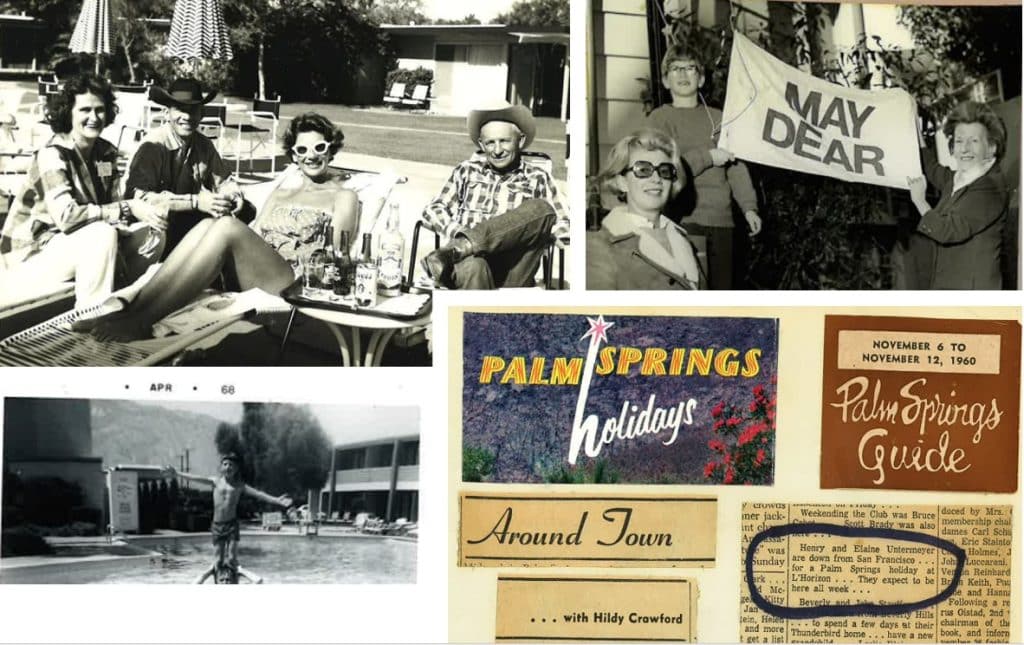
The flag was adopted in 1984 and was designed by flag-fanatic Henry Untermeyer, who retired here after living in San Francisco. Untermeyer passed away in 1994, but his son, Andrew, fondly remembers frequent vacations to Palm Springs for spring break.
His son said his dad always had a passion for flags. They were the only house in their San Francisco neighborhood with not one but two huge flag poles erected and proudly flying flags.
Untermeyer’s love of flags was mostly a hobby, and he designed custom ones for family members. But when he moved to Palm Springs and saw that the city didn’t have an official flag, he saw an opportunity.
Because Untermeyer died in 1994, there’s only so much to glean about his personality and voice through his son.
Luckily, Untermeyer was never afraid to express his thoughts and opinions, giving interviews at every step of the flag’s design process.
Reading through the three-year timeline before conception and final City Council approval gives a sense of Untermeyer’s unwavering spirit in the face of rejection and even derision.
In 1980, Untermeyer first brought up the idea for a flag, but then-Mayor John Doyle dismissed the idea as ”obviously a very low-priority item.”
When his initial design – a yellow and blue flag with wavy lines representing the Indian Canyon hot springs – was declined in 1982, he waved off the rejection. He knew that sooner or later city leaders would see it his way and understand not only the pride a flag can bring to a city but also the merchandising possibilities.
However, the rejection must have bothered him, because he and his wife took the prototype flags and turned them into vests.
While he was designing a flag for Palm Springs, he also tried working with Cathedral City, which also lacked a flag. Leaders there also rejected his initial tricolor design meant to represent different sectors of the city. They opted to go with a more basic approach: the city’s seal on a white background.
Predictably, Untermeyer took offense, calling it an “absolutely ridiculous flag.”
Reading through the minutes from the 1984 City Council meeting when Untermeyer’s flag was approved, it’s hard to tell whether council members actually came to see the matter Untermeyer’s way.
His son said the council must have been thinking, “How do we get this Untermeyer guy off our backs?”
The final design of a desert mountain sunset had input from the Agua Caliente Band of Cahuilla Indians, local artists, historians, advertising experts, business people, and regular residents. Most importantly to Untermeyer, the flag adheres to strict vexillological standards and was created with the advice of nine prominent vexillologists.
Untermeyer was proud of the flag and thought it could unite a city divided by “north and south, tennis players and golf players, people who shop at Jurgensen’s, and those who shop at Von’s.”
Beyond flags, Untermeyer was featured in the paper dozens of times. He wrote Letters to the Editor about loneliness and proper flag etiquette.
He was an active resident, with him and his wife appearing in the society pages, hosting outdoor cookouts, and riding horses. Readers can even spot tiny advertisements for his business, Desert Flag & Spa Products, accompanied by the slogan, “Our flags fly longer.”
Untermeyer saw the flag as his gift to the city that he called home.
Author

Related Articles

Measure J tax revenue climbing; finance officials cautiously optimistic about coming months
Sales tax returns for the city’s Measure J fund are up 6% so far this year, though city leaders warn that the biggest revenue months for the tourist destination are still on the horizon.

Officials: Flight path change, made without notification, is driving surge in aircraft noise complaints
More and more, residents from Palm Springs to Indio say, aircraft noise is disrupting daily life. But airport officials say federal law limits what they can do.

After shift in leaf blower enforcement strategy, city sees fewer repeat violations
After years of citing landscaping workers with little effect, the city began holding property owners accountable in 2024 — and the approach is producing results, code compliance officials told the Sustainability Commission Tuesday.