
Human Rights Commission examines Palm Springs police drone and AI tech
After reassurances from police, commission members voiced approval of the use of a wide range of security measures, from automatic license plate readers to a network of drones.
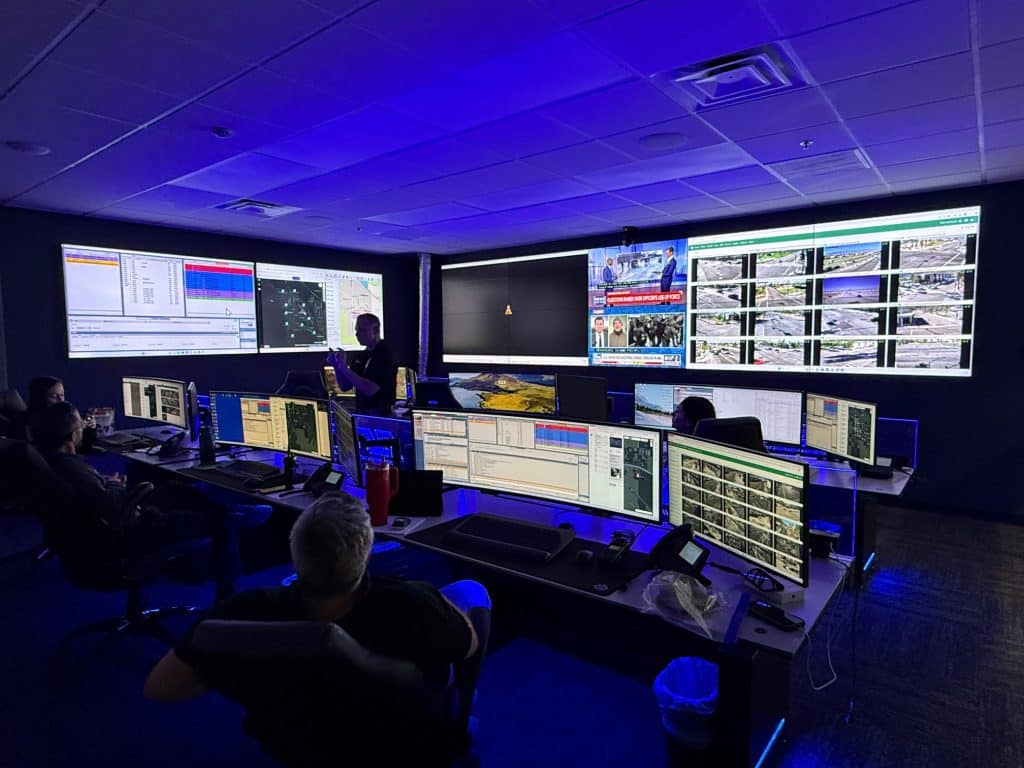
Palm Springs Police Department officials presented their new Coachella Valley Real-Time Intelligence Center (CVRTIC) to the city’s Human Rights Commission on Monday, outlining extensive protocols designed to protect civil liberties while using drones, license plate readers, and artificial intelligence to fight crime.
Police Chief Andy Mills told commissioners the department has been thoughtful about implementing the technology correctly and putting protections in place to ensure the program aligns with community values. Mills said when the program went to the City Council, councilmembers including Grace Garner and then-councilmember Christy Holstege requested specific civil liberty protections be included in the ordinance.
Local reporting and journalism you can count on.
Subscribe to The Palm Springs Post
“We want to make sure we do it correctly, and we want to put the protections in place to ensure that as we move forward, that something that our community can be proud of, and that it’s within the traditions of this community,” Mills said.
The CVRITC has been operational since early December. The technology brings together multiple law enforcement databases, citywide cameras, license plate readers, and drones to provide immediate information to officers in the field.
Lt. William Hutchinson gave examples of successful uses of the automated license plate reader — or ALPR — technology provided by Flock. He said the system recently helped solve an Indio homicide after drones tracked a suspect vehicle into Palm Springs. In another case, Cathedral City reported a bomb threat and the system alerted Palm Springs officers when the suspect vehicle entered the city.
The ALPR cameras capture license plates, the size and shape of a vehicle and unique identifiers like custom rims or bumper stickers.
“There is not facial recognition on any of these cameras,” Hutchinson said. “We’ve all used facial recognition at some point, but it’s not anywhere live on any of these cameras, it’s not on our drones. It’s actually illegal in the State of California to have facial recognition on drones.”
Hutchinson explained that the department’s rules require monthly audits and restricts access to prevent misuse of the surveillance technology. Before accessing data from Flock cameras, the system forces users fill out the reason and case number before accessing certain data, creating an audit trail of all searches and activities.
California state law enforcement agencies are forbidden from sharing license plate reader data with out-of-state public agencies or federal entities. However, a 2024 report found that 71 California law enforcement agencies have violated the law, and last year the State Attorney General filed a lawsuit against the El Cajon Police Department, accusing them of breaking that law.
While El Cajon is one of the 25 outside agencies that Palm Springs shares data with, officials there said they are fully complying with a Memorandum of Understanding (MOU) with Palm Springs.
“El Cajon would have to physically print the search results and provide them to the other agency,” Palm Springs Police Capt. Gustavo Araiza wrote in an email. “Their search does not provide open access to our system from El Cajon. If El Cajon were to print the result and provide it to another agency, this would violate the MOU they signed to have direct access to our system.”
The Palm Springs department’s transparency portal shows it has 215 LPR and other cameras throughout the city. In the last 30 days, the system has detected 457,440 vehicles.
In addition to the hundreds of cameras, the police take advantage of four drone docking stations in Palm Springs — one on the police department’s headquarters; one on the Palm Springs Convention Center; another at a city fire station; and one more on top of a business in South Palm Springs.
Addressing privacy concerns, Hutchinson said that when the drone is in motion to another location like a call for service, the camera is pointed at the horizon, not on the streets or backyards of residents.
“Now, where that will change is if we get information that the person fled the vehicle, right? Then we’re going to start looking for them, and the camera is going to go down right away,” Hutchinson said.
Commissioners were unanimous in their approval for the safety systems, and said it made them feel safer in the city and that it made the city safer for vulnerable populations.
“This is extraordinarily important,” Chair Hugo Loyola said. “We have about 14 million people traveling through here every year, and we have the festivals, and we have the concerts, and we have the pride parade, and we’ve got so many things going on that any potential threat that might be picked up…and then plan for what it could be a real a real threat.”
The center is designed as a regional approach, with Cathedral City already partnering and Desert Hot Springs and Indio planning to join. The system allows participating agencies to access and control each other’s drones across jurisdictional boundaries during pursuits or emergencies.
Author

Related Articles
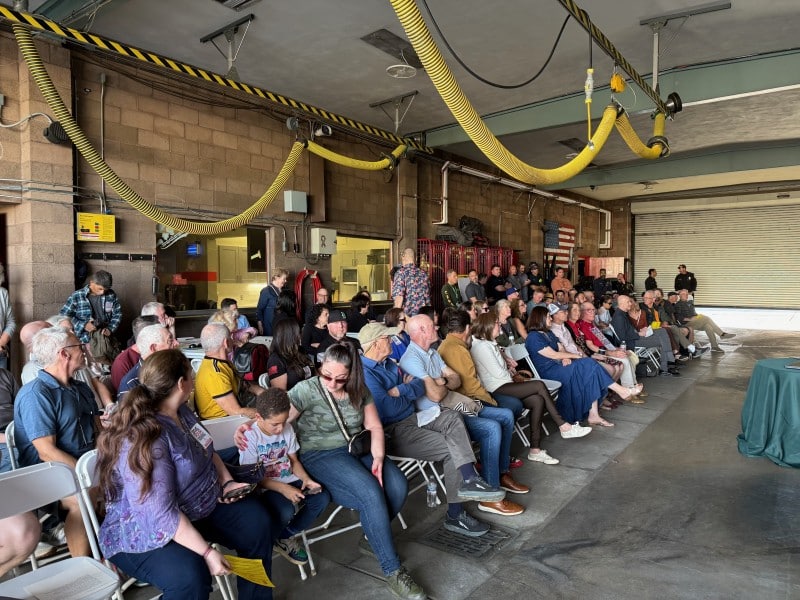
Palm Springs residents, business owners, city officials discuss future of historic downtown fire station
The Palm Springs Fire Department held an open house to gather input on plans to modernize the 1957 facility to improve response times and firefighter living conditions

Fire chief: Prescott Preserve blaze highlights urban wildfire challenges
The cause of the Feb. 1 fire remains undetermined as Oswit Land Trust continues its cleanup.
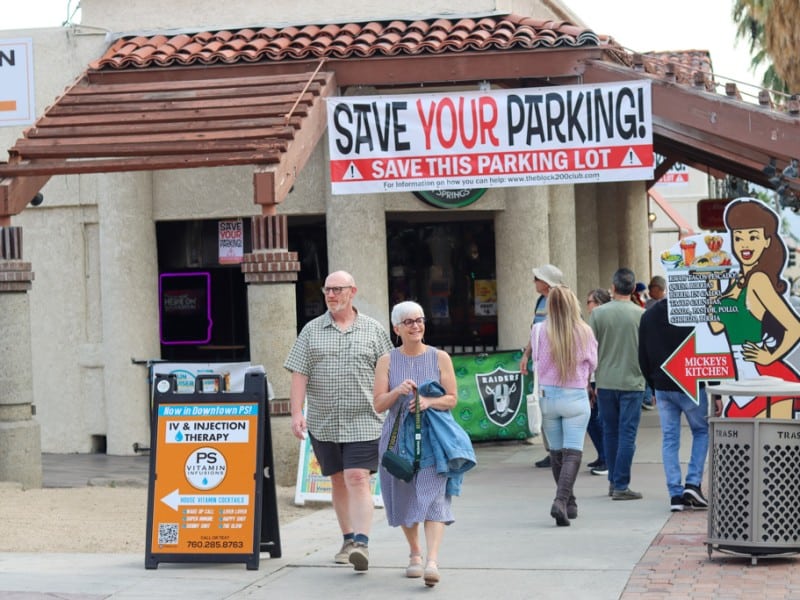
Downtown property owners push back on Fire Station 1 parking lot plan as city defends site choice
Ahead of the Fire Department’s Feb. 23 open house, a group has launched a public campaign with banners, window signs and a petition urging the City Council to relocate the project.