
Palm Springs launches inaugural AI and Creativity Expo to establish tech industry foothold
City Councilmember Jeffrey Bernstein, one of the driving forces behind the day, described it as a “landmark recurring event” designed to position Palm Springs as a hub for ethical technology innovation.
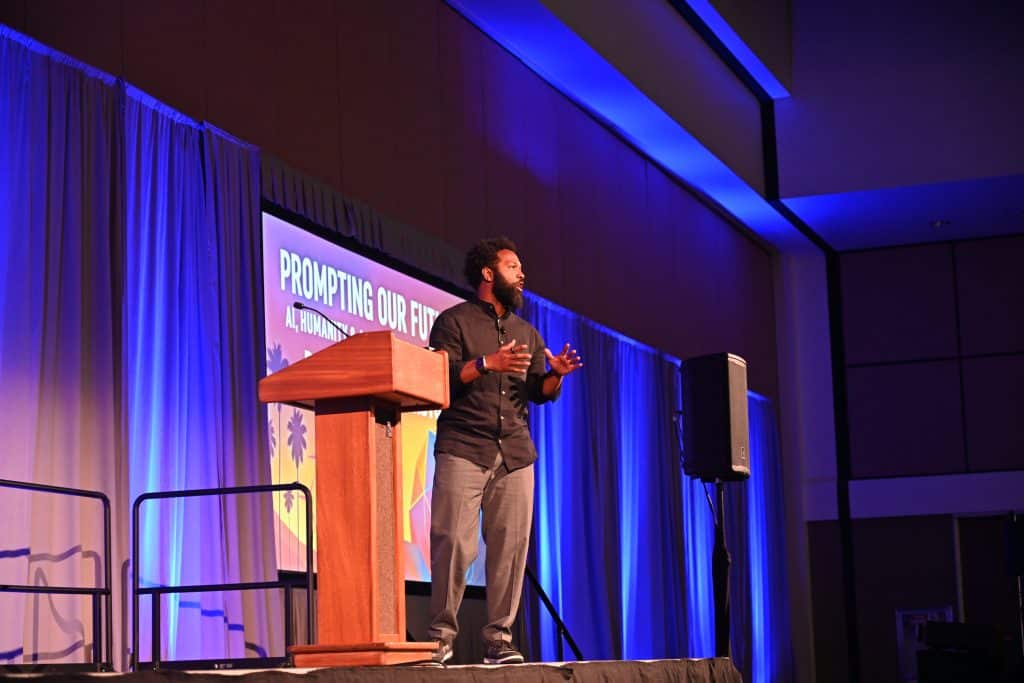
Palm Springs hosted its first AI and Creativity Expo on Monday, drawing hundreds of attendees to the Convention Center for a daylong exploration of how artificial intelligence can reshape the desert community’s economic future while preserving its distinctive character.
City Councilmember Jeffrey Bernstein, one of the driving forces behind the day, described it as a “landmark recurring event” designed to position Palm Springs as a hub for ethical technology innovation. The expo represents efforts to establish technology as a fifth economic pillar alongside the region’s traditional drivers of tourism, clean energy, healthcare and arts.
Local reporting and journalism you can count on.
Subscribe to The Palm Springs Post
“The idea of building a new economic pillar in Palm Springs, one based on technology and innovation, isn’t new,” Bernstein said during opening remarks. “It’s been discussed for decades, but something has been changing in the past few years.”
Bernstein cited a “tech migration” bringing remote workers, industry retirees and new businesses to the Coachella Valley, drawn by the region’s quality of life. He said these newcomers from Silicon Valley, Seattle and other tech centers are seeking opportunities to mentor and build lasting enterprises in Palm Springs.
The councilmember highlighted the event’s educational component, noting that 97% of Palm Springs Unified School District students qualify as socioeconomically disadvantaged under federal standards. He argued that AI’s emergence creates an opportunity to level the playing field for local youth.
“With the emergence of AI and new technologies, the playing field has been resetting,” Bernstein said. “We’re all at day one. That means our students aren’t behind yet.”
Emmy-nominated host and author Baratunde Thurston delivered the morning keynote address, emphasizing the importance of community engagement in shaping artificial intelligence’s future applications. Thurston, who recently became a Palm Springs resident, said the technology represents a shift “from tool to teammate and code to colleague.”
“We have the power and the ability to shape” AI’s development, Thurston told attendees. “People are using AI to achieve something. At least for the next couple years, AI really doesn’t do anything we don’t ask it to.”
Thurston shared personal examples of integrating AI into desert life, including using the technology to discover local events, find humane solutions for ground squirrel problems on his property, and better understand complex ballot measures as a new California resident. He outlined what he called “three A’s” for approaching AI: accelerate tasks people don’t want to spend time on, augment human capabilities rather than replace them, and accommodate populations that previous systems failed to serve well.
“Acceleration on its own isn’t a virtue, it’s a choice,” Thurston said. “Let’s be conscious about what we want to speed up and what we want to maintain a different pace for.”
During the lunchtime keynote, filmmaker Rob Minkoff, director of Disney’s “The Lion King,” reinforced the message about AI as a collaborative tool rather than a replacement for human creativity. Minkoff, who has worked through multiple technological shifts in animation from hand-drawn to computer-generated imagery, compared current AI anxiety to historical fears about new filmmaking technologies.
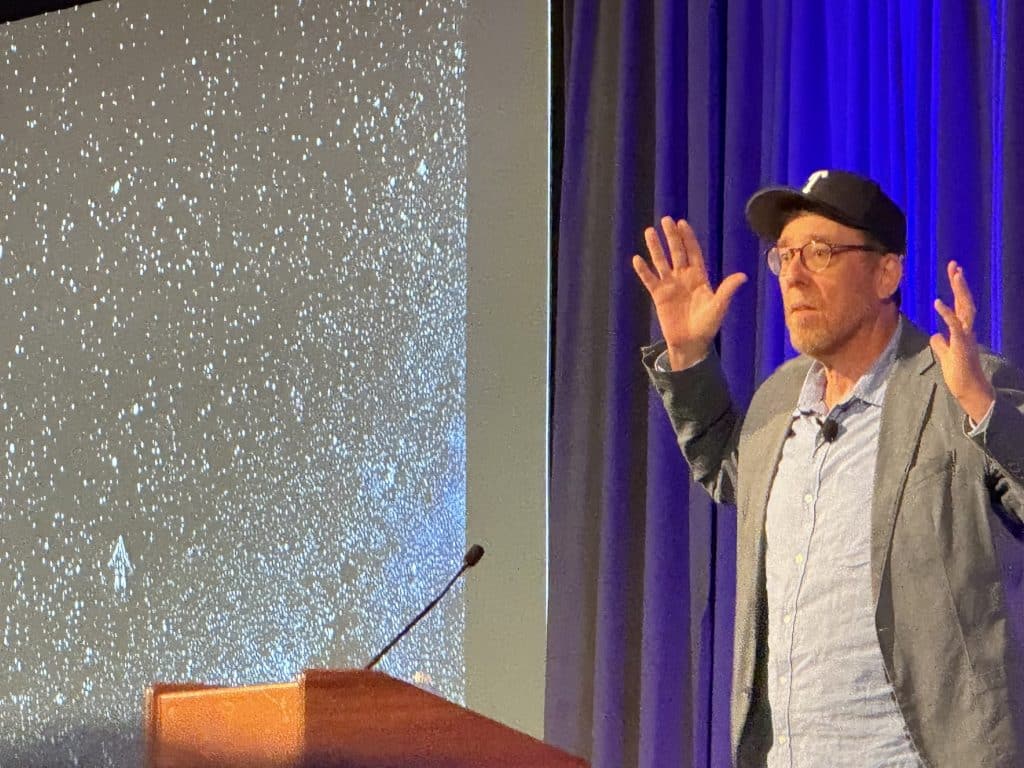
“When the Lumiere brothers first projected a film of a train arriving at a station, some of the audience ran screaming,” Minkoff said, referencing the 1895 film that reportedly caused viewers to flee the theater in panic.
Minkoff demonstrated AI-generated films and commercials, emphasizing that the technology requires human direction and vision. “AI is a tool. AI is another paintbrush. AI doesn’t have a point of view, it doesn’t have its own story to tell,” he said.
The filmmaker acknowledged concerns about copyright and intellectual property as the technology becomes more accessible. He emphasized the importance of critical thinking skills in education, arguing that humans must remain “smarter than the AI” to effectively judge its outputs.
“The humans need to have an opinion. The humans need to have perspective. The humans need to have a point of view, because that is what AI lacks,” Minkoff said.
The event’s closing panel featured leaders from across the community’s key sectors, including Christine Vendredi from the Palm Springs Art Museum, Val Martinez Garcia from College of the Desert, Ken Buechele from Eisenhower Health, and Mark Talkington from The Palm Springs Post. Each discussed how AI is beginning to impact their respective fields.
Vendredi said the art museum is already using AI for transcription services and exploring chatbot applications for visitor engagement. Martinez Garcia announced plans for an AI “accelerator” hub at the college’s new Palm Springs campus, designed to foster collaboration between students, businesses and the broader community.
Buechele described how Eisenhower Health is using AI to reduce cognitive burden on clinicians by analyzing electronic medical records and providing better information for patient care decisions. Talkington emphasized the need for human oversight in journalism, noting that while AI can handle formulaic news writing, storytelling requires human emotion and perspective.
Thurston also cautioned against allowing AI development to follow historical patterns where power and wealth concentrate in the same corners, arguing that Palm Springs has an opportunity to chart a different course than Silicon Valley.

“We get to decide what we want for this future,” Thurston said. “We cannot have the whole world, all of our interactions, all of our business needs, all of our creative urges, dependent on the thought patterns only of technologists.”
Thurston acknowledged legitimate concerns about AI, including its climate impact and potential job displacement, but argued that active engagement represents the best path forward rather than avoidance or uncritical adoption.
“If you don’t feel like a technology expert, that’s good. That’s actually an asset,” Thurston told attendees. “There is so much more to the human experience, and it’s up to all humans to decide it.”
Wayne Olson, chief economic development officer for the City of Palm Springs, outlined the city’s three-part economic development strategy focused on technology. He described plans to use tech as a demonstration of Palm Springs innovation, cultivate targeted tech clusters in health and wellness, creative media and climate resilience, and apply technology horizontally across all city sectors.
“We cannot cut our way to prosperity,” Olson said, echoing what Mayor Ron deHarte has said. “The most effective and sustainable way to fund the services our residents deserve is to grow the local economy, create jobs, and expand our tax base.”
The expo featured three main tracks targeting residents, businesses and students. Programming included practical workshops on digital safety, case studies on customer engagement and hands-on AI applications in music, video and visual arts at College of the Desert’s Palm Springs campus.
The event received support from multiple sponsors including the City of Palm Springs Office of Economic Development, College of the Desert, Palm Springs Unified School District Foundation and various local businesses. All speakers and content providers volunteered their time for the event.
Organizers plan to make the expo an annual occurrence as part of broader efforts to attract technology companies and workers to the region while maintaining Palm Springs’ distinctive character and values.
Author

Related Articles
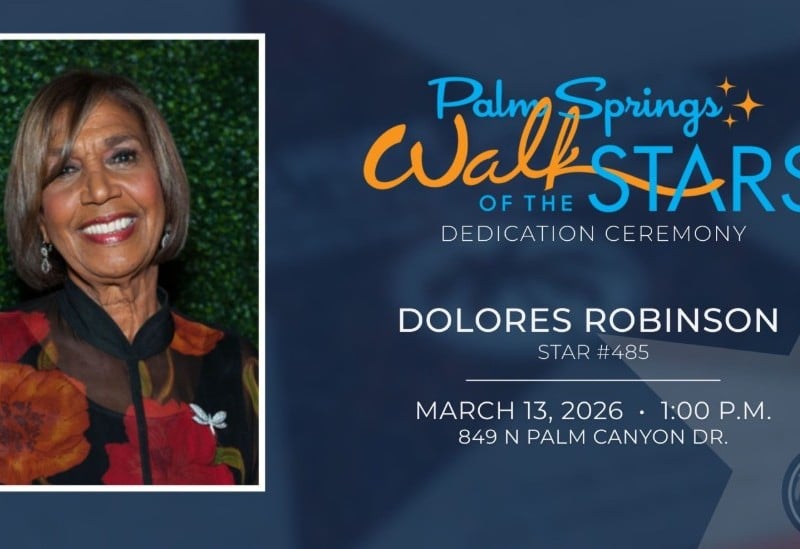
Dolores Robinson to receive next star on Palm Springs Walk of the Stars
The veteran personal manager, recognized as the first Black female personal manager in film and television, will be honored March 13.
For gay men over 50, a Palm Springs retreat creates space to rethink purpose and what comes next
The March event, titled “What Matters Next,” will offer men a space to reimagine their lives at a time when loneliness and questions of purpose are reshaping how a generation thinks about aging.

Palm Springs library, Mizell Center to host second annual Black authors event
Former NFL player RK Russell and author Toni Ann Johnson will discuss their works at the free community celebration on Feb. 8.