
Don McLean brings a lifetime of song to the Plaza Theatre
Ahead of his Palm Springs show, the “American Pie” songwriter reflects on six decades of music, creative independence and why he’s still performing at 80.
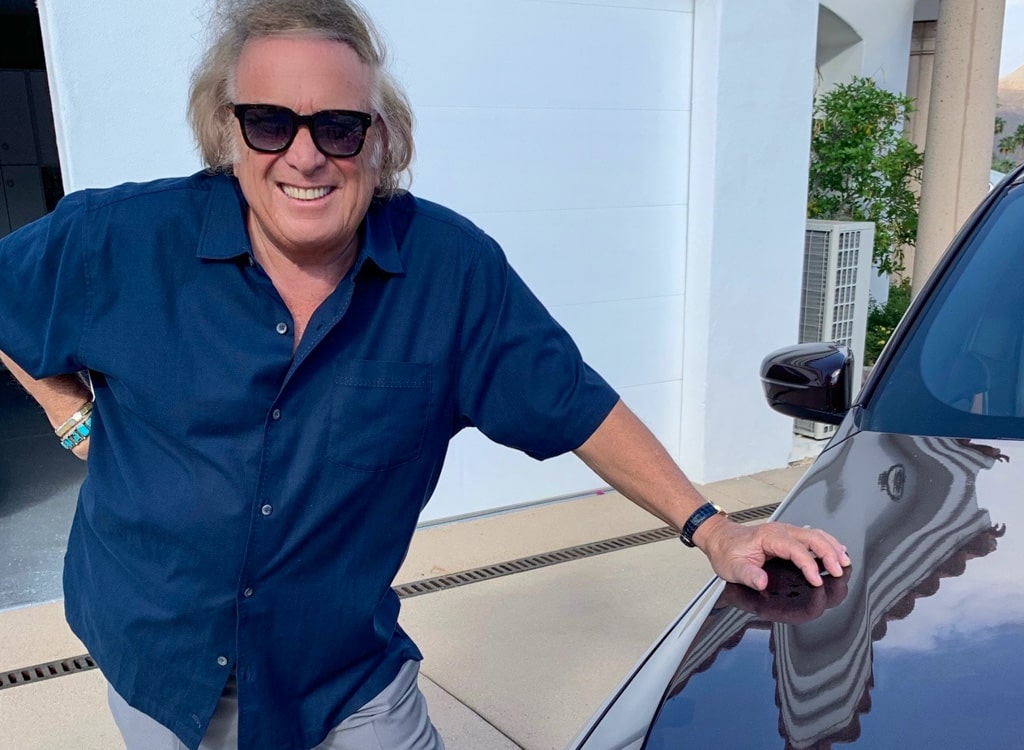
Don McLean gained pop music immortality from his 1971 anthem, “American Pie,” an eight-and-a-half-minute narrative that in 2001 was named one of the top five songs of the 20th century by the Recording Industry Association of America and the National Endowment for the Arts.
The metaphorical journey, starting on “the day that music died,” is not rock’s first long-form narrative. Bob Dylan invented that genre with elegiac literary songs like “Masters of War” and “It’s Alright, “Ma (I’m Only Bleeding).” But “American Pie” is a romp, featuring Dylan’s mid-’60s pianist, Paul Griffin. Its reflection on America’s loss of innocence, from the deaths of Buddy Holly, Ritchie Valens, and J.P. “the Big Bopper” Richardson in a1959 plane crash to the Rolling Stones’ 1969 appearance at Altamont, allowed long-form narratives to enter pop music realms for generations to come.
Local reporting and journalism you can count on.
Subscribe to The Palm Springs Post
McLean, 80, could have written a prequel to “American Pie” with his own 60-year journey from a fledgling New York suburban folk artist to a Palm Desert resident.
He adamantly denied in a phone call before his Friday (Jan. 30) concert at the Palm Springs Plaza Theatre that he’d ever do something so contrived. “I’m very, very purist in that sense,” he said.
But he’s written and recorded many eclectic thematic narratives over his 55-year career — from “Magdalene Lane,” a 1970 ballad about Judy Garland’s Hollywood struggles to “American Boys,” a 2024 album title track about the founders of rock and roll.
His own narrative could include tales about cowboy stars Hopalong Cassidy and Gene Autry; big band singers Bing Crosby and Frank Sinatra; and the mid-20th century folk band, the Weavers, who gained fame playing the music of Woody Guthrie, Lead Belly, and its iconic leader, Pete Seeger, all published by Howie Richmond, co-founder of the Songwriters Hall of Fame with fellow desert residents Johnny Mercer and Abe Olman.
McLean was inducted into that hall in 2004.
“The Weavers got me into show business,” McLean said in a rambling interview befitting his career. “Pete Seeger was about as far away from Palm Desert as you could possibly imagine. He was a communist and he was a stoic and he was not a person who appreciated golf courses or luxury living. But I adored him.”
McLean grew up in New Rochelle, where he fell in love with diverse styles of music including Sinatra-styled pop, Elvis Presley and Buddy Holly rock, and the Weavers. His father opposed his desire to pursue music professionally, but he died when Don was 15.
“So one day, I tried to call (Fred) Hellerman, who was the baritone singer and guitar player, and really the musical director, of the Weavers,” McLean said. “I called him out of the blue and we developed a kind of phone friendship. The same thing happened with Erik Darling, who was in the Weavers after Seeger. So suddenly, I was 16 years old and I found myself in Erik Darling’s living room playing music with him. At that time, he had a group called the Rooftop Singers, and they had a No. 1 record, ‘Walk Right In.’ So now I’m in the middle of show business and I’m still in high school. I drop out of college in 1964, but I ended up being managed by (Weavers manager) Harold Leventhal and meeting (Weavers’ bass singer) Lee Hayes and spending some time at his house on over in Brooklyn Heights.”
The only problem, was, The Beatles and Beach Boys pretty much killed folk music’s popularity in 1964.
“The Beatles and the Beach Boys had a huge effect on me,” McLean said. “I didn’t want to go and make a folk album, like Seeger would have done with a banjo or Dylan’s first record with just a guitar. I was already into exploring the studio fully with every song I wrote, and every song was different. I wanted to write a love song, like the kind of pop songs I heard. So I wrote, ‘And I Love You So.’ I wanted it fully orchestrated, so we had 30 strings on that record.”
McLean resisted the temptation to let Leventhal, Richmond or a record label publish his songs. That meant not getting a record deal until 1970, when he released a collection of eclectic original tunes on his LP, “Tapestry.” But that’s how he learned the money in the music industry is in publishing. Royalties flowed to him from Perry Como’s hit with McLean’s pop ballad, “And I Love You So.” He had also charted by then with “Vincent,” “Dreidel” and “American Pie.”
“Now, at age 80, I’m sitting on one of the most valuable publishing catalogs in the world,” McLean said. “And I didn’t do it because I was smart. I did it because I didn’t want to give it to them. These were my songs.”
McLean has had many eclectic interests, most notably a love of Hopalong Cassidy Westerns, starring William Boyd, from the late 1930s and ’40s. In 2008, he was sitting at a computer at his house in Maine with a picture postcard of Boyd’s Palm Desert house on his desk. He went online and discovered the house had recently been sold. He found the buyer’s phone number through a friend in the Hopalong Cassidy Appreciation Society and, the next time he was in Los Angeles, he called the homeowner. He drove out to view the house on Joshua Tree Street and fell in love with Palm Desert – “almost like I’m Ulysses being called off course by the siren song of these magical people,” he said.
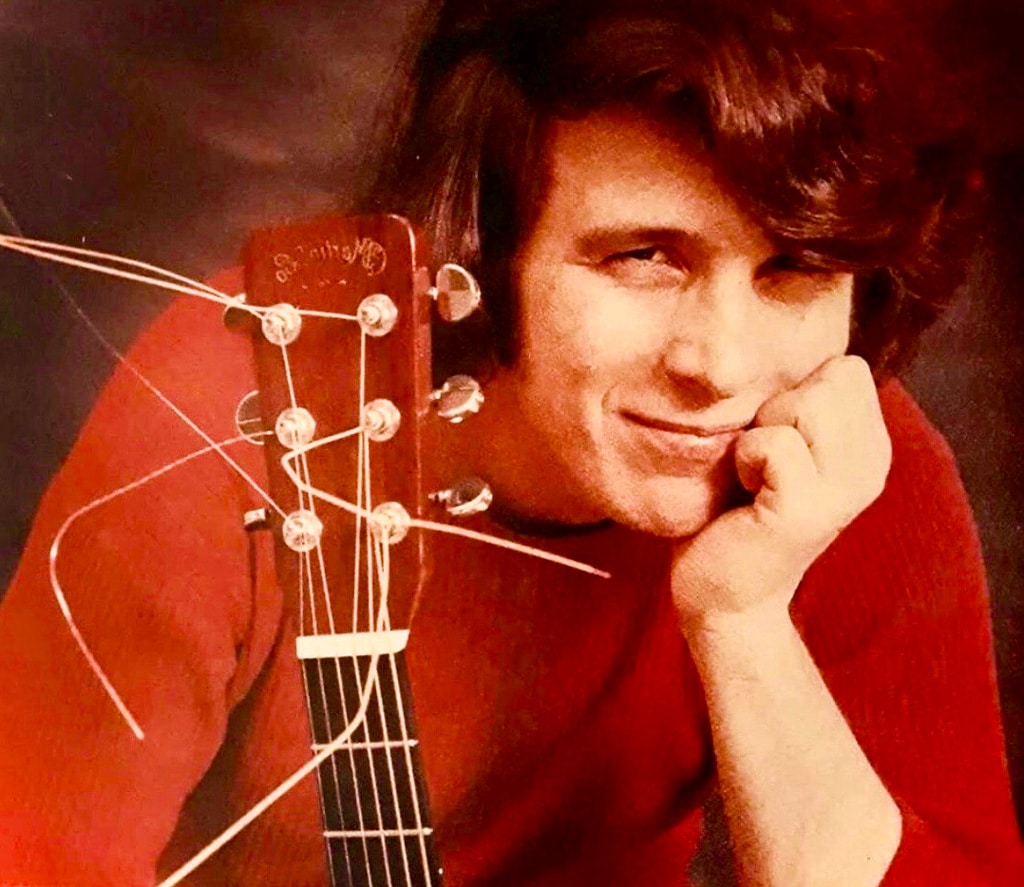
The house was too small for his liking, but he bought another place on Prairie Drive and it was life-changing.
“I’m a weird guy,” he said. “Since my father’s death, there’s an instinctive aspect to me that I live with. I just do what I feel and I go where it tells me. I had built a family — two children, 25 years or so. I was in this grand estate in Maine and, all of a sudden, the kids were grown up. I just realized I wanted to do something else completely.”
He enjoyed decorating his home with beautiful furniture he found at estate sales and driving around Palm Desert looking at other houses. He fell in love with Ironwood Country Club, and a neighborhood where old-school celebrities Crosby, Phil Harris and Jimmy Veusen lived. He knew from his personal studies that President John F. Kennedy had chosen to stay in Crosby’s house instead of his friend, Sinatra’s Rancho Mirage Compound in 1962, and that JFK allegedly had a tryst with Marilyn Monroe while staying there. So he bought another home in that area.
“I am a Kennedy Assassinologist going back to the ’60s,” he said. “I mean, I have a lot of interests in so many different things. And here I was, right in the middle of everything.”
McLean divorced for a second time in 2016 and soon began a relationship with a much younger model, Paris Dylan. She remains a romantic partner as he pursues his local passions.
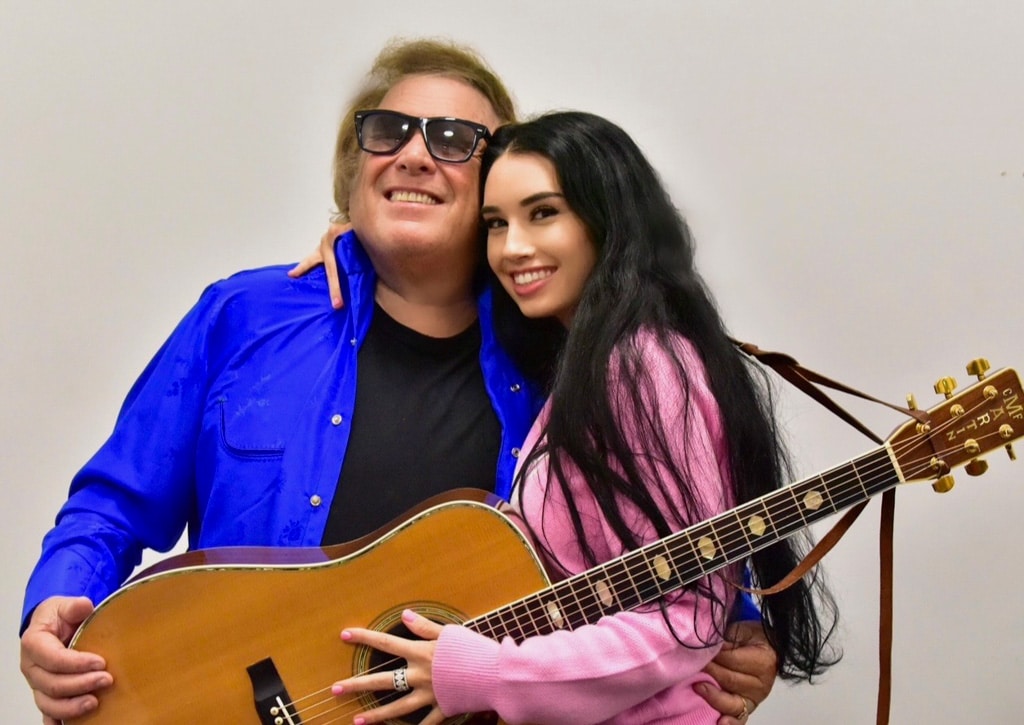
McLean has seen Paul McCartney at the Acrisure Arena and the Beach Boys at Fantasy Springs Resort Casino. He owns a copy of the documentary, “Sinatra in Palm Springs.” He’s attended Modernism Week and gotten to know Gene Autry’s widow, Jackie, who took him to the Autry suite at an Angels game. He played Stagecoach in 2014 and provided a festival highlight by leading the Palomino Tent crowd in a singalong to “American Pie.”
He’s so active today, he doesn’t have the same drive to create music he once had.
“I’m not making any more albums,” he announced, “and I’m probably not going to write any more songs. I’m 80 years old. I’ve said everything I had to say. I will never sing any better than I did on most of those records. So I’m finished with that. I will continue to sing as long as I can, but, that’s that.”
His upcoming Plaza Theatre show is one new musical experience he’s excited about.
“I understand it’s been renovated,” he said. “I’m anxious to play there.”
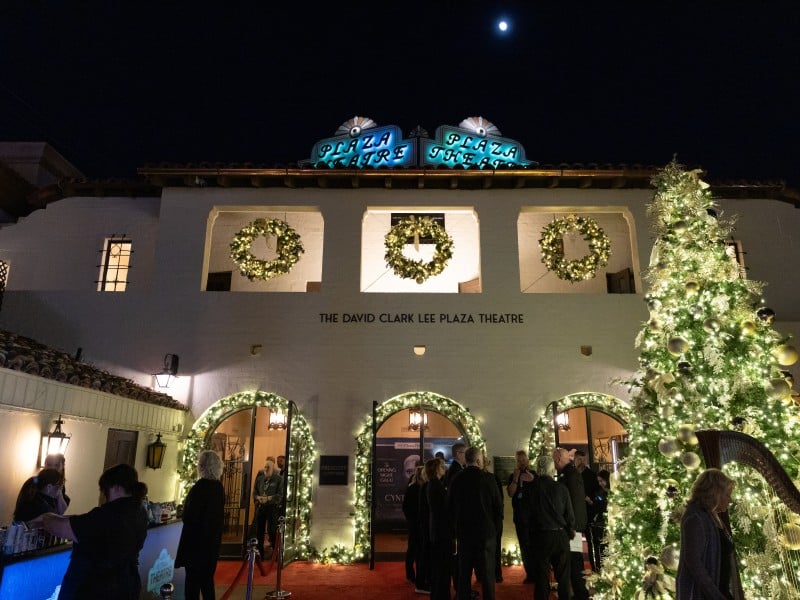
More information: Don McLean plays at 8 p.m. Friday, Jan. 30 at The Plaza Theatre, 128 South Palm Canyon Drive in Palm Springs. Tickets are $74-$98 via Ticketmaster at palmspringsplazatheatre.com
Related Articles
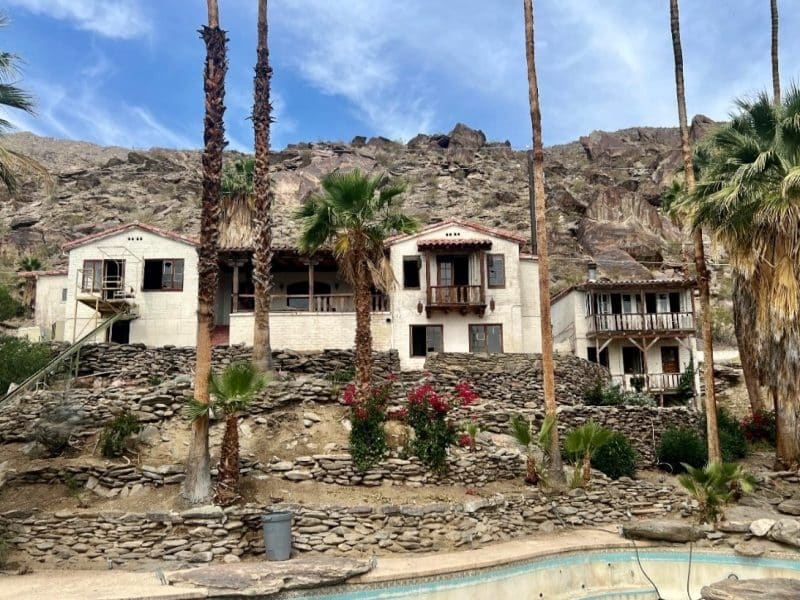
Historic board recommends landmark status for director Edmund Goulding’s ‘Little White House’ estate
The home, built eight years before the city of Palm Springs was incorporated, represents the Spanish Colonial Revival architecture that dominated in the interwar period.
Ticket prices at the Plaza Theatre spark questions — and explanations
Residents raise questions about affordability as theater operators and city officials point to the economics of a small venue.

Plaza Theatre earns National Register of Historic Places designation
The 1936 Spanish Colonial Revival theater is the only known historic atmospheric theater in the Coachella Valley.