
Despite progress in combating homelessness, some barriers still exist, city staff members tell commission
Palm Springs recorded a dramatic drop in street homelessness during this year’s Point in Time Count, but some operational issues at a pair of service centers persist, the Human Rights Commission was told.

Palm Springs has seen significant progress in reducing homelessness since opening its Navigation Center in March 2024, but city staff said recently that some barriers remain that prevent homeless individuals from accessing services and finding stable housing.
The most recent Point in Time Count, conducted in January, shows a 63% decrease in the number of unhoused individuals living on city streets since 2023. That year, volunteers reported 239 people living on the streets during the one-day survey, compared to 88 people found during this year’s count.
Local reporting and journalism you can count on.
Subscribe to The Palm Springs Post
Despite that progress, Palm Springs Homeless Outreach Coordinator Roman Ruiz told the Human Rights Commission last month that the city’s estimated 500 homeless individuals still face a web of barriers that prevent them from accessing basic services.
Ruiz and Housing Services Administrator Ariel Tolefree-Williams presented a detailed account of systemic problems at the Access Center at 225 El Cielo Rd. and Navigation Center at 3589 McCarthy Rd. — which serve as the entry points for homeless services in the city. The facilities are operated by Martha’s Village and Kitchen under a city contract.
“The barriers are just stacked up against our homeless individuals,” Ruiz said. “Every time they have to start over again, they have to deal with the whole new system, because the systems are changing each time.”
The Access Center, housed in a former boxing club building, operates from 8 a.m. to 3:30 p.m. daily. Tolefree-Williams said the limited hours create impossible scheduling conflicts for homeless individuals trying to work while accessing services.
“If you have a job, you have to tell your boss that you’re in this situation, which is not always the best thing for them, because they will get discriminated against,” Ruiz said.
The rigid schedule requires homeless individuals to stand in line for two hours hoping to get a shower, then return by 1 or 2 p.m. to sign up for a bed at the Navigation Center, Tolefree-Williams explained. The Access Center closes at 3:30 p.m., leaving just a few hours to accomplish tasks like obtaining identification documents or applying for benefits.
“There are growing pains and I think that’s what we’re trying to figure out. It’s really a balance and I do think that it’s going to just take time for us to get to a point of really feeling like there are very minimal issues.
— Councilmember Grace Garner
Basic transportation poses another obstacle. Many homeless individuals lack bus passes to travel between service locations across the city. The situation is complicated by Palm Springs having only one public restroom and limited options for meals, with Well in the Desert providing lunches from 11 a.m. to 1 p.m.
“If you imagine doing this every day, all day, this is making me tired just thinking about it,” Ruiz said.
Both officials expressed frustration with the current contract arrangement with Martha’s Village, saying efforts to modify operations have met resistance. Tolefree-Williams said the organization follows practices from other cities rather than adapting to Palm Springs’ specific needs.
“We’ve hit roadblocks,” Tolefree-Williams said when asked about efforts to change the operating hours and procedures.
On Tuesday, City Councilmember Grace Garner, who has taken a lead role on homeless services, acknowledged the operational challenges but said the city maintains regular communication with Martha’s Village to address issues as they arise.
“A lot of the logistical issues are things that are necessary to manage everything that’s happening,” Garner said by phone. “Some of them are things that could be done differently, but we also want to work with our provider to make this work for them too.”
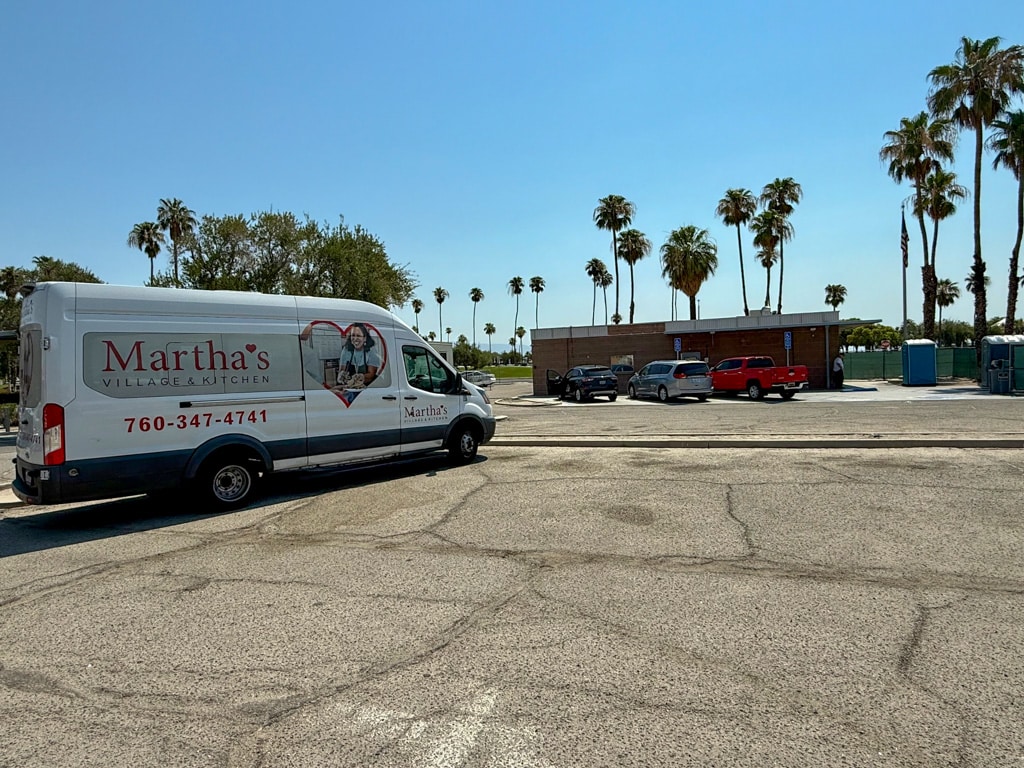
Garner said the city has discussed additional training for staff at the Access Center and emphasized that the Navigation Center model represents new territory for both the city and Martha’s Village. Unlike Martha’s standalone facility in Indio, the Palm Springs operation is a city program with Martha’s serving as the service provider.
“There are growing pains and I think that’s what we’re trying to figure out,” Garner said. “It’s really a balance and I do think that it’s going to just take time for us to get to a point of really feeling like there are very minimal issues.”
Garner said she has increased her involvement in homeless services since the Navigation Center opened, describing it as “arguably our largest program that we’ve done in recent years.” She recently traveled to Sacramento with other councilmembers to discuss barriers to assistance and the funding needs for the offered in Palm Springs with state officials.
“We are getting results, as you saw with our latest point in time count, so things are definitely shifting,” Garner said. “But it’s never going to be perfect.”
Author

Related Articles

Police and residents share concerns about Navigation Center’s first year, note signs of progress
City officials say the facility has helped people find housing and jobs, but police and neighbors worry Palm Springs is becoming a magnet for the region’s unhoused.
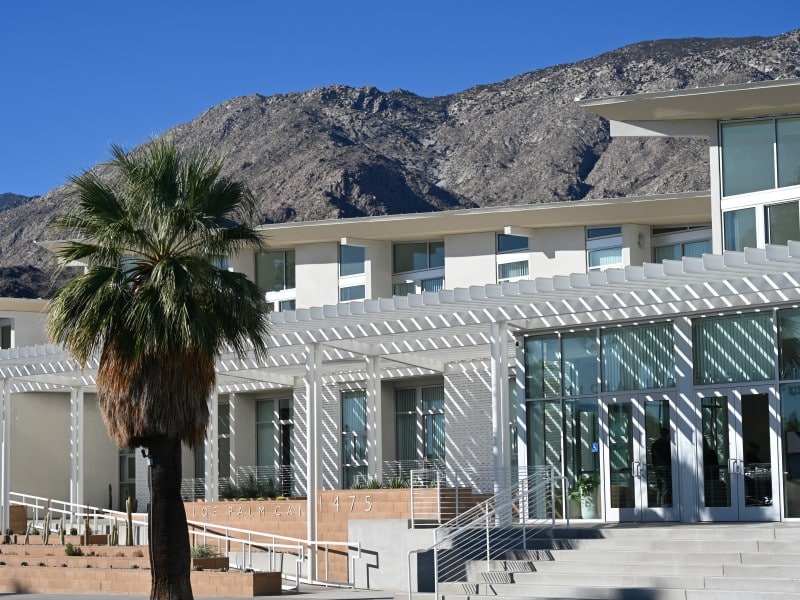
At Aloe Palm Canyon, modernist architecture meets affordable housing for seniors
The $45 million development, which had its ribbon cutting Thursday, features floor-to-ceiling windows and sophisticated finishes, proving that beautiful architecture isn’t just for the wealthy.
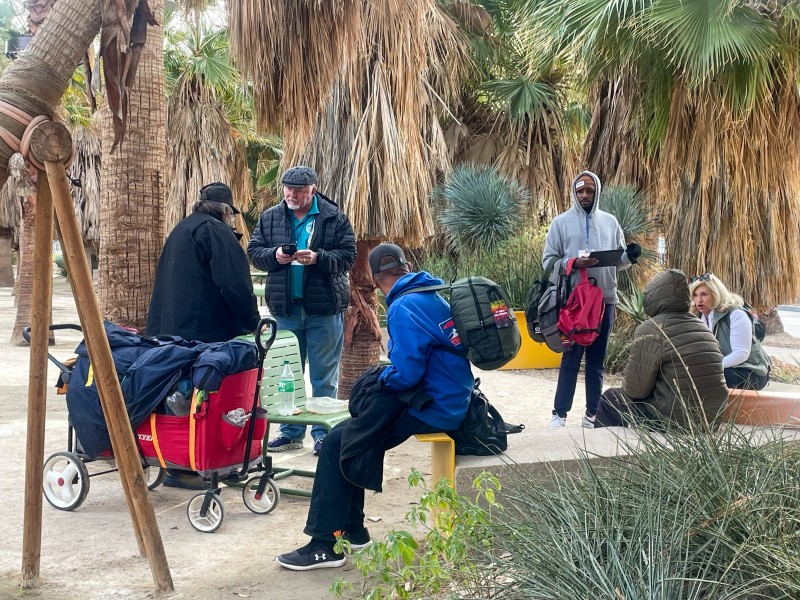
Palm Springs reports 63% drop in homelessness as county data is released
Numbers from a one-day point-in-time count in January show a second consecutive year of declining growth rates and a 19% drop in unsheltered individuals across all of Riverside County.