
Council approves Gene Autry affordable housing project, delays first-time home buyer program
The first-time home buyer program was tabled after members of the Section 14 Survivors and others in the community requested more involvement.
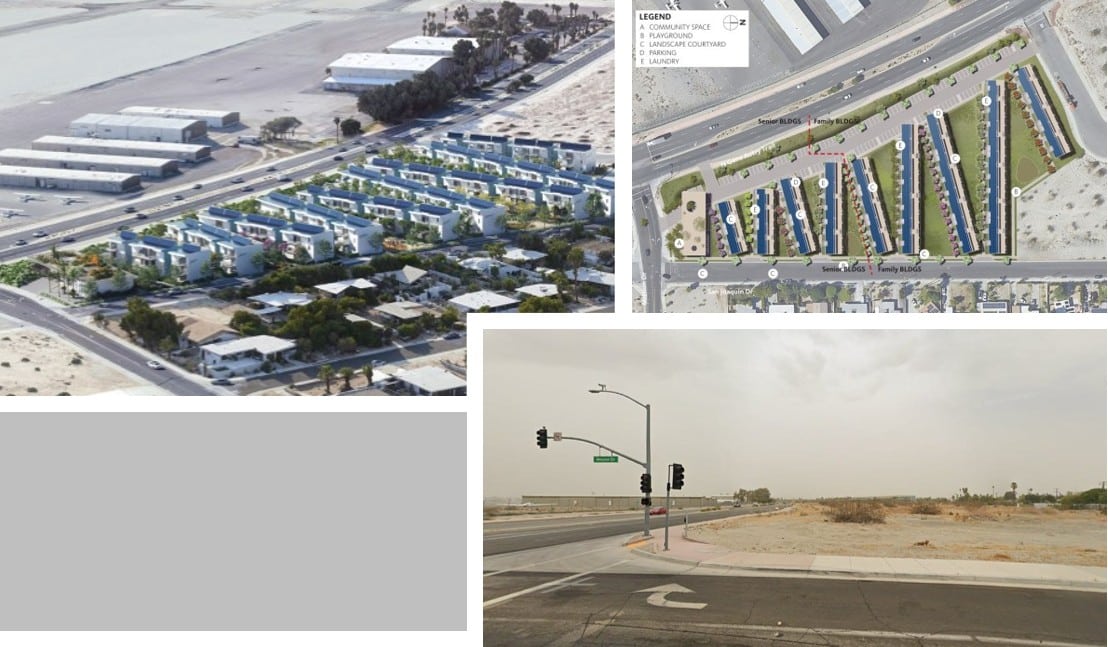
The Palm Springs City Council approved negotiations for a 203-unit affordable housing development while tabling a first-time home buyer assistance program at its meeting last week.
The council voted to move forward with an exclusive negotiation agreement with West Hollywood Community Housing Corporation to develop Juniper Mission on city-owned surplus land near Gene Autry Trail and the airport.
Local reporting and journalism you can count on.
Subscribe to The Palm Springs Post
The project, detailed in a staff report here, would include 156 family units and 47 senior units for households earning up to 60% of area median income. The development features an intergenerational design that blends family and senior housing with shared community spaces and programs.
Juniper Mission represents a total development cost of approximately $80 million to $85 million, funded through state, county, federal and private financing. The city would contribute surplus land through a ground lease arrangement and receive $40,000 annually in ground lease payments, totaling over $5 million during the initial 30-year term.
The project would include rooftop solar panels, drought-tolerant landscaping, and preserve more than 45% of the site as open space. Completion is targeted for late 2028.
West Hollywood Community Housing Corporation also developed Aloe Palm Canyon, another affordable housing project in Palm Springs that recently opened.
The council delayed action on a separate first-time home buyer assistance program after extensive public comment from Section 14 survivors and descendants who requested greater clarity and involvement in the planning process.
Speakers raised questions about how funds would be distributed, whether the assistance would be structured as a loan or grant, and how descendants living outside Palm Springs would qualify. Several requested more detailed information before the program launches and asked to be involved in the planning process.
The proposed program would provide down payment assistance of up to $200,000, or up to 50% of the home purchase price. The assistance would be structured as a silent mortgage with a 15-year affordability term that would be forgivable if the homeowner maintains it as a primary residence.
The program would serve households earning up to 140% of area median income and cap eligible home prices at $750,000. It would initially reserve 20% of funding for Section 14 survivors and descendants for the first 60 days.
Councilmembers requested additional community meetings or focus groups to gather feedback before finalizing the program. They asked staff to provide clearer explanations of how the program would work and analyze whether the proposed caps align with current real estate market conditions.
Staff indicated the program would be administered through a partnership with Riverside County for a 10% administrative fee. The county would provide technical administration, underwriting, compliance, monitoring and reporting.
The program would be funded through housing set-aside money from transient occupancy tax as part of the city’s Section 14 settlement commitments.
The item is expected to return in December or January. City staff committed to conducting targeted outreach to the Section 14 community before the program launches.
Authors


Related Articles
Palm Springs appeals board moves to consider greater discretion in vacation rental cases
A representative of a local vacation rental group argued that treating every violation the same “undermines trust in the process.”
Public workshops bookend busy week at Palm Springs City Hall
Open houses on Fire Station 1 and traffic safety frame meetings on tourism, parks, development and city finances

Measure J tax revenue climbing; finance officials cautiously optimistic about coming months
Sales tax returns for the city’s Measure J fund are up 6% so far this year, though city leaders warn that the biggest revenue months for the tourist destination are still on the horizon.