
Clive Davis, Barry Manilow reveal stories behind five decades of hit records during Plaza Theatre benefit
The legendary music mogul and the iconic singer-songwriter shared memories of career-defining moments, from the discovery of Whitney Houston to the creation of “Mandy,” during a fundraising event Friday evening.
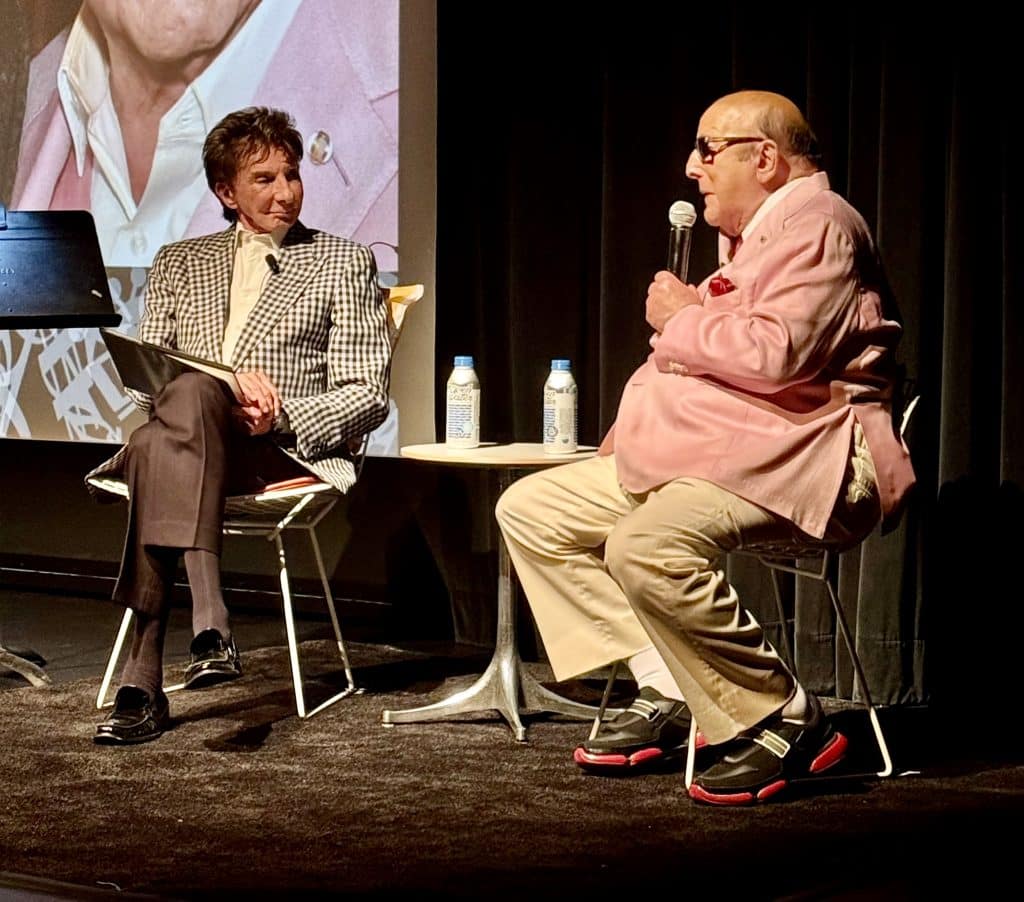
Record mogul Clive Davis has a documentary that has been running on Netflix for five years, and he’s written two autobiographies.
So when the Palm Springs Plaza Theatre Foundation asked for a film to precede his personal appearance with long-time friend and collaborator Barry Manilow to help the raise the last $3 million needed to open the Plaza Theatre in December, Davis provided a veritable highlights reel assembled by music producer and artist, Mark Ronson.
Local reporting and journalism you can count on.
Subscribe to The Palm Springs Post
But when you’ve been a major record label president for more than half a century, responsible for the careers of mega-stars from Janis Joplin to Bruce Springsteen to Aretha Franklin to Whitney Houston, you’re going to have a long reel.
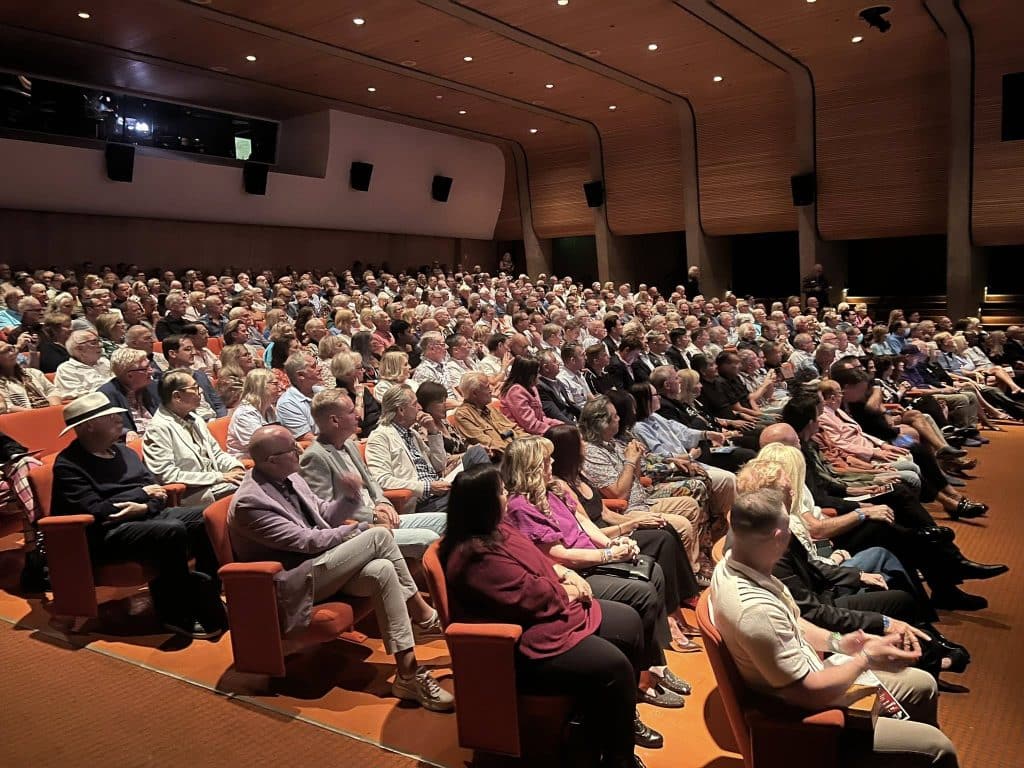
“Do You Remember? with Clive Davis,” presented Friday at the Annenberg Theater of the Palm Springs Art Museum, was scheduled to start at 6:30 p.m. But, following an introduction by Plaza Foundation vice president Kevin Corcoran, the film ran like a PowerPoint presentation of his culture-changing acts. The marquee event, a Q&A with the 93-year-old mogul moderated by Manilow, began at 8:30 p.m.
In the spirit of the film, here are the Q&A highlights tightly edited for fast pacing:
The Monterey Pop Festival epiphany and signing Janis Joplin
Davis made his mark as president of Columbia Records when he claimed to be the only record executive to attend the groundbreaking Monterey Pop Festival in 1967. He had an epiphany that he should sign some of those bands because Columbia’s artists were aging out. He signed Janis Joplin and Big Brother and the Holding Company for $200,000 at a time when most artists were getting $10,000 signing deals.
Manilow asked, is it true she wanted to seal the deal by going to bed with you?
“Yes,” said Davis. “I accepted it as a compliment.”
“And?” inquired Manilow.
“I did not.”
Turning Santana’s career around
Manilow said Davis signed Carlos Santana when he was 52 in 1999 after not having had a hit in 20 years. It became known in the industry as Davis’ Folly. But Davis only agreed to release Santana’s first LP, “Supernatural,” if he’d let him select songs for half the album based on their hit potential. It wound up winning nine Grammies and selling 30 million copies, prompting Manilow to react, “Holy shit”
“This is your genius,” he said. “I mean, you gave him the greatest choice of songs ever. If that was me, I’d have to think twice. But he said yes and you were right.”
The beginning of a 50-year partnership with Manilow
Manilow expanded on their relationship with an exchange that transitioned into Davis’ criteria for selecting artists. Davis received $10 million and the artists on a small Bell Records label to start Arista Records. Davis chose to keep Melissa Manchester, the Bay City Rollers, and, said Manilow, “a young talented, debonaire, handsome… Can you tell us about that?”
Davis: Let me put it this way. It was the start of a 50-year relationship. Only my relationship with Whitney (Houston) equaled the kind of relationship that Barry and I have had. And it began when I saw Barry, believe it or not, open for Dionne Warwick in Central Park. I saw a gifted vocalist, performer… We have totally different ideas of who this debonaire, handsome man is. He had written some great commercials that are still famous today. He was easy in charm, speaking to the audience, and he was a really exceptional vocalist. So, I went over his material and I said, “You write well” — and I’ll hasten to add, Barry Manilow has been inducted and is a wonderful member of the Songwriter’s Hall of Fame. I said, “You have a number of good cuts here, but you have never had a hit single. I would like to go out and look for outside songs.” This is something I had never done at Columbia. What I had done at Colombia that got me into the Rock and Roll Hall of Fame was discover self-contained (performer-songwriter acts). I said, “I have to see, do I have any ear for songs?” The need for hit songs was critical. So he sat me down, if you will, and said, “I write, arrange. That’s what I do. I never thought of myself as a male vocalist doing pop songs that I didn’t write.” And it was during that dialogue that the song “Mandy” came to me. It was called “Brandy” and a song (by that name) by Looking Glass had been on my label. “Brandy (You’re A Fine Girl).” So we named it “Mandy.”
How “Mandy” really came together
Manilow: Um, it’s not exactly true. Let me tell you my version.
Davis: Your version.
Manilow: You call me and say, “You need a career-making single.” I said, “No problem. I’ll call you back.” He said, “I think I may have found something for you.” “Well, OK.” So I listened to it and it was awful. It was “Brandy.” But I wanted to be a team player, so I went into the studio and did it just like that record. It was terrible. Clive came in and said, “That’s terrible.” I said, “I know that’s terrible.” So, during the afternoon, I practiced “Brandy.” As I sang it, I found the love song inside this rock and roll song, and I changed the chords around and gave it a beginning. I didn’t think anything of it because I was going to do this rock and roll version of it. But when Clive said that was terrible, I said, “Well, come to the piano and let me show you what I played around with this afternoon.” I played him the love song, called “Mandy,” and he said, “Just do that.” Just like that.
Davis: Every word Barry said is true. But it describes our relationship over this incredible career and life because something clicked in my brain when I heard this song, at this tempo, that there is a version of this song that could be a hit. And that was true of every subsequent song. He made it the hit. Equal to his songwriting ability is the ability to arrange like no one in the world. And he graciously said, “I’ll consider two songs an album from you. And each time I played a demo from the future album, he did say to himself, “What in the world is he giving me?
The genius of Manilow’s arrangements
Manilow: For instance, “I Write the Songs” (written by Bruce Johnston of the Beach Boys).
Davis: Then we didn’t talk to each other for six months. (But) he never ever said, “I won’t do it.” He would go into his own hibernation and come up with these arrangements. How you never got co-writing credit is beyond me because the songs by themselves without the genius of — and I’m not saying this because we’re doing this tonight. He took “Can’t Smile Without You.” He took “Tryin’ To Get the Feeling Again,” and, of course, “I Write the Songs.”
Manilow: “I Write the Songs” took me a long time to figure out. “What is he hearing in this song that I don’t hear?” But when I dove in and I realized it was about God writing the songs. It’s not about “I.” “I’ve been alive forever and I wrote the very first song. I put the words and the melody together. I am music and I…” “Oh, I see what you’re saying! I figured out, I can make this song into an anthem for the spirit of music.” Then I was home free because then it was mine and I got a great record on it. Everything was better about that song.
Reviving Dionne Warwick’s career
Manilow: Next question: Based on the success of “Mandy,” you have been suggesting two songs for me off each album. I have asked you to (pick) two songs and I do the rest of them. You (must) have a truckload of hit songs, so you thought, “What female singer hasn’t had a hit at a while and should? Who can I help?” The first one was Dionne Warwick. Tell us about that.
Davis: I had so many songs on hold that it would have been three, four, five years before Barry would have recorded it. So I went to him and said, “Look, this one has just come in. How would you feel if I signed Dionne and you produced a record for her because your ability to arrange is second to none. He said, “I love Dionne Warwick.” Dionne said, “I’m leaving the record business because I haven’t had to hit in about four years.” I said, “You know, I’m part of the record business. And I’m not letting you leave. You come meet with me. I’m going to play you a song that I think could clearly revive your career. And I’m going to ask Barry Manilow to produce it.” She came to my office, I played her (“I’ll Never Love This Way Again”) and the rest is history.
Working with Aretha Franklin
Manilow: You did the same for Aretha.
Davis: After I had hit with Dionne of “I’ll Never Love This Way Again,” Aretha called me. There’s only one Aretha Franklin. She said, “Would you come to my home in the Los Angeles area? I’ll cook dinner. I want to talk about music careers and what your interest is in working with me.” So I did just that. She said, “Look, I’m approaching 40. Can I have a hit? I’ve seen what you did with Dionne and I need someone like (Atlantic Records producer) Jerry Wexler, who did it for me – “Natural Woman,” “Respect.” I said I would.
The Kenny G Christmas album story
Manilow: I love that you got Kenny G to do a Christmas album. Kenny says, “I’m Jewish!” And Clive says, “Who do you think wrote “White Christmas?” Then this other story that he tells: You want a vocalist on one of the tracks of that Christmas album, and he just wants the sax to play the whole album. You keep pushing him and he just won’t give in. So the album comes out. Of course, it sells millions. And he says to you, “Can you tell me I was right?” And you say, “No. It would have sold a lot more if you had listened to me!”
Davis: True story.
Discovering Whitney Houston
Manilow: All right, Whitney. Tell us where you found her. She was so young.
Davis: Whitney was 18 or 19. Her mother, Cissy, was the leading background singer for Aretha Franklin. Her cousin was Dionne Warwick, and she was a model. But she was doing background vocals for Luther Vandross, who came to see me one day and said, “You really have to audition Whitney Houston.” She was being auditioned by Electra Records and one other. We arranged with Cissy for me to come to a performance at the Sweetwater, which was a small nightclub cabaret on the west side of Manhattan. Her first song just knocked me out. “The Greatest Love of All.” The song was recorded by George Benson. Went to No. 8 R&B. I had commissioned it. One of the first albums on Arista was the soundtrack to the movie (using that song title) on the life of Mohammad Ali. Michael Masser (another deceased Palm Springs resident) wrote it for that film. She found more meaning in that song than I knew the composers had even thought of when they wrote it. So, Whitney and I got along from the beginning. She came to me after the second album sold like 25 million. “Everybody is telling me I should collaborate and write with them.” Madonna is now cowriting, Janet Jackson is now cowriting. I said, “Look, we had just had seven straight number one singles. It broke The Beatles’ record. I would never say, ‘Don’t write.’ But just know the bar is up there. If you can write as well as the songs that you’re delivering, that would be great.” She never brought the subject up.
The cautionary tale of Melissa Manchester
I say that because Barry will wince when I tell you a story. One of his best friends growing up with him was Melissa Manchester. Melissa had the hit, “Midnight Blue” (and) “Come In From the Rain,” which she co-wrote with Carole Bayer Sager. She had a need for hits because she, like Barry, was doing three albums a year. In like-spirit, I gave her “Don’t Cry Out Loud” and “You Should Hear How She Talks About You.” They both were hits. She hated doing them. She comes to a meeting and says, “I’ve got to tell you, I don’t want to do any outside material. I want to be like Joni Mitchell.” I said, “You’re young, you’re beautiful, your voice is spectacular. You should want to be Barbra Streisand. That’s much more realistic than all of a sudden becoming Joni Mitchell. But she said, “I want to be Joni Mitchell.” And she never had another hit.
Making “The Bodyguard” a musical success
Manilow: Tell us about “The Bodyguard.” That’s an interesting story.
Davis: I wasn’t thrilled when Whitney did “The Bodyguard.” She’s taking a role in the movie, probably for $1 million when she was probably earning $50 million from her record contract. So she does the movie and Warner sends it to me over Christmas. Not one song in that movie. I wrote what is now, may I say, a famous letter to Kevin Costner and his director, Mick Jackson. I said, “There’s not any reason to know why she needs a bodyguard. She doesn’t sing one song. I will work with (people like) David Foster to come up with material, submitting four, five, six songs that she will do.” Jackson said, “I want my movie as is.” And Kevin tells the story, “The letter makes such sense to me that I let the director resign.” Kevin came up with the idea of Dolly Parton’s “I Will Always Love You.” I had never heard of it. He played it over the phone for me for me and I said, “That’s a great idea. Go ahead.” Whitney recorded it and “The Bodyguard” is the biggest selling soundtrack album.
After the Q&A concluded around 10 p.m., the producers presented a clip of a new Davis-Manilow collaboration, a recording of a Peter Allen composition that Davis suggested for Manilow titled “Once Before I Go.” It could become Manilow’s equivalent of Frank Sinatra’s “My Way.”
Related Articles
Don McLean brings a lifetime of song to the Plaza Theatre
Ahead of his Palm Springs show, the “American Pie” songwriter reflects on six decades of music, creative independence and why he’s still performing at 80.
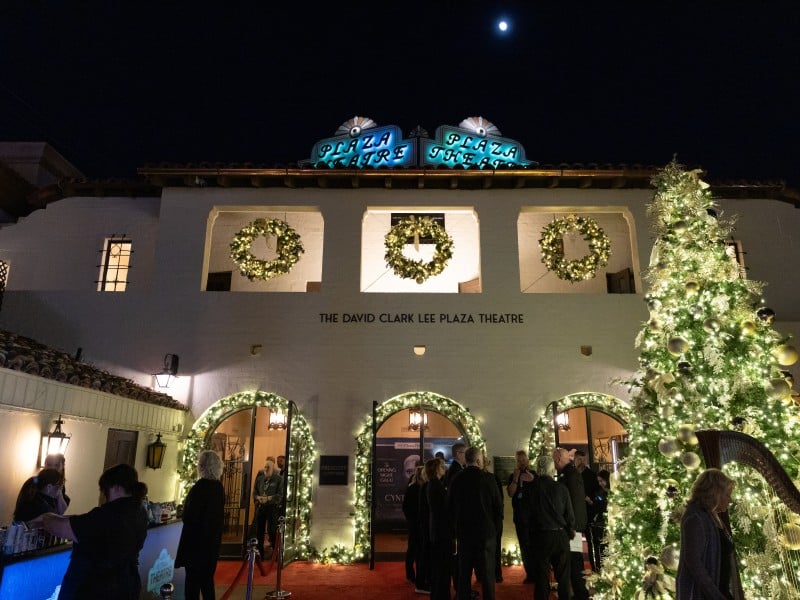
Ticket prices at the Plaza Theatre spark questions — and explanations
Residents raise questions about affordability as theater operators and city officials point to the economics of a small venue.

Plaza Theatre earns National Register of Historic Places designation
The 1936 Spanish Colonial Revival theater is the only known historic atmospheric theater in the Coachella Valley.