
City manager: ‘Hugely busy’ 2025 saw momentum built piece by piece
After a year of openings, emergencies and policy choices, City Manager Scott Stiles takes stock of Palm Springs’ trajectory.
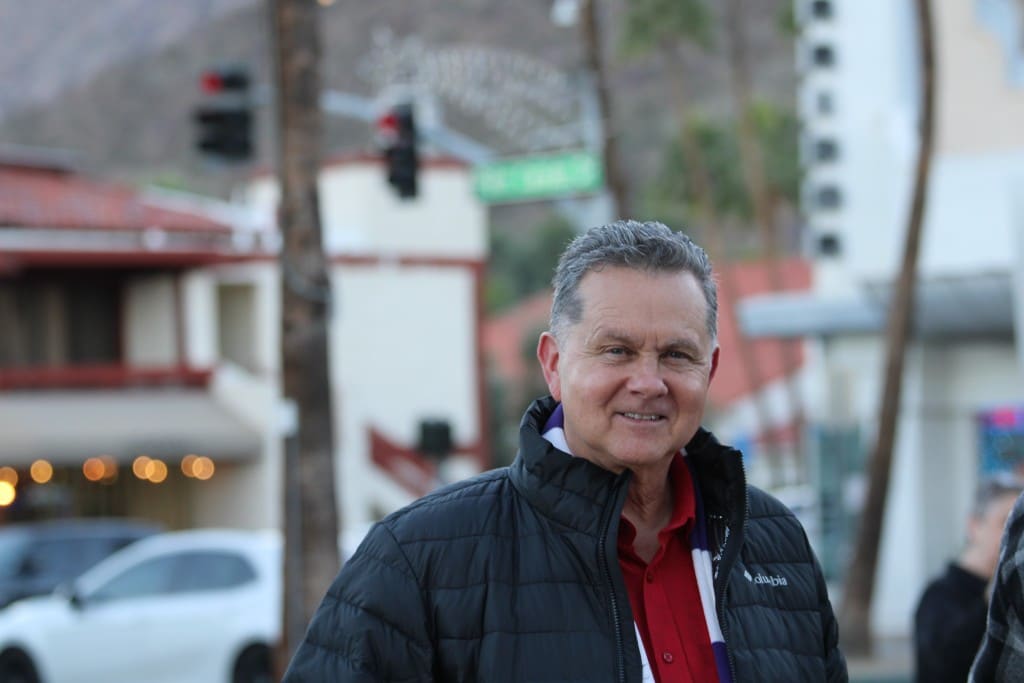
Palm Springs City Manager Scott Stiles describes 2025 not as a year defined by any single achievement, but by momentum.
“It was a hugely busy year,” he said in a Tuesday afternoon interview. “It wasn’t just completing some stuff. It was also really putting more stuff into place.”
Local reporting and journalism you can count on.
Subscribe to The Palm Springs Post
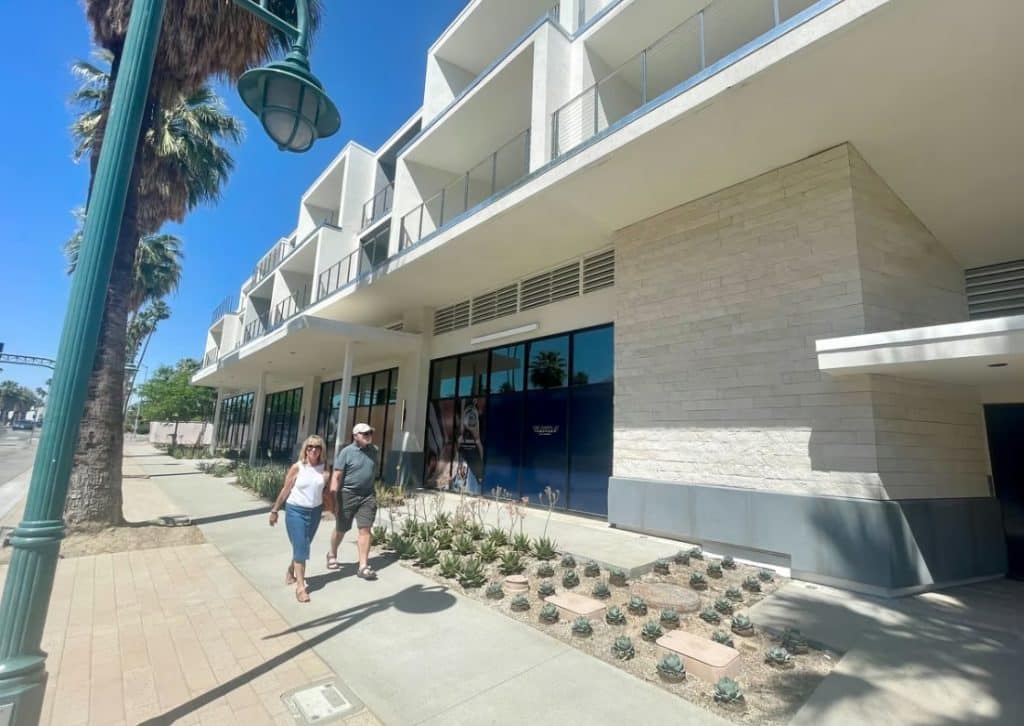
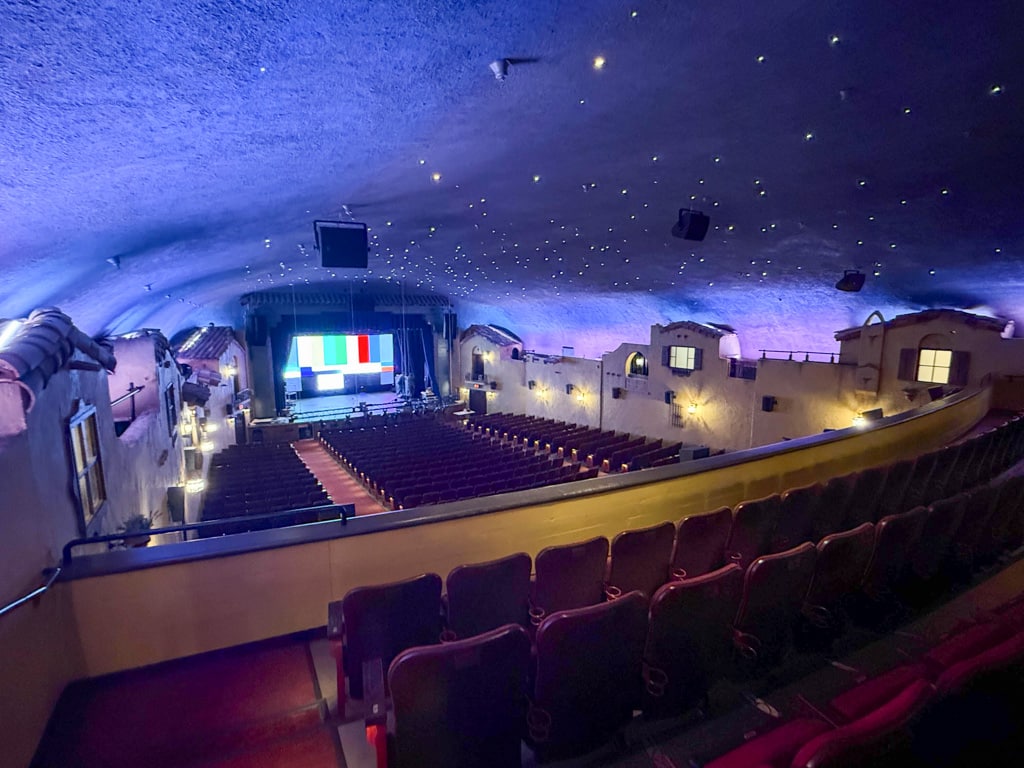
That sense of layered progress was visible most clearly downtown, where long-anticipated projects finally crossed the finish line. The opening of the Thompson Hotel brought new activity to a prominent corner of the city, while the reopening of the Plaza Theatre restored a cultural anchor that had sat dark for years. Stiles likened the building to “that missing tooth that was waiting to be redone.”
City engineering staff oversaw the Plaza Theatre restoration, a project that became a point of pride inside City Hall. Stiles recalled telling staff that the work would be something they could point to decades from now. “There’s not a lot of glory we get as city employees,” he said. “But you get glory in seeing this stuff get built.”
Beyond downtown, the year was marked by a steady accumulation of smaller but highly visible investments in neighborhoods. Three revamped playgrounds opened in 2025, and the city is on track to complete five playground renovations within a few years. The Aloe Palm Canyon affordable housing project also opened, a building Stiles called beautiful, particularly for its prominence at a gateway into the city.
Inside City Hall, the work of 2025 was less visible but no less consuming. The city approved a two-year budget during the first half of the year, a process Stiles described as one of the most time-intensive responsibilities of staff and council alike. “People don’t realize probably how much work goes into approving a major two-year document like that,” he said.
That budget process included a council retreat to align priorities and resulted in the formal adoption of a new reserve policy, requiring the city to maintain reserves equal to 20% of operating costs. Palm Springs ended the year with between $83 million and $87 million in reserves, along with roughly $50 million in unappropriated surplus.
The city also conducted quarterly financial reports for the first time, an added layer of transparency that early figures suggest showed hotel tax revenues holding steady.
“We have trade-offs in every budget,” Stiles said, “but we were able to protect our strategic reserves.”
Economic development was another area where planning gave way to implementation. The City Council approved an economic development framework in 2025 aimed at diversifying Palm Springs’ economy beyond tourism over the next several years, and added funding to the city’s Economic Development Office to support that work. Stiles pointed to the renovation of 40 to 50 businesses during the year as a sign of confidence.
“If people are investing in their property like that,” he said, “that means they have confidence in where the city is going.”
The city’s long-running hotel incentive program — allowing operators to receive rebates when they reinvest in their properties — remained part of that strategy. “That’s really important to keeping our inventory robust and fresh and up to date,” Stiles said.
Infrastructure improvements continued across the city as well — including along Indian Canyon near the golf course, where homeowners undertook major renovations. The cumulative effect, Stiles said, is noticeable.
“As you’re coming into the city now, especially off the 10 down into the 111, it looks a lot different.”
If redevelopment and investment defined one side of 2025, homelessness remained among the city’s most urgent challenges. The city’s Navigation Center operated at full capacity throughout the year, providing nightly shelter to more than 100 people and serving more than 62,000 meals since opening. Operating the facility costs roughly $4.5 million annually.
“Every night now, we have 123 people that have a roof over their head,” Stiles said. “They’re getting a meal, and they’re getting services that are helping move them into better situations.”
Stiles acknowledged that homelessness has not been solved, but said the city saw visible improvements, particularly in areas that previously had large encampments, including South Palm Springs and the Tahquitz Wash.
“I think everybody sees it,” he said. “That has to be better than just settling for everybody sleeping out in the wash when it’s 120 degrees.”
The year also brought moments of crisis that tested the city’s emergency response. A bombing at a fertility clinic drew national attention and required first responders to enter unstable buildings to recover embryonic materials.
“That was pretty heroic stuff,” Stiles said. “You don’t know what the conditions of those buildings are.”
The incident prompted internal reviews of the city’s emergency operations procedures and underscored Palm Springs’ national visibility. “When you say Palm Springs, everybody knows,” Stiles said.
Public safety continued to evolve in quieter but consequential ways. The Palm Springs Police Department established a real-time crime center in 2025 and expanded its use of drone technology, a move Stiles said has been accompanied by careful attention to privacy. The department maintains public records of all drone deployments.
“The chief and I talk about it a lot,” Stiles said. “They’re really trying to make sure they do it with all the best intentions.”
Transportation rose as a higher-profile concern for residents during the year, joining housing and homelessness near the top of the city’s issue list. The CV Link — while not a city project — opened 12 miles through Palm Springs, while work continued along Highway 111 and Vista Chino.
“It was a hugely busy year. It wasn’t just completing some stuff. It was also really putting more stuff into place.”
City Manager Scott Stiles
At the airport, all concessions were renovated in 2025, and capital improvements continued under the airport’s master plan. The city also moved forward with planning for a consolidated car rental facility and began exploring development potential on airport-owned land north of the existing terminal.
“Can there be office? Will there be logistics or professional positions that want to be located there?” Stiles said, citing modernization at the airport as a draw.
Affordable housing remained a through-line across departments. Multiple projects advanced in 2025, including a Gene Autry development expected to deliver about 150 units. For Stiles, progress in housing reflects political will as much as process.
“Affordable housing comes down to the policy of your city,” he said. “You have to have a council that wants to say it’s important.”
Looking back, Stiles said the concern entering 2025 was whether the city’s development pipeline was simply too full. Instead, staff delivered.
“We’re cranking out a whole bunch of stuff,” he said. “Our staff are doing really good work.”
He returned, in the end, to the people behind the projects.
“We really have a hard-working, dedicated group of city employees,” Stiles said. “You could see the pride on our folks in engineering when they watched the Plaza Theatre open. That’s what makes it worth it.”
THIS WEEK: OUR YEAR END SERIES
MONDAY: Our top 5 stories of 2025, according to the data
TUESDAY: Readers weigh in on their top stories of 2025, predict 2026’s news
TODAY: Palm Springs in 2025: Leaders look back
THURSDAY: Palm Springs in 2026: City Hall sets priorities
FRIDAY: Meet our 2025 Palm Springs Person of the Year
Author

Related Articles
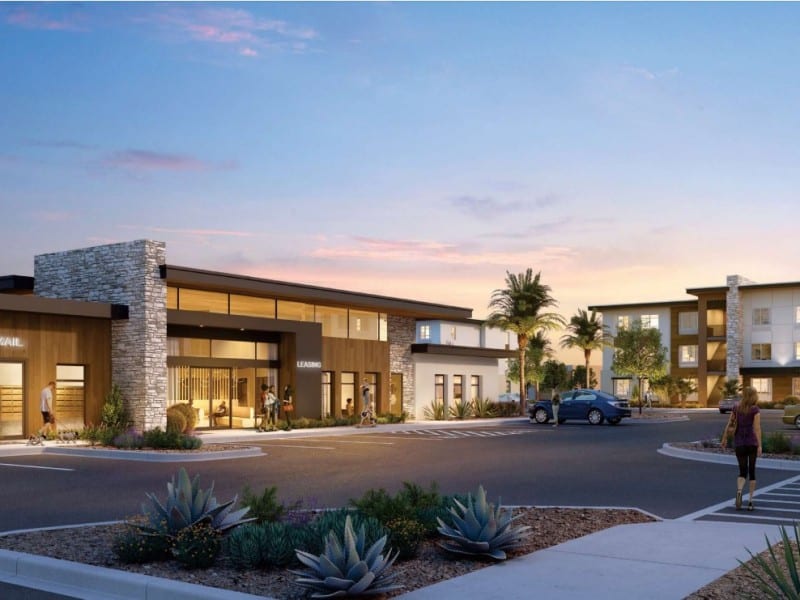
Palm Springs council to weigh appeal, funding for two affordable housing projects along West San Rafael Drive
Neighbors are challenging an 82-unit development while both that project and a separate 110-unit complex are being considered for city financial assistance.
Public Arts Commission to weigh Village Green relocation for Bogert statue
The proposal revives a long-discussed plan to find a new public home for the former mayor’s statue, removed from City Hall in 2022, with the Historical Society offering to cover all relocation and maintenance costs.
Work to launch new convention district moves forward after council approves $1.25M in design contracts
The work will shape urban connections, branding and future upgrades as part of a $135 million convention center modernization.