
An ally for all: New superintendent brings empathetic leadership to diverse district
‘I’ve always had this thing about caring for people. That’s just how I’m wired,’ says Dr. Marcus Funchess, who started as Palm Springs Unified School District’s superintendent on July 1.
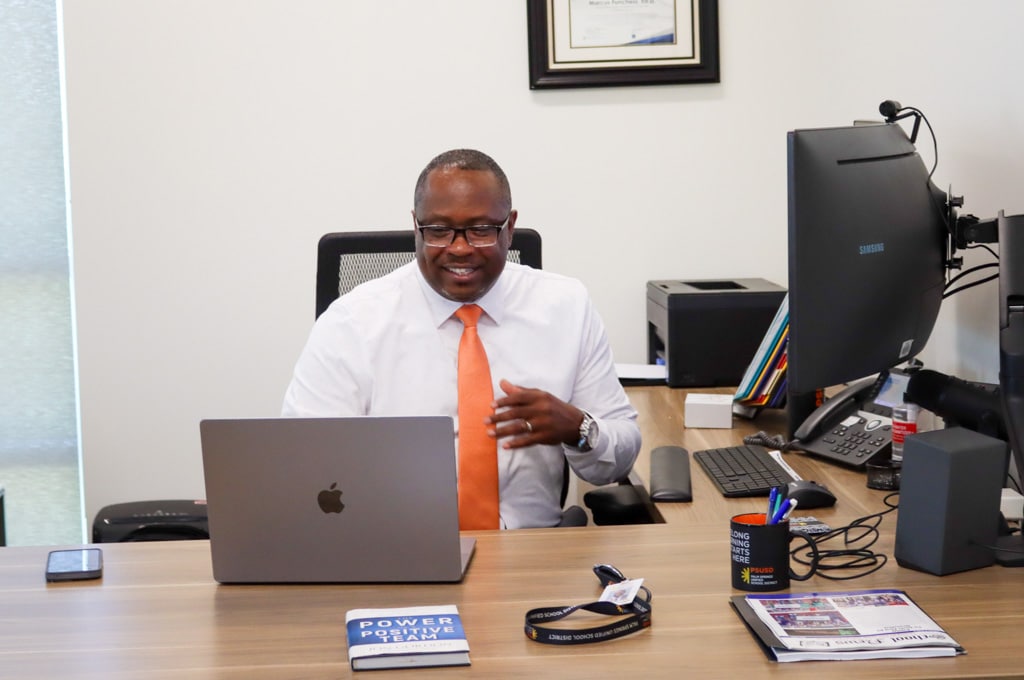
Dr. Marcus Funchess still remembers being the shy, introverted kid who wouldn’t raise his hand in class but always made sure no one was left out during kickball games.
That instinct to care for others, born on the playgrounds of Riverside elementary schools in the 1970s, now drives the leadership philosophy of Palm Springs Unified School District’s new superintendent as he takes the helm of a district serving nearly 20,000 students across the western Coachella Valley.
Local reporting and journalism you can count on.
Subscribe to The Palm Springs Post
“If someone wasn’t chosen for a game, I’d be the one to choose that person or say, ‘Hey, why aren’t they playing? Let’s get them in here,'” Funchess said during an interview in his first week on the job.
Funchess, 52, brings nearly 30 years in education to PSUSD, where he becomes the district’s first Black superintendent. His journey from a quiet child in Riverside to leading one of California’s most diverse school districts reflects both personal growth and an unwavering commitment to inclusive education.
From Mississippi to California
Born in Jackson, Miss., Funchess moved to Riverside at age 1 when his father, a preschool teacher, decided to pursue his career in California. The year was 1973, and like many African American families, the Funchess family sought opportunities away from the South.
“My dad had this excellent idea of coming out to California to teach,” Funchess said. “They wanted to get away from the South and come out to California for a new life, a new area.”
Growing up as the middle child of three on Riverside’s east side, Funchess witnessed the challenges facing less affluent communities, including gang violence and young people entering the criminal justice system. Initially, he thought he might become a probation officer to help keep people out of jail.
“But then it dawned on me in college, it’s almost too late because they’re in the system,” Funchess said. “Education is a way to really begin to help shape the hearts and minds of young people so that they see themselves as someone who can do well in life.”
Choosing education work
That realization led him to teaching, following in his father’s footsteps while drawing on his mother’s natural ability to work with young people. After earning his doctorate in educational leadership from the University of Redlands, Funchess spent more than 25 years in San Bernardino City Unified School District, rising from elementary teacher to assistant superintendent of human resources.
His experience in San Bernardino, serving high-needs schools with significant English language learner populations, mirrors many of the challenges and opportunities he sees in Palm Springs. But Funchess rejects the notion that socioeconomic challenges should limit expectations for student achievement.
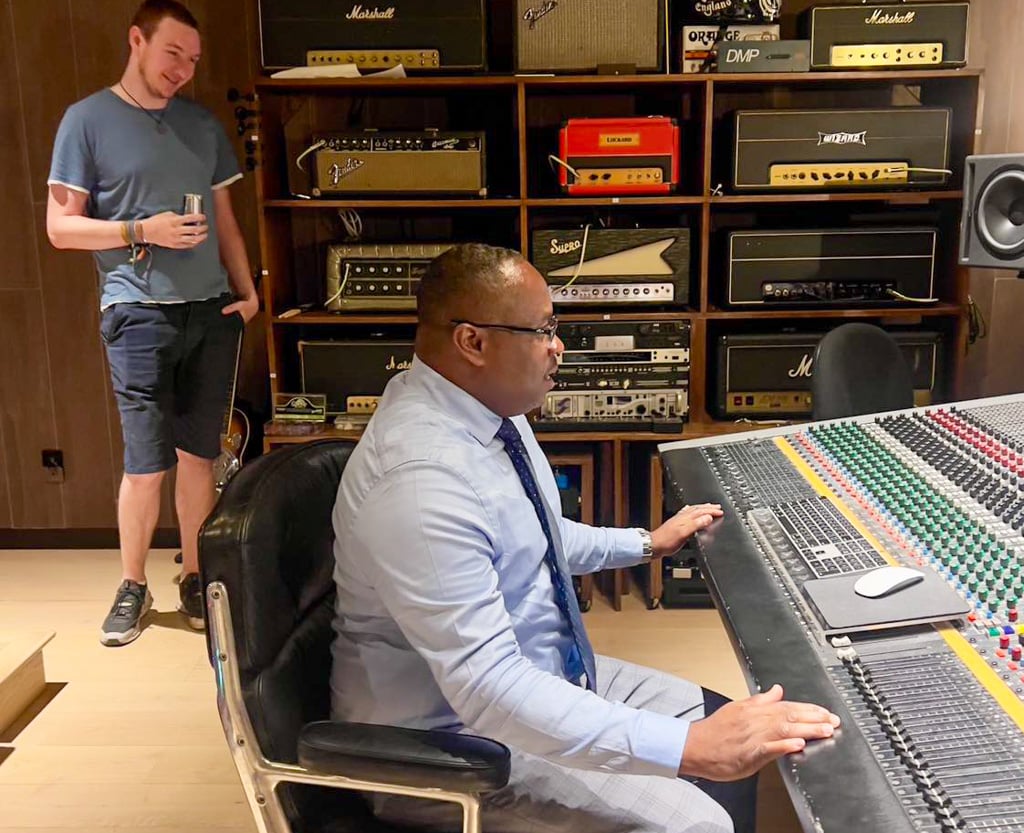
“Sometimes people bring in that talking point because it allows people to have an excuse for why we’re not doing better,” Funchess said about the district’s high percentage of students qualifying for free or reduced-price lunch. “That notion of socioeconomic being a barrier to success is only truthful if we allow it to be.”
He points to his success in San Bernardino, where he helped schools with similar demographics exceed expectations when educators maintained high standards and provided proper support.
“I’ve seen us be able to overcome some of those notions about young people from less affluent areas, African American students not being able to achieve,” Funchess said. “I’ve seen the exact opposite when our expectations and standards are where they need to be.”
Building bridges through listening
Funchess’s leadership style centers on what he calls a “people first, process second” approach. Rather than immediately implementing changes, he plans to spend his first six months learning about the district’s people and systems before making major decisions.
“Before you can change a system, you need to understand it, because systems are put in place by people, and the people put those systems in place for a reason,” he explained. “If I spend that time up front getting to know people and asking the right questions about the processes they have in place, I can get a better understanding of why we have the systems we have.”
This approach extends to his strategy for handling community opposition or criticism. As both an educator and a minister outside of work, Funchess has learned the value of listening first.
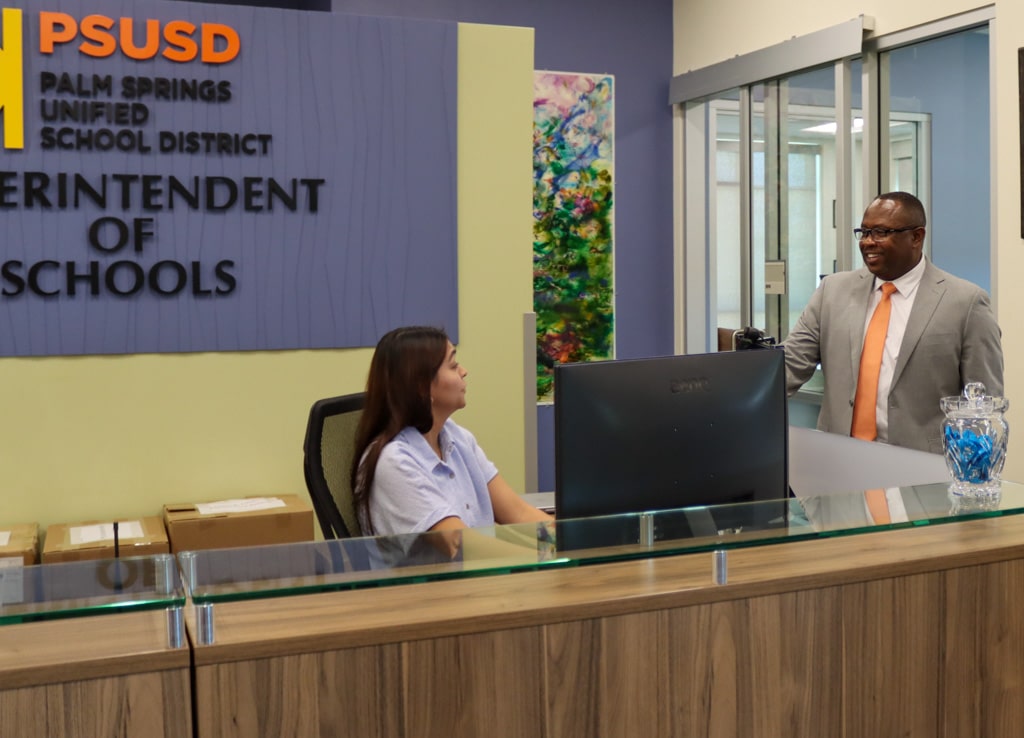
“One of my strategies is to at least listen, because many times people are misinformed or they’ve had a miscommunication of some sort,” he said when asked how he would respond to those who are critical of Palms Springs more progressive values. “If I listen, I might be able to find something to help me understand them and then be able to talk in such a way to help them understand what we’re trying to do.”
Funchess acknowledges that building trust will be particularly important with three communities: African American families concerned about hate speech and feeling valued in schools, Latino families adjusting to a non-Spanish-speaking superintendent after his predecessor, and LGBTQ+ community members who are a large part of the district’s staff.
As for those who may attack the LGBTQ+ community, he said his ministerial background — rather than creating conflict with the those who disagree with the district’s strong LGBTQ+ advocacy — actually reinforces his inclusive approach.
“I think that’s what makes me the person that I am: accepting, loving, caring, and someone that advocates for others,” Funchess said. “I think the LGBTQ+ community will understand that I’m probably going to be one of their biggest supporters.”
Fatherhood and the bigger picture
His personal experience as a father informs his patient leadership style. As he watched his three children, ages 19, 24, and 27, navigate an expensive housing market and challenging job environment, it has given him perspective on the obstacles facing today’s young people.
“It is tougher than it was when we were kids,” he agreed when the topic came up. “I try to be patient. They’ll find their way.”
For the broader Palm Springs community, including residents without children in the schools, Funchess argues that investing in education serves everyone’s interests.
“These scholars here are our future in Palm Springs,” he said. “What we do with these young people here will determine what happens out in this community. If we’re educating well, the Palm Springs community will be well.”
Building a shared vision
Looking ahead to his first year, Funchess has set three specific goals: developing a shared vision that includes voices from across the community, raising standards and expectations for academic excellence among all student groups, and creating a positive atmosphere where people feel good about the district’s direction.
“It’s hard to capture in quantitative data — it’s more qualitative,” he said about the third goal. “When you talk to people, they’re like, ‘Hey, do you see what Palm Springs Unified is doing?'”
The shared vision process will be crucial to his long-term success. Drawing from his experience in San Bernardino, where he helped establish district-wide language referring to students as “scholars,” Funchess believes common terminology and goals create ownership across the community.
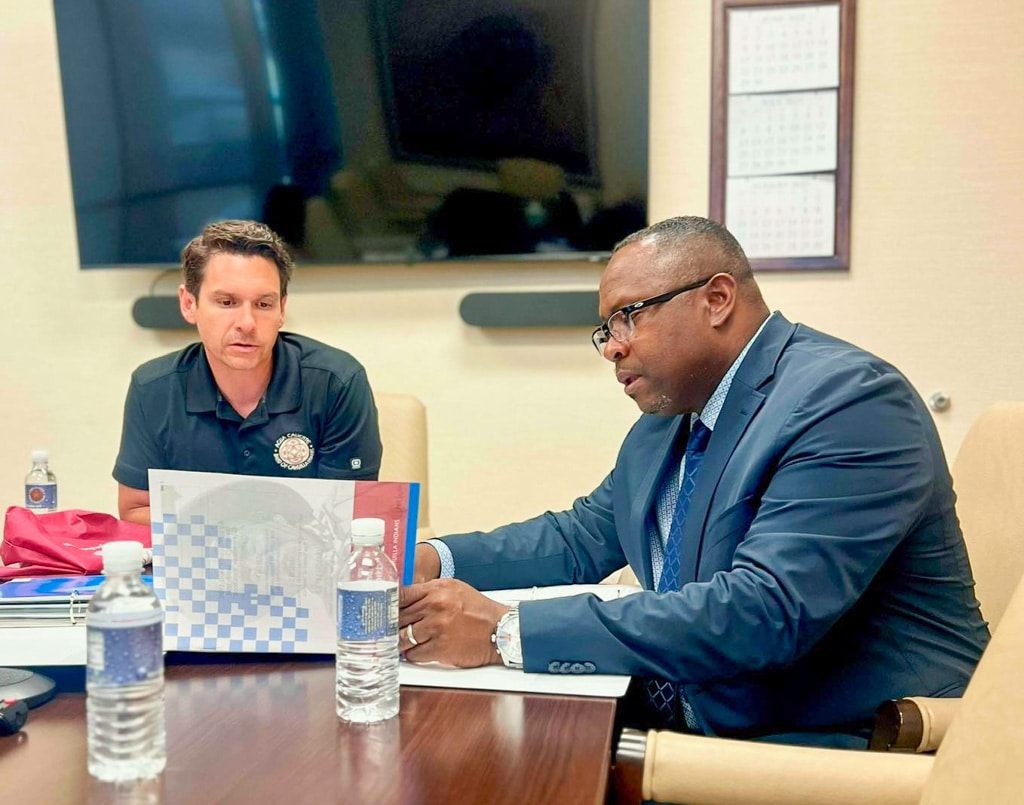
“When you start hearing everyone talk that same language, there’s no better feeling than that for an administrator,” he said. “A shared vision points the direction toward the future, and if it’s done well, everyone begins to speak that language.”
His entry plan includes meeting with community members, elected officials, and parents in the coming weeks to gather what he calls “deep learning” through one-on-one conversations.
“The deep learning comes when you talk to a senior in high school who’s been through the system,” Funchess said. “The deep learning comes when you ask people to give you their raw, unfiltered thoughts about the institution that they call the school district.”
As he settles into his new role, Funchess carries forward the same instinct that made him include left-out classmates in playground games decades ago. Now, instead of kickball teams, he’s working to ensure every student, family, and community member feels valued and included in Palm Springs Unified’s future.
“Even though I was kind of shy and introverted — I still am today somewhat — my job calls for me to be out there talking,” Funchess said. “I’ve always had this thing about caring for people. That’s just how I’m wired.”
Author

Related Articles

Former COD president sues district, board chair alleging discrimination, retaliation, financial misconduct
Laura Hope claims gender bias, a hostile work environment and whistleblower retaliation, specifically naming current board member and former president Joel Kinnamon.
Latest Measure J project will see fourth wellness center coming to local elementary school
The new wellness center at Cahuilla Elementary should be up and running by the end of this school year, and will mark the fourth and final facility of its type funded by the city tax.
Meet Ellen Goodman, our Palm Springs Person of the Year for 2025
As executive director of The Foundation For PSUSD, Goodman has spent a decade building programs that reveal the Coachella Valley’s children — and its future — to a community that often overlooks them.