
Longtime airline employee reflects on watching PSP go from six-seaters to 3.2 million passengers
From handwritten tickets and terrazzo flooring to a modern facility serving 3.2 million passengers, Gina Russo-Hartman has seen it all at Palm Springs International Airport.
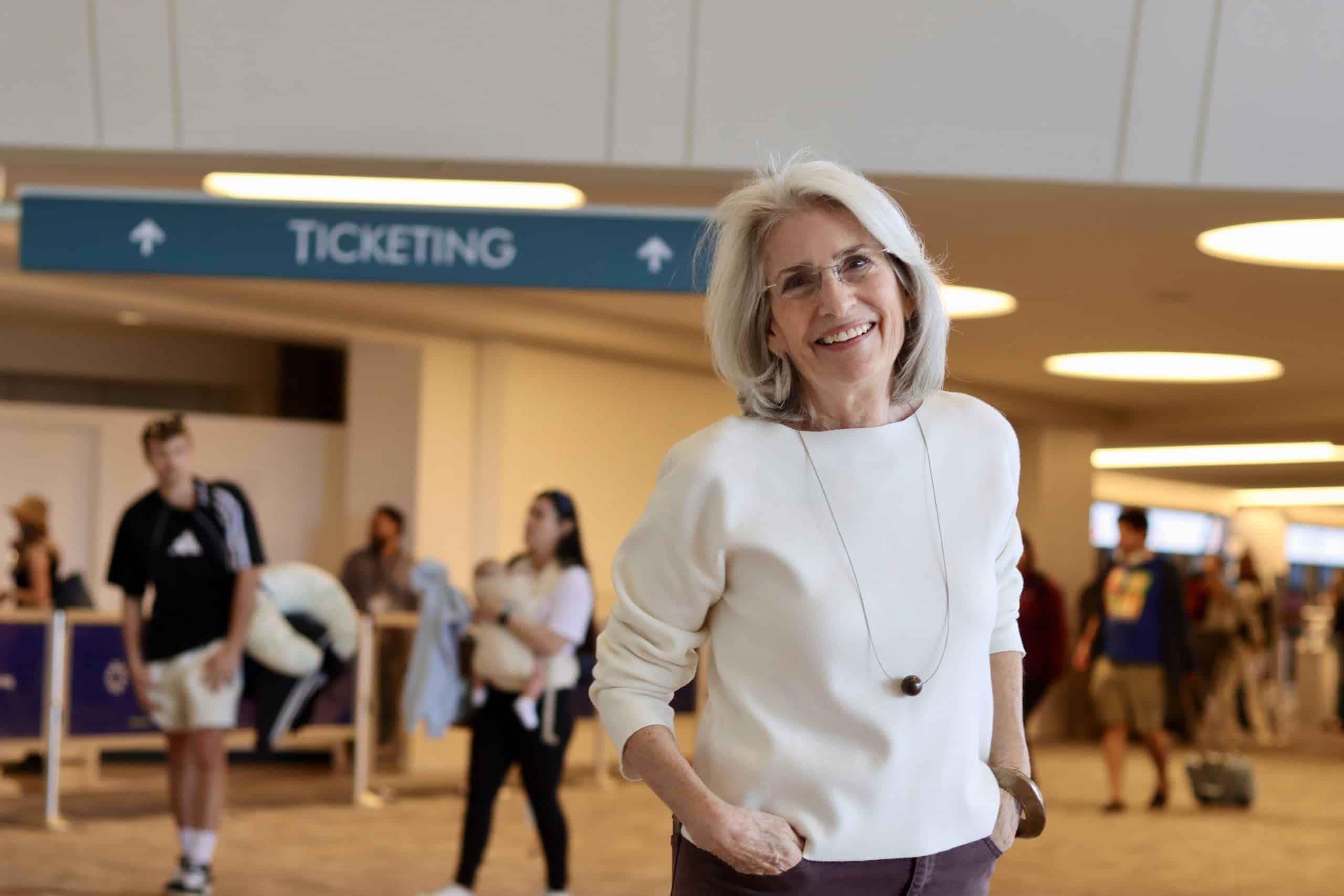
For nearly half a century, Gina Russo-Hartman did not have to choose a morning outfit.
From her school days at St. Teresa Catholic School in Palm Springs to her 47-year career at the Palm Springs International Airport, a uniform was her constant. Now, as she begins retirement, she faces an unexpected challenge: choosing what to wear every day.
Local reporting and journalism you can count on.
Subscribe to The Palm Springs Post
The airport has been part of Russo-Hartman’s life since childhood. She grew up about three blocks away, playing in the fountain out front.
“My earliest memory of the airport was my mother dressing us up to meet my dad at the little wooden deck of the airport,” she said. “We met him on his flights coming from Los Angeles on Bonanza airlines.”
When her professional career began in 1978, the aviation industry relied on manual precision rather than digital algorithms. Working for Sun Aire Lines, Russo-Hartman managed reservations using three-foot by three-foot notepads and hand-wrote tickets.
“As people called in, we wrote down their names for the flight,” she said. “They didn’t get a confirmation number, they just trusted that we had their name on the manifest.”
The fleet consisted of six- and eight-seater Cessna aircraft flying routes to Borrego Springs and San Diego, then eventually 18-seater planes so small passengers couldn’t stand upright on board.
She watched as the airport went from about six flights a day to one flight every hour. She also witnessed the city’s transition from a strictly seasonal town to an almost year-round destination.
“It pretty much closed down in the summer,” she said. “Now we continue flights in the summer.”
As the city’s population and tourist reputation grew, the airport expanded to meet higher demand. Baggage claim used to be outside in the heat but was eventually enclosed and replaced by the car rental area. The airport added new restaurants, built the Sonny Bono Concourse, and modernized the ticket counters.
Russo-Hartman’s career also spanned consolidations in the airline industry as carriers like TWA, Air California, and Western were merged into or acquired by larger airlines like American and Delta. Her own professional path led her through Sky West for 33 years and a stint with American Eagle before she spent her final decade with Alaska Airlines.
The most significant changes in her career followed the Sept. 11 terrorist attacks. Before 9/11.
“There was no real security screening,” she said. “They would look in your purse, but people were able to carry [small] knives and scissors and all of that.”
Afterward, security checks became much more strict, friends and family were no longer allowed past the checkpoint, and employee areas became more secure.

The airport’s current growing pains are a direct result of its success. The airport reported passenger numbers hitting records of 3.2 million annually, and the existing facilities need to expand to meet that growth, particularly at baggage claim and parking.
To address this, the Palm Springs City Council last year approved a master plan to help the airport accommodate an estimated 6.4 million passengers by 2042 by adding seven additional gates.
Travelers will also see a return to the airport’s roots: the original terrazzo floors Russo-Hartman remembers from the 1966 Wexler terminal are slated to make a return.
With construction looming, Russo-Hartman remains a staunch defender of the airport’s character, especially its indoor-outdoor layout and views. “I’ll miss it all,” she said. “I love arriving on a flight and then walking into the lobby and looking out on the mountains… it’s so spectacular.”
Retirement will not find her idle. Without a 4 a.m. wake-up call, she can now spend more time dancing and enjoying the city. She also plans to use the benefits she accrued as an airline employee to travel the world with her 10-year-old granddaughter.
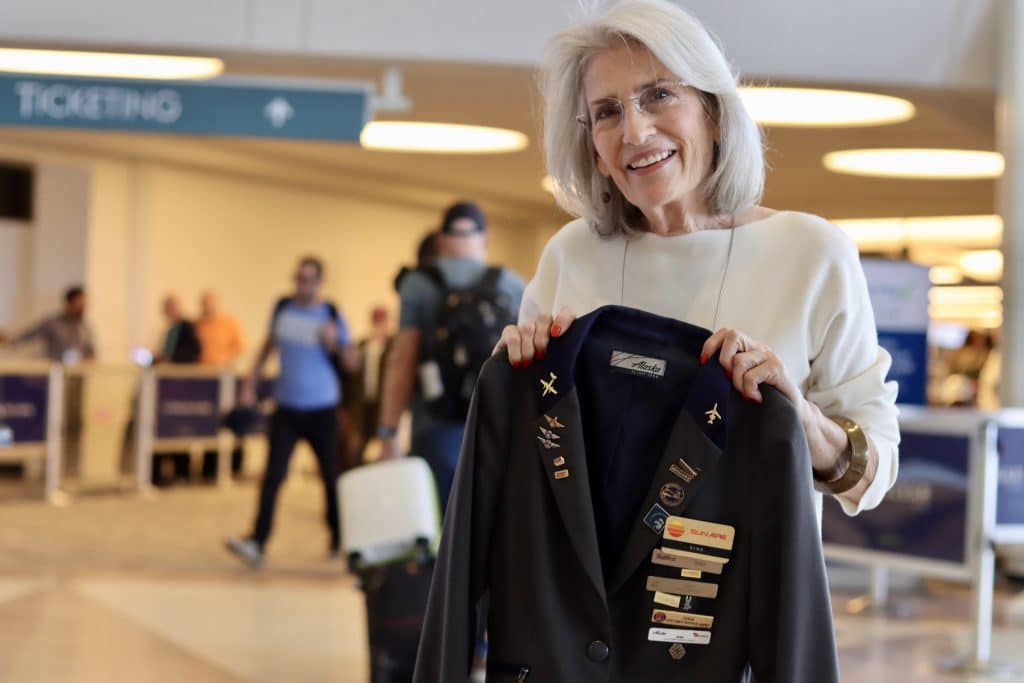
“My son…has traveled all over the world,” she said, and she wants the same for her granddaughter. Russo-Hartman, her son, and her late husband, who died in 2015, enjoyed seeing the sights in Africa, Asia, and Europe.
Up next on her bucket list: Japan, Korea, the Galapagos Islands, South America, and exploring more of Europe.
While she is stepping away from the counter, she is considering staying involved by attending community meetings to ensure the airport’s future growth respects its iconic mid-century aesthetic.
She will miss her coworkers, talking to new people every day, and the airport itself.
“I get told every day what a beautiful airport we have and how stress-free it is compared to where [passengers] were coming from,” she said.
Author

Related Articles
Palm Springs Parks Foundation launches community conversation on reimagining city’s parks
At its first listening session, the newly-launched non-profit heard calls for shade, water play, quiet spaces, and parks that reflect the city’s identity.

2025 In Memoriam Part 2: Looking back on politicians, entertainers, cultural pioneers we lost
From mayors and philanthropists to adventurers and acclaimed actors, the Coachella Valley said goodbye to remarkable individuals in 2025 whose contributions continue shaping our desert communities and cultural identity.

2025 In Memoriam Part 1: Looking back on artists, entertainers and cultural pioneers we lost
From a pioneering police novelist to a game show legend and a rock icon, Bruce Fessier looks back as the desert community mourned the passing of luminaries who shaped our cultural landscape.