
Does Downtown Palm Springs have too much parking, or not enough? Council discusses study results
Recommendations under consideration include better signage to available parking, consistent time limits, improved garage maintenance, and programs to steer employees to underused garages.
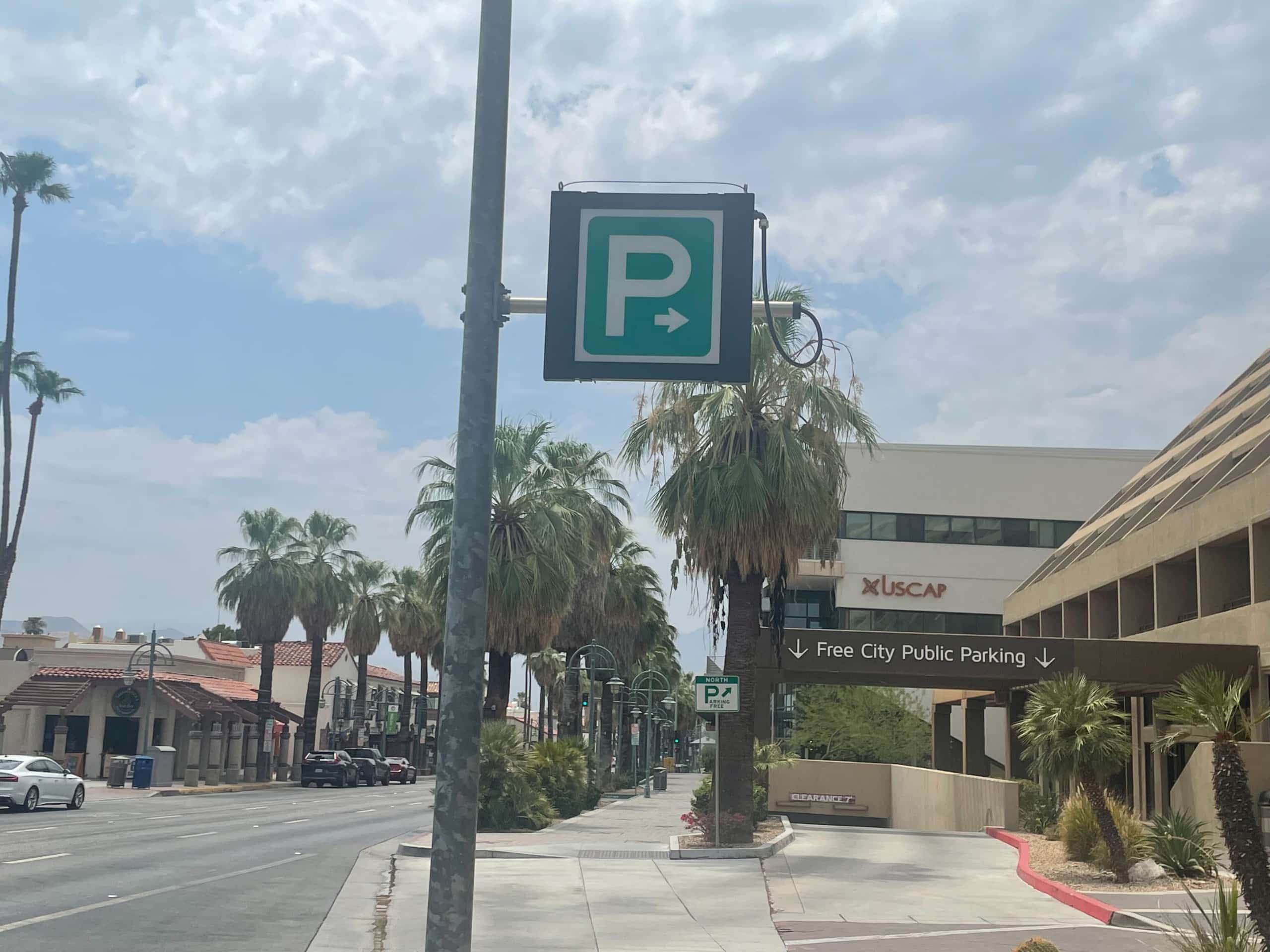
The Palm Springs City Council discussed next steps for alleviating parking stress in downtown Wednesday, following a study that found street parking is in high demand while public parking garages are often underutilized.
Palm Springs Resorts commissioned DIXON Resources Unlimited to evaluate the parking situation in 2024. The study analyzed about 2,286 parking spaces in the downtown area in January and May, and found an average occupancy rate of 29% across all parking facilities.
Local reporting and journalism you can count on.
Subscribe to The Palm Springs Post
The Downtown Parking Garage on Museum Way was at just 15% capacity during the data collection periods, while on-street parking along Palm Canyon Drive and Indian Canyon Drive averaged 47% occupancy, with some areas reaching 95% on weekends.
The study focused on on-street and off-street parking inventory, occupancy rates, community outreach, and field assessments of existing parking signage and enforcement. One of the key findings: While it might feel like there’s not enough parking in Downtown Palm Springs when you’re trying to find a street parking spot along Palm Canyon Drive, there’s usually plenty of spots open in parking garages.
Overall recommendations to improve the downtown parking situation include improving signage that guides people to available parking, establishing consistent time-limit policies, improving maintenance issues in the public garages, and creating programs that encourage employee parking in the underutilized garages.
A city staff report broke down specific recommendations into short-term (0-12 months), mid-term (1-3 years), and long-term (three-plus years).
Short-term options include upgrading existing garages, completing repairs at the Belardo structure, and improving signage directing drivers to off-street and underground parking such as the Hyatt Garage. Mid-term ideas include an employee parking permit program and garage improvements to enhance user experience, while long-term options could involve demand-based pricing during special events and more advanced parking management systems.
The City Council directed city staff Wednesday to start with low-hanging fruit such as improving wayfinding downtown, while also progressing on other short-term options like parking garage improvements.
Councilmembers Ron deHarte and Jeffrey Bernstein will be on a subcommittee to look into signage and wayfinding improvements, then will report back to the full Council at a later date. Councilmembers also requested an assessment of existing parking spots, such as how many are ADA compliant and how many have a 20-minute parking limit or a three-hour time limit.
The hope is that starting with these shorter-term options could alleviate some of the current parking stressors downtown before the city has to move onto potentially larger changes such as extending the three-hour street parking limit to 24 hours a day, instead of just between noon and 6 p.m. as it currently stands.
During public comments at Wednesday’s meeting, Joy Brown Meredith, president of Main Street Palm Springs and owner of Crystal Fantasy, suggested extending the three-hour time limit as a possible solution before trying out more regulations such as separate employee parking, especially given the study’s finding that there is plenty of parking.
Other downtown business owners said they believed the study’s findings might have been different if it was conducted during peak season.
Author

Related Articles
Palm Springs boards, groups to discuss bike parking expansion, Tramview Heights plan this week
Five meetings this week also cover downtown safety upgrades, a Tram View Heights update and a drop in airport noise complaints.
Palm Springs sets community meetings on elected mayor question as advocacy group presses for legal report
City attorney says no comparable city model exists for switching to a directly elected mayor as seven public sessions begin July 22.
Palm Springs City Council approves new palm tree skirt removal policy
Officials will prioritize frond removal in high-traffic commercial areas, with exceptions for historic sites and habitat concerns raised by wildlife advocates.