
Palm Springs Parks Foundation launches community conversation on reimagining city’s parks
At its first listening session, the newly-launched non-profit heard calls for shade, water play, quiet spaces, and parks that reflect the city’s identity.
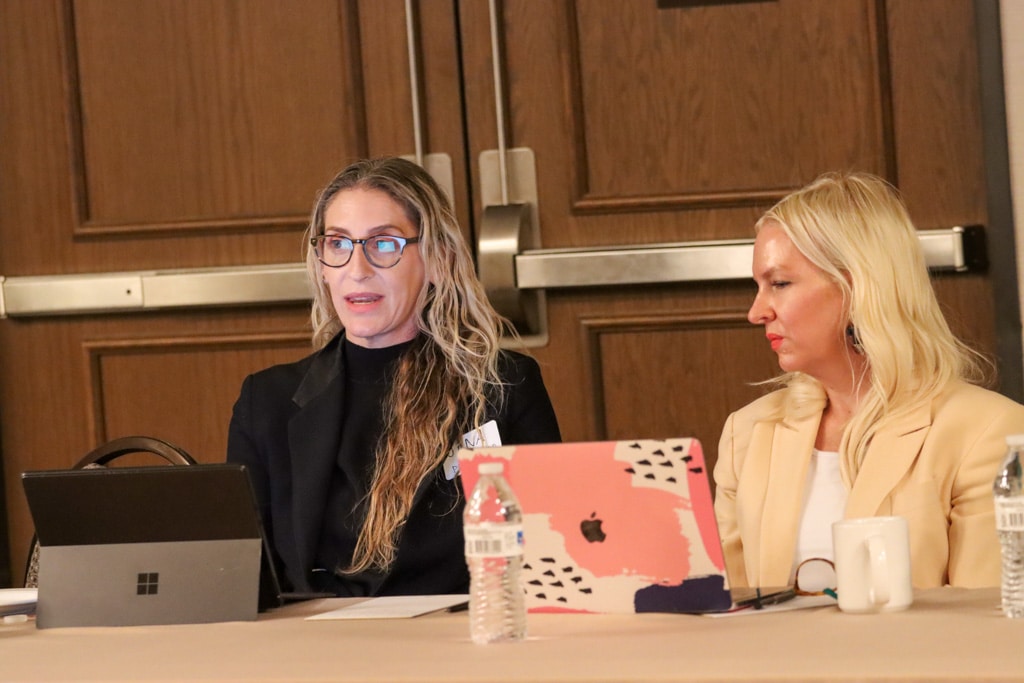
The Palm Springs Parks Foundation on Friday morning took its next step by asking residents a central question: What do people want from their parks?
About two dozen people gathered at the Hilton Palm Springs for the nonprofit’s first community listening session, an event organizers said will be the start of an ongoing conversation about how the city’s parks and recreation facilities can better serve a wide range of needs — from families seeking shade and water play to residents looking for quieter spaces.
Local reporting and journalism you can count on.
Subscribe to The Palm Springs Post
“Parks for me are not just beautiful spaces. They are not just places for recreation and activity, but they’re also places for me where I can be quiet, where I can be pensive, thoughtful, I can read, I can write, I can do art,” said Ellen Goodman, who moderated the session and previously served seven years on the Palm Springs Parks and Recreation Commission.
“I think that part was always missing for me in parks, because every time I visited a park as a little person, it was always around recreation and activity. And then I grew up thinking parks were about recreation and activity, and I realized that parks are so much more.”
The Parks Foundation, which established its 501(c)(3) nonprofit status about a year ago, aims to serve as a fundraising partner for the city’s Parks and Recreation Department while collaborating on projects such as shade structures, water features, and park programming. Three of the four current board members — Jana Fitzgerald, Katherine Hatch, and Kelly McLean — attended the session. The other, David Feltman, was traveling.
“It’s really a partnership, and it’s not uncommon. Parks foundations exist all over the United States,” Goodman said, noting the organization plans to work with a national parks foundations association and explore sister-city relationships to share best practices.
The listening session was intentionally structured to resemble a public comment period, with board members and city officials present only to listen rather than respond. Goodman encouraged participants to offer candid feedback, asking them to “shed your skin” and speak honestly about their experiences with local parks.
Early in the discussion, designer Tom Dolle, who has worked on efforts to improve Sunrise Park, framed parks as destinations rather than leftover spaces.
“I see parks as the potential to be actually very inspiring spaces, as well as recreation,” Dolle said. “It should be a place you want to go because it’s such a cool place to be, and I don’t feel that in most of our parks here.”
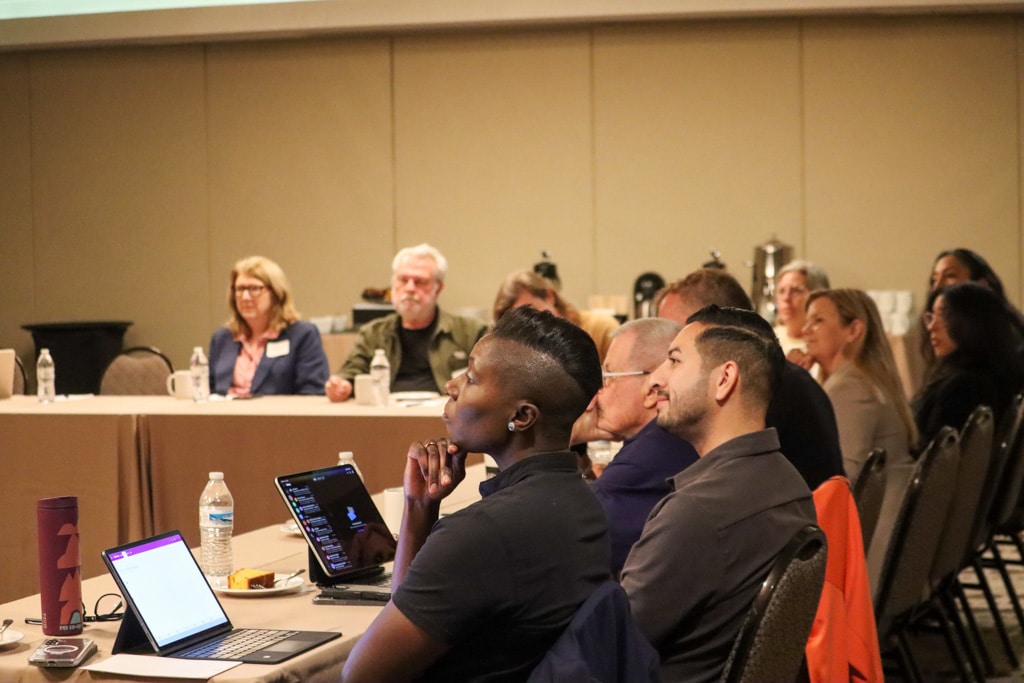
Dolle cited examples such as the High Line in New York and Millennium Park in Chicago, describing parks that draw people because they offer more than traditional recreation. He said Sunrise Park, in particular, could serve as a model.
“We have an opportunity,” Dolle said. “Sunrise Park is an ideal example of one that has the potential to be something that people would want to go to because it’s a cool place to be, and that’s what we don’t have.”
He also argued that Palm Springs’ architectural identity should be reflected in its public spaces.
“We have such a rich architectural heritage here that should be represented in our public spaces too,” Dolle said. “So it’s not just about building things and putting things in the parks, but about thinking about, are we creating a really beautiful, architecturally significant addition to the city?”
Gary Armstrong, chair of the city’s Public Arts Commission, supported the idea of parks that integrate art and recreation, citing an example from Playa Del Rey that combined natural areas, sports fields, water features, a stage, and playgrounds.
“I think for me, the vision of the park is really bringing the arts in the park as well as the facilities for the kids of different ages,” Armstrong said.
Armstrong also raised concerns about equity and access, questioning whose priorities should guide park investments.
“Palm Springs is a destination. Let’s have a destination park that people want to come to, that you don’t need to have children or even a dog or even play pickleball. It’s just, you come to Palm Springs, you need to go to this park.”
— Palm Springs Parks Foundation board member Kelly McLean
“Historically, parks were created for lower and middle income families. Upper income families have their own backyard, or they have their estate gated community,” he said. “And so I think a lot of the things that historically Palm Springs has done in architectural preservation may not be the value for a lower income family. Their value may be shade or accessible water. They want to be able to take their kids there and play.”
Franchesca Forrer, who was born and raised around parks in the Florida Everglades, suggested the two perspectives could be balanced.
“I think parks have to be two things, I think both statements are true and both I think can happen. We can have things that are really tied to our unique architecture and granted unique history, but then are also really respectful of those who probably are going to use it and rely on it,” Forrer said.
She added that park design should engage all the senses through native landscaping and thoughtful planning.
“I think for me, in connection to the arts, all senses have to be alive in parks,” Forrer said. “The minute you walk in, you know you’re someplace special.”
As the discussion continued, several participants pointed to practical gaps in Palm Springs parks, particularly the lack of shade and water play areas. Multiple speakers said families often travel to other desert cities to find those amenities.
Hatch shared her own experience after moving to Palm Springs during the pandemic.
“I moved here during Covid while I was pregnant with my third son, and we were really dependent on the parks during Covid because there was little else to do,” Hatch said. “I was really struck by the lack of water and shade, and I found myself driving to other desert cities.”
“And not everyone can do that,” she added. “So it’s really my goal, especially with water play, to try and bring that to the parks here, so that everyone who lives here can do that here in Palm Springs.”
McLean, who grew up in Palm Springs and returned in 2008, said the city has begun to place more emphasis on parks in recent years, but argued the moment calls for broader thinking.
“I think for the first time ever since being back in the desert, I want to compliment the city and some of the city officials who have really moved the needle in terms of just parks being kind of on the radar,” McLean said.
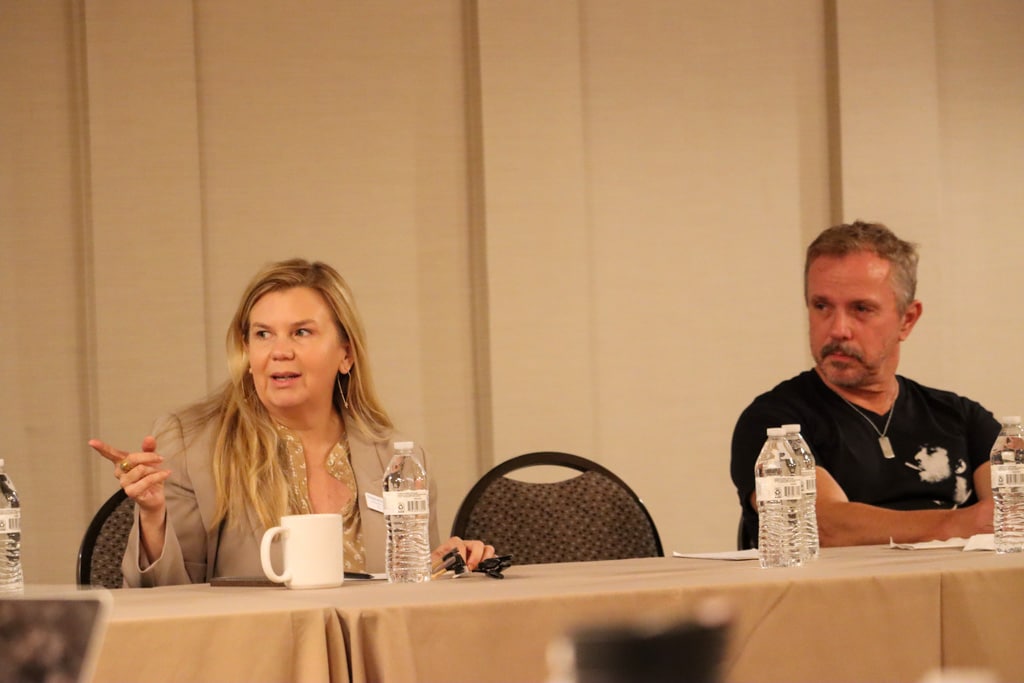
She said recent playground updates have helped build public interest and trust.
“There’s already a feeling of excitement around the parks, because playgrounds have been updated, and people feel like we’re paying attention,” McLean said. “So I think what’s exciting about the Parks Foundation is we’re now partnering with the city and have the ability to really think bigger.”
McLean said the goal is to imagine a park that appeals to residents and visitors alike.
“Palm Springs is a destination. Let’s have a destination park that people want to come to, that you don’t need to have children or even a dog or even play pickleball,” she said. “It’s just, you come to Palm Springs, you need to go to this park.”
The Friday session was the first of several planned listening sessions that will take place across different neighborhoods and community groups in Palm Springs.
“You are our beta test, in a sense,” Goodman told participants, explaining that future sessions will aim to capture perspectives from across the city’s demographic spectrum.
The foundation is still developing a memorandum of understanding with the city, and Goodman said feedback from the listening sessions will help shape that agreement. After the sessions conclude, the foundation plans to compile a report that will inform its strategic plan.
“The foundation is only in its first year,” Goodman said, asking for patience as the organization reviews input over the next 60 to 90 days. “It takes some time to actually pull all of that together.”
The Parks Foundation has also opened applications for new board members as it prepares to expand its fundraising and community engagement efforts. For more information on the foundation, turn here. For an application to serve on its board, fill out this form.
Author

Related Articles
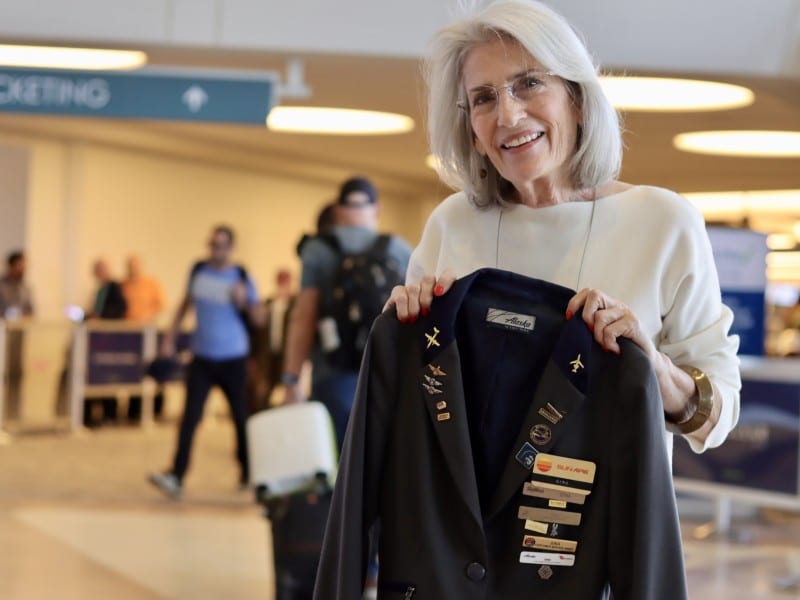
Longtime airline employee reflects on watching PSP go from six-seaters to 3.2 million passengers
From handwritten tickets and terrazzo flooring to a modern facility serving 3.2 million passengers, Gina Russo-Hartman has seen it all at Palm Springs International Airport.

2025 In Memoriam Part 2: Looking back on politicians, entertainers, cultural pioneers we lost
From mayors and philanthropists to adventurers and acclaimed actors, the Coachella Valley said goodbye to remarkable individuals in 2025 whose contributions continue shaping our desert communities and cultural identity.
2025 In Memoriam Part 1: Looking back on artists, entertainers and cultural pioneers we lost
From a pioneering police novelist to a game show legend and a rock icon, Bruce Fessier looks back as the desert community mourned the passing of luminaries who shaped our cultural landscape.