
2025 In Memoriam Part 1: Looking back on artists, entertainers and cultural pioneers we lost
From a pioneering police novelist to a game show legend and a rock icon, Bruce Fessier looks back as the desert community mourned the passing of luminaries who shaped our cultural landscape.
There was a time when the Coachella Valley was home to the nation’s greatest authors: Truman Capote, Ray Bradbury, Sidney Sheldon, Harold Robbins, Anne Rice. Even Norman Mailer wrote a controversial, career-changing novel about Palm Springs, “The Deer Park,” after taking a 20-minute drive through the desert town shortly after dawn in 1952.
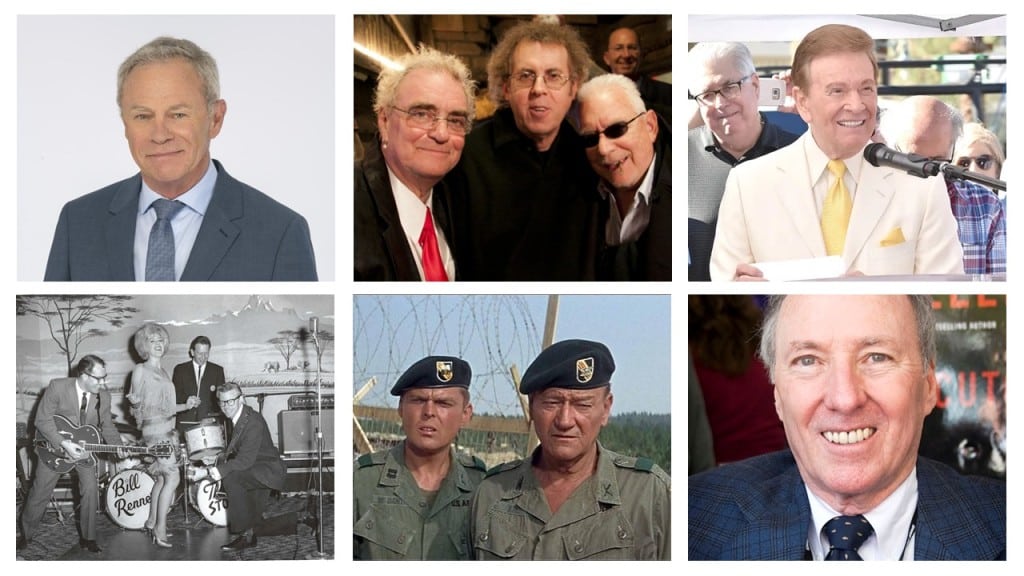
Joseph Wambaugh, who wrote novels and non-fiction books such as “The New Centurions,” “The Choirboys” and “The Secrets of Harry Bright” (which eviscerated the Coachella Valley country club set) may have been the last iconic author to live in the Coachella Valley. He passed away in February after gaining fame for portraying Southern California through the unique lens of a longtime Los Angeles Police detective with an MA in English literature.
Local reporting and journalism you can count on.
Subscribe to The Palm Springs Post
That makes him the ideal subject to begin my chronological review of local luminaries who died in 2025.
Feb. 28: Wambaugh, 88, of cancer at his Rancho Mirage home. Joe pioneered modern police literature by depicting cops as flawed three-dimensional characters instead of good and bad-guy caricatures. He met Capote on “The Tonight Show” while studying the case that became his third book, “The Onion Field.” Capote told him he should write in the “non-fiction novel” style he had pioneered with “In Cold Blood.” He did and he became so famous, the guys he handcuffed began asking for autographs. Capote invited him to visit him in Palm Springs in 1972 and Joe soon quit his job at the LAPD and moved to Sunrise Country Club in Rancho Mirage.
He called me out of the blue in 2002 after I happened to see him at a party at his subsequent house at Thunderbird Heights. He had just written “Fire Lover: A True Story,” which had busted him out of a six-year writer’s block. He told me over lunch at Le Vallauris, “An author is miserable when he’s writing and more miserable when he’s not.” Five years later, I reminded him of that quote after he had a character in his book, “Hollywood Station,” say, “Doing good police work is more fun than anything you’ll ever do in your life.” He said he truly believed that. “I mean, where else can you get paid to thump and shoot people,” he said, “and get a city car to drive home.” Joe never was part of the country club scene. He preferred to meet local cops with great stories to tell.
April 15: Wink Martindale, 91, from lymphoma at Eisenhower Medical Center in Rancho Mirage. Wink was a leading TV game show host for more than 50 years – moderating 21 programs since his 1964 debut on “What’s This Song” under the name “Win” Martindale. He went on to host “Trivial Pursuit,” “Gambit,” “High Rollers,” and his most popular show, “Tic-Tac-Dough.” But Wink earned his place in pop culture history in 1954 while working as a 19-year-old DJ for WHBQ TV in his native Tennessee. Another DJ at the Memphis station, Dewey Phillips, played a demonstration disc from Sun Records and that demo, “That’s All Right” by Elvis Presley, started Elvis mania. Phillips became Presley’s first manager and, when WHBQ launched a music TV show, Wink became the host of “Top 10 Dance Party.”
Elvis appeared in 1956 – at the height of his popularity – and that propelled Martindale to the big time. He moved to L.A. in 1959 and was a DJ for KHJ. But Wink always had an affinity for the Coachella Valley. In 2003, he returned to his roots by recording a pilot at Casablanca Studios in Desert Hot Springs for a music TV show called “The Beat Goes On” with Connie Stevens. In 2021, he signed with Louie Comella’s IVOX Media to present his radio series, “The History of Rock and Roll” and “The Elvis Presley Story,” on KWXY and KKGX radio in Cathedral City. Comella’s plans didn’t come to fruition, but the effervescent Wink remained a beloved member of the local community.
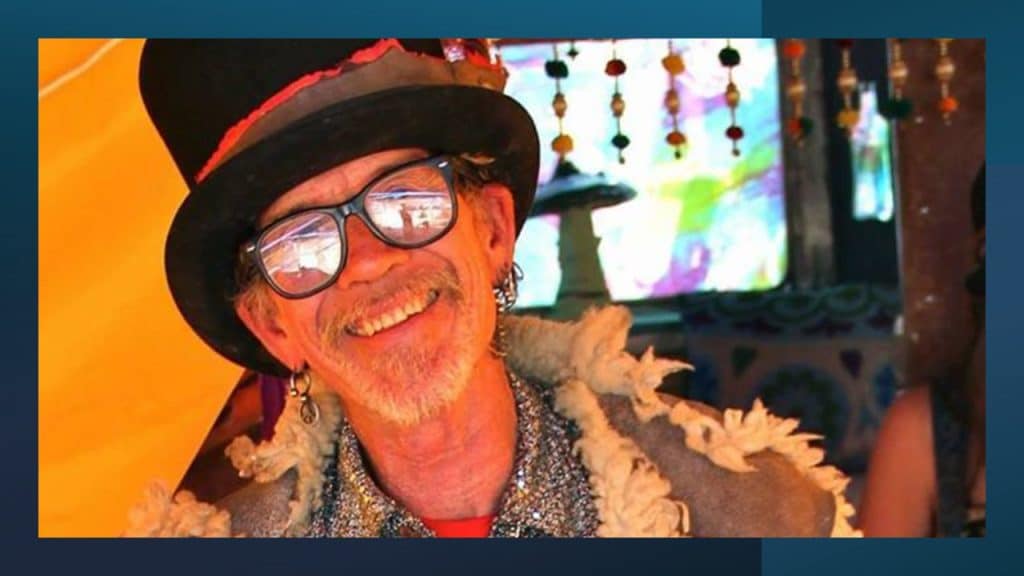
June 7: Bobby Furst, 71, in Joshua Tree. This founder of the art and performance venue, Furstwurld in Joshua Tree was the heart and soul of the high desert art community. He was an assemblage artist inspired by Joshua Tree’s patron saint of assemblage art, Noah Purifoy. He grew up in Laurel Canyon and bought a house there near singer-songwriter Victoria Williams in the late 1980s. Between Purifoy, Williams, and a 1972 breakfast with George Van Tassel, founder of the Integratron and host of a series of high desert UFO programs, Furst felt the gravitational pull of Joshua Tree and moved there in 2008t as it was gaining international renown. He built a steel Quonset hut studio-gallery that quickly became popular on the Highway 62 Open Studio Art Tours. He added a performance space with actual theater seats that brought a surreal quirky quality that defined the spirit of Joshua Tree. Furst, who wore a top hat, Sonny Bono-type vests and peace signs, loved being the circus ringleader.
June 17: H. Earl “Bud” Hoover II, 92, in Santa Fe, New Mexico. Bud was a Palm Springs arts leader who could be called a mid-century non-modern pioneer, meaning he preferred the natural desert to the modern one. A scion of the Hoover vacuum family, he was born in Highland Park, Illinois, but spent many childhood winters in Palm Springs’ bucolic Smoke Tree Ranch. He was a serious collector of Western and Spanish Colonial art, and he brought that passion to his early 1980s chairmanship of the old Palm Springs Desert Museum and its Western Art Council. His museum was remembered for the large natural science diorama his family paid to upgrade, but he also was a board vice president who helped build the Annenberg Theater and produce some spectacular fundraisers.
I’ll never forget being invited to his retrospective of Frank Sinatra’s film career in 1981. Bud and his wife sat at a table with the Sinatras, the Gregory Pecks, the Marvin Davises and songwriter Billy Steinberg’s mother, Louise Steinberg. Not sitting at the table of honor were Former First Lady Betty Ford, sitting ambassadors Walter and Leonore Annenberg, Gene Autry, producer Hal Wallis and Elvis Presley’s manager, Col. Tom Parker. Bud also was a major supporter of the Palm Springs Historical Society and the Living Desert, which named its Education Center after him. I can’t begin to report all of his endeavors outside of the desert, but his obituary says the former Army Lieutenant was a senior commander for the Los Angeles Sheriff’s Department and a deputy sheriff for the Riverside County Sheriff’s Office.
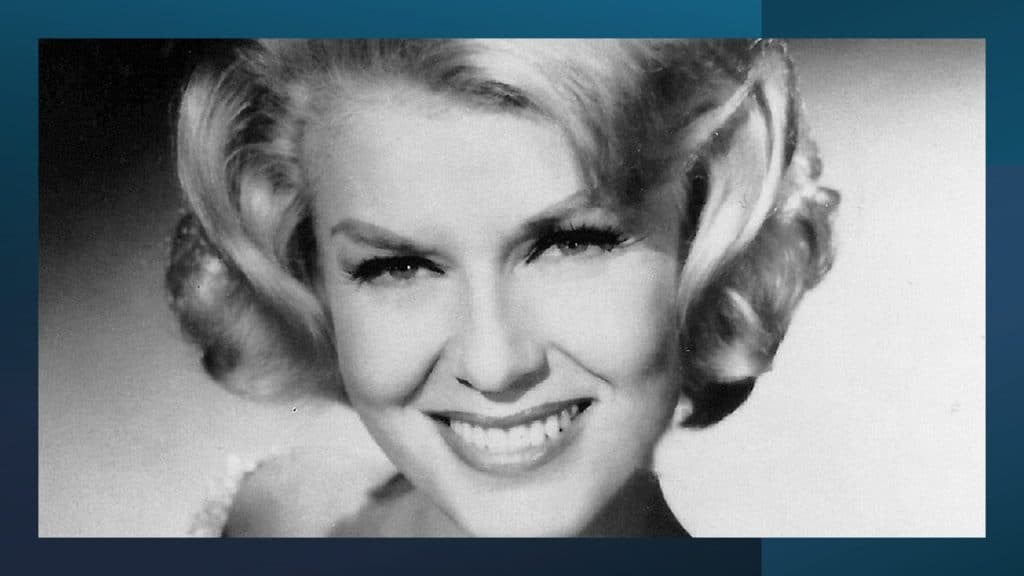
Aug. 4: Jane Morgan, 101, in Naples, Fla. Jane was one of those rare superstars who advanced the performing arts more by retiring than appearing on a stage or recording studio. She was a cabaret sensation in Paris and London in the late 1940s and early ’50s before returning to New York to appear at the Latin Quarter. She had a major hit with “Fascination” in 1957 and a significant career on Broadway, including a starring role in “Mame.” She performed for French President Charles de Gaulle and five U.S. Presidents. But, in 1959, she hired Jerry Weintraub as her manager and fell in love with him, although not necessarily in that order.
Weintraub credited Jane for giving him a pretense of sophistication and for opening doors that would have been bolted shut to him. By 1973, Weintraub was managing tours for Elvis, Sinatra, Bob Dylan, Neil Diamond and Led Zeppelin, and Jane decided to devote herself to Jerry and their family. Their interior designer, Michael Allen, introduced me to the Weintraubs at their Morningside Country Club home after singing in “The Fabulous Palm Spring Follies” in the early 1990s. Jane loved Michael, but he irritated Jerry as much as he did me. That gave us something in common and for that, I’ll always appreciate Michael.
Aug. 4: Terry Reid, 75, at Eisenhower Medical Center from cancer. Terry may be the most mischaracterized singer-guitarist in rock history. He’s remembered as the guy who turned down Led Zeppelin and recommended Robert Plant and John Bonham for Jimmy Page’s new band after the Yardbirds. But people don’t remember that Terry and Rod Stewart were the hottest British singers of their era. Stewart joined the Jeff Beck Group after he left the Yardbirds and that didn’t turn out well. Terry had been more successful than Stewart, having opened for the Rolling Stones, Cream and the Kinks, and he was being groomed by the Stones as a solo artist. So why would he want to work for someone else? Terry recorded a treasure chest of material as a solo artist, but it wasn’t well managed. He became known as a singer’s singer – appearing at huge festivals such as Isle of Wight and Glastonbury and singing at Mick and Bianca Jagger’s 1971 wedding.
But when I first heard him on April 29, 1993, at the old Sun Studios on Sunrise and Tahquitz Canyon in Palm Springs, I didn’t know he was in the band. It was promoted as The Flew featuring Joe Walsh, who had recently “flown the coop” from the Eagles. I reported that the band got a 15-minute standing ovation after Walsh sang “Rocky Mountain High,” but I didn’t mention Terry. I didn’t meet him until 2010 when we were hanging out in the green room of the McCallum Theatre after a concert by fellow British rock legend, Eric Burdon. After that, I learned he was only about the music. He’d play with anyone who could keep up no matter where they were.
In 2015, he and I and another judge selected the Little Red Spiders to win the Tachevah Music Showcase, co-sponsored by The Desert Sun. They got asked to play Coachella and asked Terry to play with them. He did it just for the experience. Terry was jamming with Johnny Depp and some hard-living musicians from the ’70s, called the Hollywood Vampires, by then. But he wasn’t just a Vampire, either. For his final act, he chose to be buried in Joshua Tree in a Native American ceremony led by a man who learned his sacred rites from a Northern Paiute medicine man called Grandfather Raymond Stone of Owens Valley. It was the most spiritually moving funeral I’ve ever attended. I thought to myself, “This is who Terry Reid really is.”
Aug. 15: Tristan Rogers, 79, in Palm Springs of lung cancer. Rogers acted on the soap opera, “General Hospital,” for 45 years. He lived in Palm Springs for three decades and recently talked about local activities in the podcast, “PS After Dark,” featuring his suave Melbourne, Australia, dialect. He’s also known for voicing Jake in the 1990 Disney movie, “The Rescuers Down Under.” It’s a shame and sadly ironic that he died from lung cancer. He was active in local fundraisers for the American Cancer Society – Desert Spirit Chapter, and his publicist emphasized that he never smoked cigarettes.
Aug. 16: Bill Renner, 94, in a nursing home in Palm Desert. Bill was a jazz drummer by training, but his greatest achievement might have been introducing rock and R&B to Palm Springs and making it commercially viable. Before he arrived in the early 1960s, rock was forbidden within the city limits. But Bill and his wife, Diane, who served as the dancing “front woman” to Bill’s band with Jody Reynolds, introduced The Twist to the Farm House nightclub in Cathedral City and then the El Mirador Hotel in Palm Springs. That led to Bill providing bands for every local convention before the Palm Springs Convention Center hired its own booking team. He also produced the legendary jam sessions at the Bob Hope Chrysler Desert Classic, where many of the tournament’s celebrity golfers would sing with one of Bill’s bands. I said after Bill’s death on the anniversary of Elvis’ passing last summer that Elvis and Sinatra lived in Palm Springs, but Bill monetized rock, jazz and R&B in this desert.
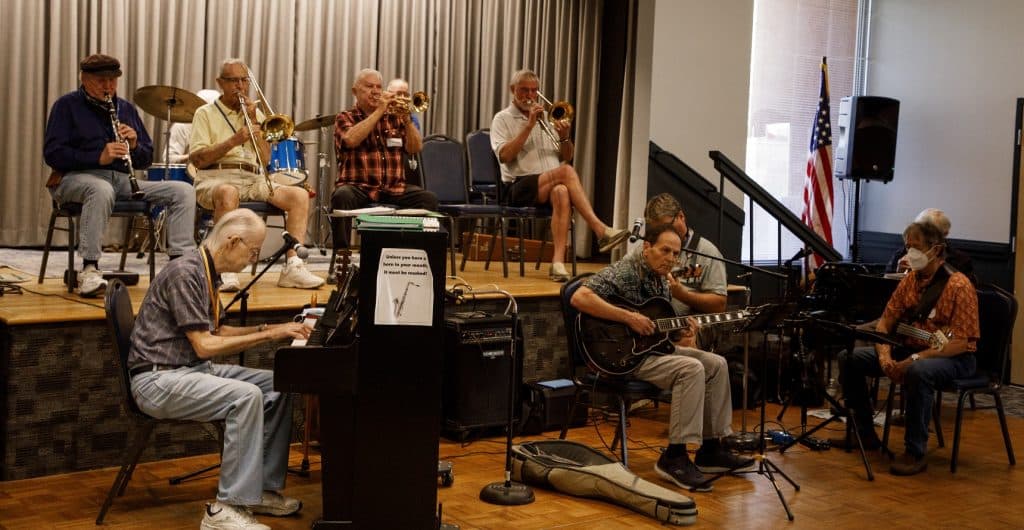
Aug. 23: Dick Broadie, 86, in Palm Springs. Before Coachella, the Coachella Valley music festival to attend was a Dixieland jazz fest. And the most valuable player at those festivals was Dick Broadie, a mad scientist who was crazy for all kinds of jazz – from trad to bebop. He studied electronics in high school in Chicago and, by the time most musicians of his era were content to warble Hoagy Carmichael’s “Rocking Chair,” Dick was inventing a way to covert monaural sound to stereo – not fake, artificial-intelligence stereo, but real binaural sound. But Chicago is the home of Dixieland jazz and Dick played clarinet (and any other instrument that could be played with fingers), so Dick started playing with Dick Scobey, a legendary rare record collector who had a table at Dixieland jazz fests across the country.
After graduating from electronics school in 1958, Dick moved to California and met his Chicago Dixieland pal, Clancy Hayes. They started sitting in with San Francisco’s king of Dixieland jazz, Turk Murphy, and, just after his 21st birthday, he got to play a benefit with Duke Ellington and Count Basie’s great blues vocalist, Jimmy Rushing. He started joining Dixieland societies, which were like a geriatric underground compared to what was happening in rock in the late 1960s, and he got to play all these little festivals with guys who had played with masters from Louis Armstrong to Bessie Smith.
He moved to Palm Springs in 1971 and became a swing/Dixieland jazz leader in a town known for harboring jazz pioneers from Phil Harris (Jack Benny’s band leader in the 1930s) to Ben Pollack (who started the “king of swing,” Benny Goodman). Dick co-founded the Palm Springs Jazz Society and, when tension developed over Dick allowing “progressive” musicians, the Dixieland Jazz Society of the Desert sprang up from Dick’s mailing list, and Dick joined its board.
I loved those local festivals when they had great old jazz musicians to support them. My parents would come down each April and swing dance. When my son, Clay, was born three weeks before the 1988 Dixieland Jazz Festival of the Desert, we took him to the weekend-long party and he was named the official Jazz Baby of 1988. The festivals now belong to a different era because younger audiences only got to hear the music played by amateurs. Dick was the last of our greats who knew the real greats of Dixieland jazz.
Aug. 26: Ed Faulkner, 93, in a nursing home in Vista. Faulkner was past his acting prime when I met him in his adopted town of Rancho Mirage in the late 1990s. He had retired from a second career with Sea Containers, Inc., but was still doing voiceover work for Fantasy Springs Casino. His cherub face and imposing 6-foot 3-inch frame was familiar from his roles in films like “The Green Berets” and “McLintock!” with John Wayne, “G.I. Blues” and “Tickle Me” with Elvis Presley, and dozens of TV Westerns. He called Wayne a mentor with whom he played chess and bridge. He got his co-starring role in the Vietnam War film, “The Green Beret,” he said, because he wrote Wayne a note suggesting he switch the Stetson he had worn in several Wayne films for a beret. Wayne sent him a script and said, “I like your guts.” But Faulkner said he’ll be remembered for all the Westerns in which he played bad guys who never won a fight.
Related Articles
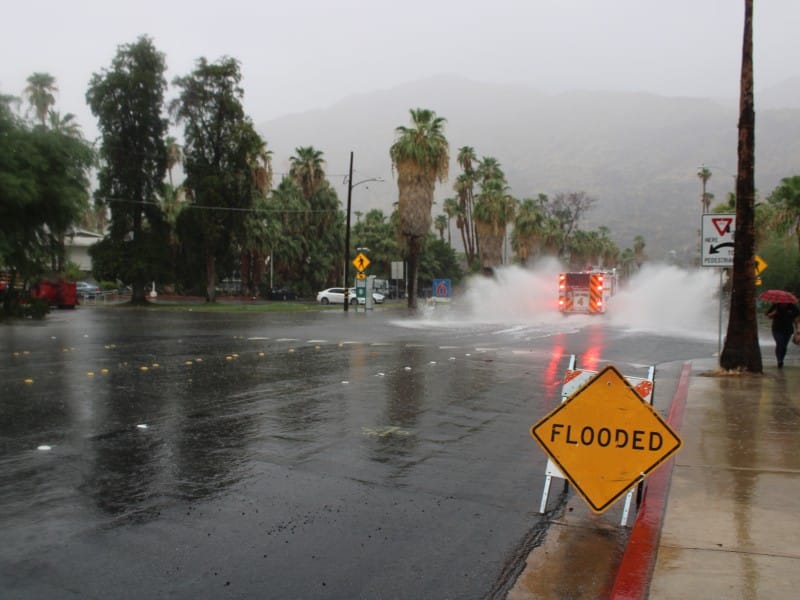
Palm Springs prepares for strong El Niño with growing CERT ranks
Hundreds of residents have already received emergency training, and demand remains high as the city and volunteer groups brace for possible flooding and other severe weather.
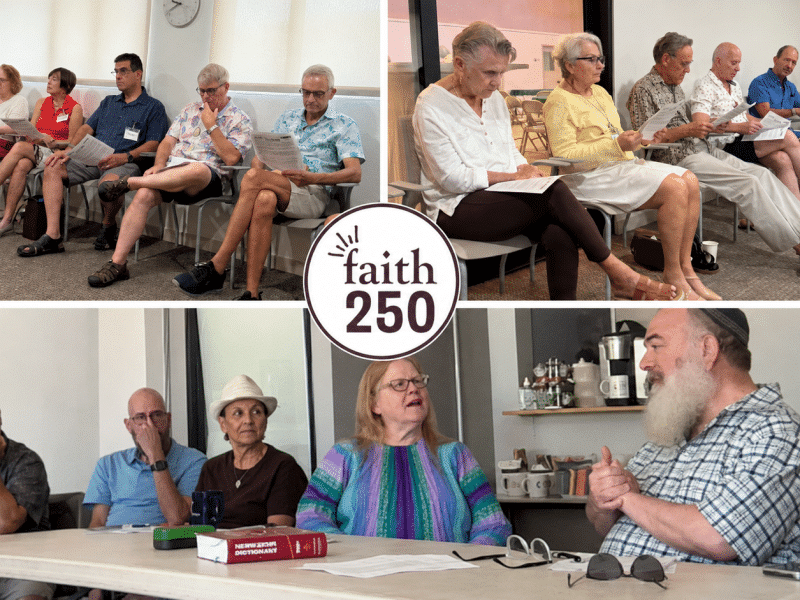
Valley congregations pair American history with faith traditions in ongoing dialogue series
The faith250 initiative pairs founding documents like the Declaration of Independence with religious texts and regional history.
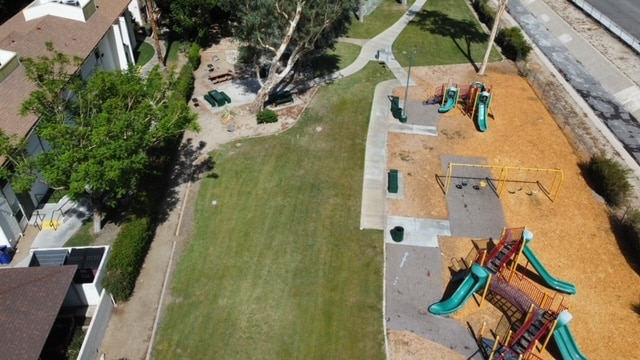
Officials set turf closure schedule for a dozen city parks
Rotating maintenance closures will affect fields and grass areas at parks across the city from September through December to allow reseeding and irrigation work.