
Palm Springs historical walking tour to offer rare interior access to city’s pre-modernist landmarks
The tour serves as ONE-PS’s only major fundraising event of the year, supporting all the organization’s activities throughout the year, including the citywide picnic in March.
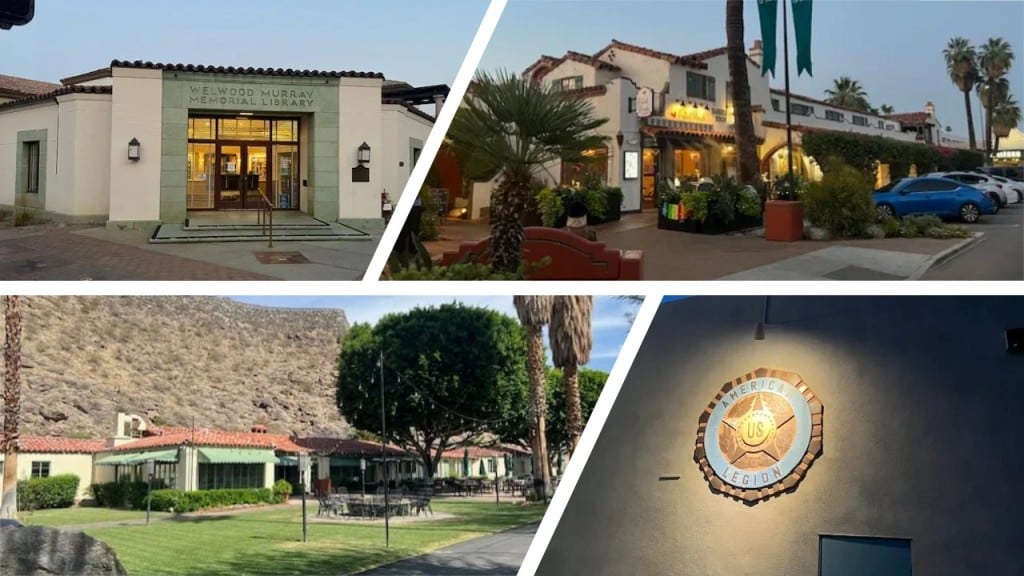
A historical walking tour scheduled for Oct. 18 will offer participants rare interior access to some of the buildings that showcase the pioneering men and women who shaped Palm Springs before Mid-Century Modern architecture made the desert city famous.
“What differentiates this tour is that we won’t be just walking by these locations but will have access to the interiors as well, and many of these are not easily accessible to the general public,” said Tim Schoeffler, vice chair of Organized Neighborhoods of Palm Springs (ONE-PS), who chairs the historical walking tour event.
Local reporting and journalism you can count on.
Subscribe to The Palm Springs Post
The “Iconic Palm Springs” tour, an official Modernism Week event organized by ONE-PS, will run from 9:30 a.m. to 3 p.m. and include stops at seven historic downtown locations. A total of 400 tickets will be available through the Modernism Web Site, with staggered start times beginning at 9:30 a.m. Tickets are $110.
The tour serves as ONE-PS’s only major fundraising event of the year, supporting all the organization’s activities throughout the year, including the citywide picnic in March. The entire route runs 22 minutes at a moderate pace, not including stopping time at each location, and covers about 2,200 steps.
“A generation before Mid-Century Modern took Palm Springs by storm, there was a group of pioneering men, and indomitable women, who contributed greatly to what was to become modern day Palm Springs,” according to tour organizers. “Their vision and tenacity helped put Palm Springs on the map.”
Welwood Murray Memorial Library
The tour begins at the Welwood Murray Memorial Library at 100 S. Palm Canyon Drive, a Class 1 Designated Historic Site designed by architect John Porter Clark and completed in 1940.
The library is named after Welwood Murray, a Scottish-born pioneer who built and operated the Palm Springs Hotel from 1887 until 1909. Murray’s son, George Murray, gifted the land to the city in 1938. On the day of the tour, the library will host an architectural book sale in the Community Room.
LaPlaza Shopping Center
Tour participants will visit LaPlaza Shopping Center at 160 S. Palm Canyon Drive, built in 1936 and one of the first planned outdoor shopping centers in Southern California.
Julia Patterson Carnell, an heiress to the National Cash Register fortune, purchased 3.5 acres from Palm Springs pioneer Cornelia White after realizing the city had limited shopping options during visits to Nellie Coffman’s Desert Inn. The shopping center and Plaza Theatre were designed in Spanish Colonial Revival style by Harry J. Williams, father of architects E. Stewart Williams and Roger Williams.
LaPlaza features a little-known history of housing for the wealthy visitors to the Desert Inn. During the 1930s, while guests stayed at the inn, their luxury automobiles were serviced in an underground basement garage with room for 141 cars.
Upstairs housing for chauffeurs was referred to as the “LaPlaza Men’s Lodge,” while a second-story dance hall was later converted to housing for local shop girls, referred to as the “LaPlaza Women’s Lodge.” Tour participants will view both complexes.
The center is currently owned and managed by Larry and Mike Pitts, the third and fourth generations of the Pitts family that has had ownership interest in LaPlaza since the early 1950s.
Plaza Theatre restoration
The Plaza Theatre at 128 S. Palm Canyon Drive, also designed by Williams in 1936, hosted the world premiere of Greta Garbo’s film “Camille” on opening night. Carnell originally built the theater as a movie house, which was operated by Earle Strebe.
Over the decades, the theater hosted live radio broadcasts by Bob Hope, Bing Crosby and Jack Benny. It also served as the venue for the “Fabulous Palm Springs Follies,” a revue featuring former Broadway and Hollywood dancers who were all at least 60 years old.
After the Follies closed in 2014 and a decade of inactivity and deterioration, the Plaza Theatre has undergone complete restoration preserving its historic charm while modernizing its facilities. The restoration includes structural repairs, installation of a state-of-the-art HVAC system and uncovering of original decorative elements.
Due to ongoing interior construction — the project is expected to be completed in late fall — an interior tour isn’t possible. Instead, board member and historian Jim Cook will give 10- to 15-minute talks on the history of the theater.
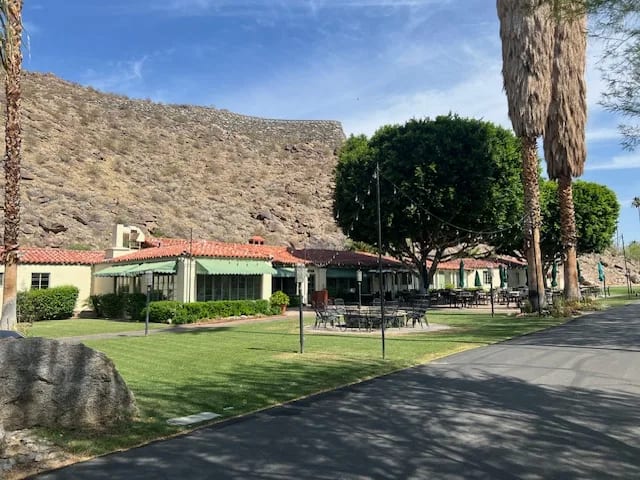
O’Donnell Golf Club House
The tour will include interior views of the O’Donnell Golf Club House at the O’Donnell Golf Course, originally known as the Desert Golf Course and the oldest golf course in the Coachella Valley.
The Spanish-Colonial Revival residence, known as the “Golf House,” was designed by architect William Charles Tanner and completed in 1936. Tom O’Donnell was one of the early champions of Palm Springs and was the key funding source for Nellie Coffman to upgrade the Desert Inn from simple tent cabins into a luxury resort complex that brought the rich and famous to Palm Springs.
In a 1928 profile of Coffman in Pictorial California, her contribution to Palm Springs was summed up as “A Woman Starts an Inn and Creates a Town.”
Next door to the club house is the Casita, which was used by Dr. Winifred O’Donnell, Tom O’Donnell’s wife. The Los Angeles Times deemed her “one of the most prominent women osteopaths in Southern California.”
She maintained offices in Long Beach and Los Angeles and starting in 1936, while in Palm Springs she utilized the casita as her doctor’s office. Both the interiors of the club house and casita will be on the tour. In 2020, the property was listed on the National Register of Historic Places.
Behind the golf club, tour participants will see the Promontory, or “Inspiration Point.” During the Depression in 1934, O’Donnell used his personal assets to fund the creation of Inspiration Point, providing jobs for the local unemployed who earned $2.50 a day, which was enough to support a family at the time.
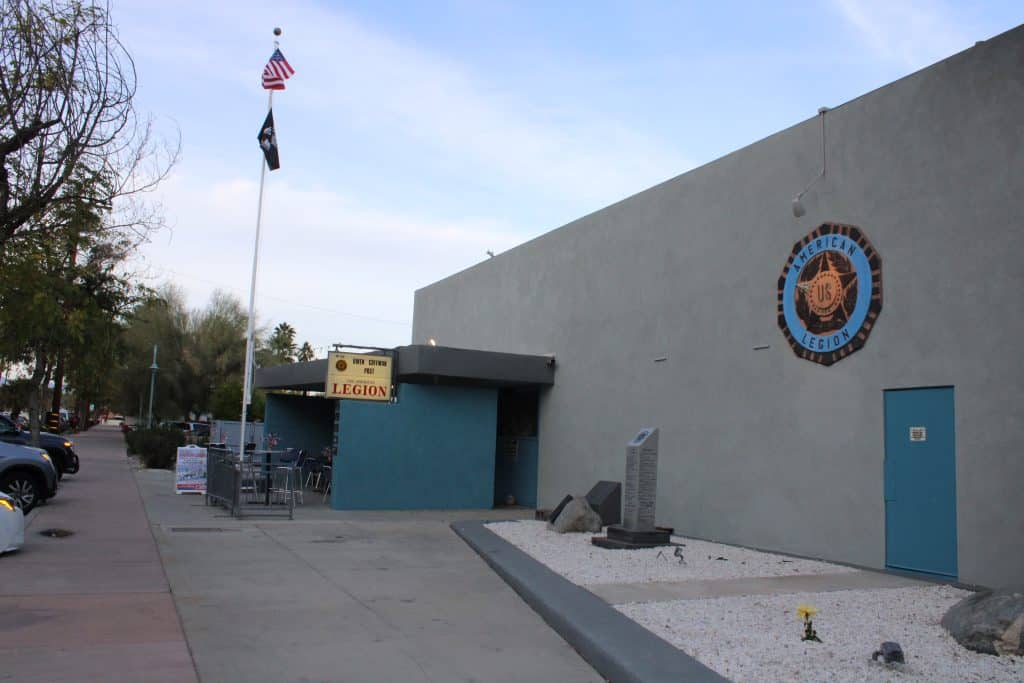
American Legion Post 519
The American Legion Post 519 at 400 N. Belardo Road was dedicated on Jan. 3, 1948, and was designed by architects Albert Frey and John Porter Clark. The post is named in honor of 2nd Lieutenant Owen Baylis Coffman, who was killed in action during World War II. Coffman was the grandson of Nellie Coffman.
Between 1948 and 1954, the post’s stage hosted live radio broadcasts featuring Al Jolson, Doris Day, Judy Garland and other Hollywood legends. The radio control room is still available to view.
The building’s unique “Lamella” roof design is one of only three remaining in California. In 1999, the post was designated a Class One Historic Site due to its architectural significance and rich history.
Efforts are underway to restore the building to its 1948 appearance. Palm Springs’ Measure J Commission recently submitted, and the City Council approved, a $250,000 grant toward the restoration.
Temple Isaiah
Temple Isaiah at 332 W. Alejo Road was officially organized in December 1947. The original chapel was designed by E. Stewart Williams.
By 1956, the completed center boasted a modern sanctuary, library, offices, a patio and various meeting rooms and classrooms. Temple Isaiah became the focal point of organized Jewish communal life in the Palm Springs area, serving the Conservative, Reform and Orthodox communities.
Due to continued growth, an expansion project was undertaken in 1987 that added the Bochner Sanctuary, Tash/Agam Ark, Warsaw Ballroom, Levy Hall, Vener Reception Hall and a new kitchen.
The exterior of this addition, designed by architect David Christian, is described as having a “Brutalist-style façade that evokes the massive scale of Noah’s Ark,” and it effectively encased the original E. Stewart Williams chapel. Frank Sinatra was instrumental in helping to raise funds for this expansion. The tour will visit the Bochner Sanctuary.
Welwood Murray Cemetery
The tour concludes at Welwood Murray Cemetery at Chino Drive and Vine Avenue, established by Murray in 1917 after his son George passed away, though the first burial was his other son, Erskine, in 1894.
Murray himself and his wife Elizabeth are also buried there. The Murray heirs deeded the cemetery in 1917 to the public, leading to the formation of the Palm Springs Cemetery District.
Many of the town’s early settlers and notable citizens are buried there, including Cornelia White, Alvah Hicks, Nellie Coffman, Welwood Murray, Harry Williams, Ruth Hardy, Zaddie Bunker, Albert Frey and Charlie Farrell.
Authors


Related Articles
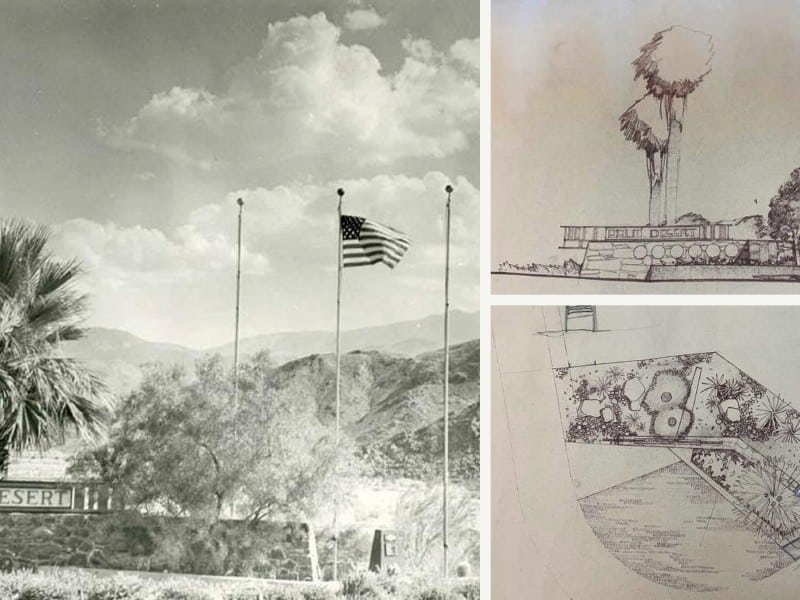
Palm Springs preservation group steps in to help revive a piece of Palm Desert history
The Palm Springs Preservation Foundation has offered to fund conceptual design work for a recreation of a historic Palm Desert entry sign designed by noted desert architect William F. Cody.
Seven Lakes Golf & Country Club takes step toward becoming Palm Springs’ largest historic district
The city’s Historic Site Preservation Board approved the designation for the 120-acre complex, which counts Dwight D. Eisenhower among its notable golfers.
Modernism Week sets schedule for October festival in Palm Springs
Organizers say the four-day event will introduce new evening entertainment options, including curated dinners, social gatherings and a wine tasting, alongside returning tours and talks.