
California Supreme Court declines to hear Palm Springs development dispute
The denial means a Grit Development company must pay prevailing wages to construction workers on the project that transformed the former Desert Fashion Plaza site into a mixed-use development.
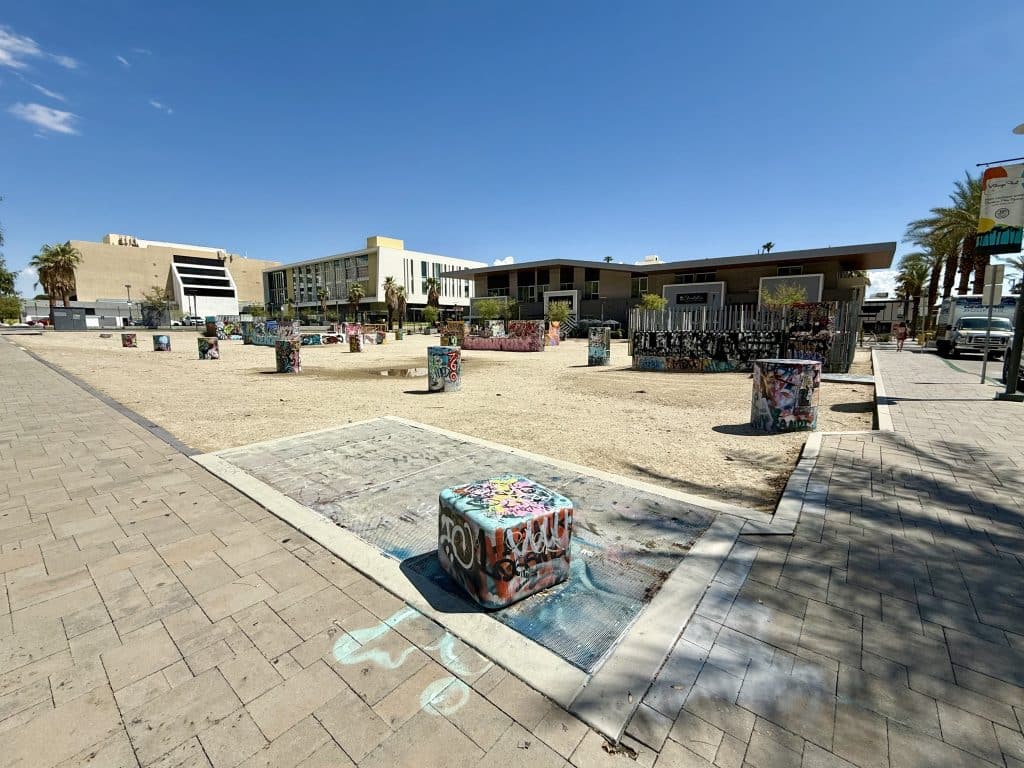
The California Supreme Court declined Wednesday to review a dispute over a $175 million Palm Springs redevelopment project, ending the developer’s challenge to state prevailing wage requirements and letting stand a lower court ruling against the company.
The denial means Palm Springs Promenade LLC must pay prevailing wages to construction workers on the project that transformed the former Desert Fashion Plaza site into a mixed-use development with residential units, restaurants, retail space and a luxury hotel. The developer now faces potential liability for back pay to workers.
Local reporting and journalism you can count on.
Subscribe to The Palm Springs Post
The case centered on whether the project qualified as a “municipal affair” under California’s home rule doctrine, which allows charter cities to exempt themselves from certain state laws, including prevailing wage requirements, on local projects.
Palm Springs Promenade, created by Grit Development specifically for this project, contributed $143 million in private funds while the city provided about $51.36 million. The city’s contribution included funds to acquire public assets, street construction, parking improvements and change orders.
Michael Braun, president of Grit Development, could not be reached for comment Thursday regarding what may the next move might be for his company or the project.
In court documents, the developer argued the city maintained control over public funds through the Project Financing Agreement, making the project exempt from state wage laws. But the Fourth District Court of Appeal disagreed in June, finding that Palm Springs Promenade “retained substantial control over how its construction monies were spent” because an independent fund control agent, not the city, reviewed billing documents and disbursement requests.
The legal dispute began in 2017 when the Center for Contract Compliance requested the Department of Industrial Relations determine whether the project was subject to prevailing wage requirements. The department ruled in August 2018 that such wages were required, leading to court challenges that both Palm Springs Promenade and the city supported.
The League of California Cities had filed a letter supporting the developer’s petition for review, arguing the appellate decision threatened charter cities’ constitutional authority over public spending in public-private partnerships.
The decision establishes that private developers cannot claim charter city exemptions from state wage laws when they control most construction aspects, even with substantial city funding. The ruling could affect how cities structure future public-private partnerships in redevelopment projects.
Author

Related Articles

Palm Springs airport study finds economic impact tops $2.55 billion
Nearly 97% of the airport’s overall economic impact stayed within the Coachella Valley, the study found, and more than half occurred within the city of Palm Springs.

Palm Springs home prices fall 6% to $1.1M, marking valley’s largest drop
Amid interest rate shifts, detached home prices in Palm Springs tumbled 6% over the past year to a median of $1.1 million, the steepest percentage decline among all desert cities, while condo values dropped 7%.

Palm Springs puts $1 million behind business program tied to Section 14 settlement
Five-year agreement will fund entrepreneur training and micro-grants, with priority outreach to Section 14 survivors and descendants.