
Historic water settlement confirms Agua Caliente tribe’s rights to 20,000 acre-feet annually
The agreement will settle two long-standing lawsuits and calls for up to $500 million in federal funding for water infrastructure projects throughout the Coachella Valley.
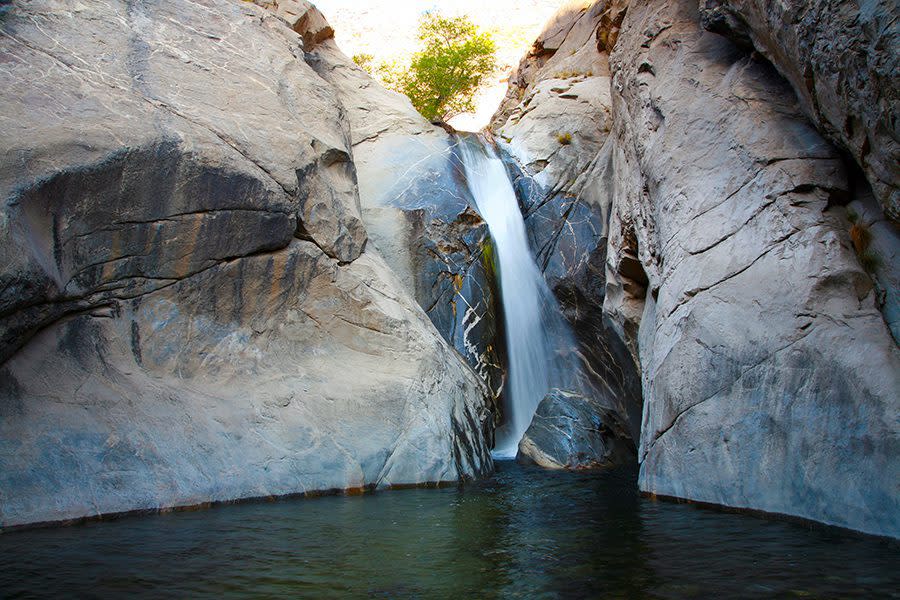
The Agua Caliente Band of Cahuilla Indians, Coachella Valley Water District (CVWD) and Desert Water Agency (DWA) have signed a comprehensive water rights settlement agreement that confirms the tribe’s right to 20,000 acre-feet of groundwater per year and establishes a new cooperative framework for managing the valley’s water resources.
The agreement, signed May 19 and announced Wednesday morning, must still be approved by Congress. It will settle two long-standing lawsuits and calls for up to $500 million in federal funding for water infrastructure projects throughout the Coachella Valley. The settlement also includes provisions for thousands of acres of Bureau of Land Management land to be transferred into trust for the tribe.
Local reporting and journalism you can count on.
Subscribe to The Palm Springs Post
“The agreement affirms the Tribe’s right to manage, regulate, and govern the use of the Tribal Water Right in the Coachella Valley, and at the same time will provide a real benefit to the entire Coachella Valley,” said Tribal Chairman Reid D. Milanovich.
“We all rolled up our sleeves and worked together to come to an agreement that recognizes the Tribe’s water rights and sovereignty, considers the unique jurisdictional issues of our checkerboard reservation, and respects our traditional and cultural uses for our tribal community.”
The tribe’s water rights carry priority dates of 1876 and 1877, tied to when the federal government established the Agua Caliente Indian Reservation. Under the settlement, the water districts will continue delivering water to customers on reservation trust lands using the tribe’s water allocation, with the districts providing supplemental water if demand exceeds the tribal supply.
“The settlement with the Tribe will benefit the Coachella Valley for years to come as it brings essential collaboration on local water resources and recognizes Tribal Water Rights,” said John Powell Jr., CVWD board president. “For over a century, CVWD has proudly served our community with vital water services, guided by responsible groundwater management and a diversified water portfolio that supports our local economy.”
A key component of the agreement is a Memorandum of Cooperation that establishes how the tribe and water districts will jointly manage groundwater beneath the reservation. The agreement creates a Technical Advisory Committee with representatives from all three entities to monitor groundwater conditions and recommend management actions if water levels decline.
“Desert Water Agency customers can be certain this agreement will not affect our ability to provide safe and reliable water,” said Paul Ortega, DWA board president. “This settlement respects the Tribe’s sovereign rights to help manage and regulate water within a portion of our vast aquifer. Together, we will ensure the reliability and sustainability of our region’s water supply.”
The settlement includes specific protections for water quality. The water districts committed to maintaining total dissolved solids levels in groundwater used for reservation water supplies within limits established in the state’s Basin Plan. If TDS levels exceed those limits, the districts must treat the water before delivering it to reservation customers.
Under the agreement, approximately 2,742 acres of BLM land will be transferred to the United States to be held in trust for the tribe. The transfers include parcels in Township 4 South and Township 5 South, Range 4 East. Additionally, CVWD will purchase approximately 842 acres of BLM land currently used for the Whitewater River Recharge Facility.
The federal funding request includes $300 million for tribal water development projects, $100 million for groundwater augmentation to support water levels under the reservation, $50 million for water management and administration, and $50 million for operation and maintenance of water projects. The tribe and water districts will also seek $15 million in state funding.
The settlement resolves litigation dating back to 2013, when the tribe sued the water districts seeking recognition of its groundwater rights. Federal courts ruled in 2015 and 2017 that the tribe has federally reserved rights to groundwater, but the amount had not been determined until this settlement.
The agreement now goes to Congress for approval and appropriation of funding. Once enacted, it will provide long-term certainty for water management in the Coachella Valley while recognizing the tribe’s sovereign authority over its water resources.
Author

Related Articles
Palm Springs mayor responds to ICE activity with community resources, legal guidance
Mayor Naomi Soto outlined legal protections during federal immigration enforcement, announced police assistance for property retrieval, and directed affected families to community organizations for support.
Readers name fertility-clinic bombing as Palm Springs’ biggest story of 2025
Taken together, the responses to our annual poll tell the story of a community shaken by an act of violence and bracing for a year defined by competing pressures — economic, political, and environmental.
Palm Springs 2025 Year in Review: Our top 5 stories
Your clicks told a story of a year defined by crisis, change, and a few surprises — including Palm Springs’ most anticipated hamburger.