
Local graphic designer has bold new vision for the future of city parks, starting with one of its most significant
Tom Dolle, creative director at Tom Dolle Design, has so far shown his 57-page plan to architects, historians, and others in the city, hoping to build support for a project he’s calling “Golden Sunrise.”
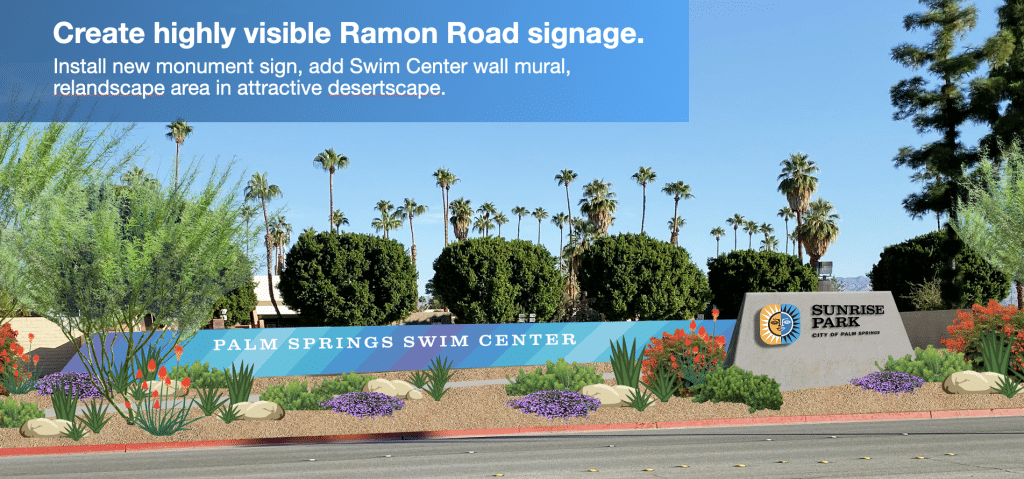
A local graphic designer is sharing his ideas to celebrate a milestone moment for Sunrise Park and refresh recreational facilities throughout the city. This week, his thoughts will be reviewed by one of the most important audiences yet — the Palm Springs City Council.
Tom Dolle, creative director at Tom Dolle Design, has so far shown his 57-page plan to architects, historians, and others in the city, hoping to build support for a project he’s calling “Golden Sunrise.”
Local reporting and journalism you can count on.
Subscribe to The Palm Springs Post
The project would see the park bordered by South Sunrise Way, East Baristo Road, and East Ramon Road — which contains the public library, pool and pavilion, a stadium, the Mizell Center, and more — revamped in time for its 50th anniversary in 2025. Dolle envisions a citywide event to celebrate the anniversary.
“With a rich history in the city’s culture since the 1920s, and (nine) significant structures by prominent local architects,” Dolle wrote, “Sunrise Park is the largest campus of its kind and a unique historical asset that should be celebrated and protected.”
So far, he’s received the tentative support of all who have seen the presentation. On Thursday, he hopes city councilmembers will also approve of what they see, possibly backing the formation of a committee that would solicit public input to create a vision for all recreational opportunities in the city for the decades to come.
Dolle’s presentation begins with a journey through the history of parks and recreation in Palm Springs. It concludes with an outline of plans for refreshed signage and revamped and repaired facilities at Sunrise Park and a bold new vision to address issues at parks throughout the city.
He concludes with a four-part plan that includes seeking historic designation at the park, installing sustainable landscaping and solar-power-generating structures and equipment, improving signage, and restoring and renovating existing structures.
According to Dolle, the most significant issues that need addressing are the “shabby” and underutilized pavilion and leisure center, the “tired” and unsustainable turf landscaping, and the inadequate identity signage and directional signage.
Among the changes he envisions would be revisions to the transformation of the city pavilion into “a first-class, flexible, multi-use entertainment and community space with modern lighting, sound system, acoustics, (and) flexible seating.” An outdoor amphitheater and a solar art park are also included in his plans.
“A section of Sunrise Park could be a great location for temporary or permanent art installations that use the sun and solar energy as the theme,” Dolle wrote. “Use public art to visibly demonstrate that Palm Springs is a leader in desert sustainability.”

Surfacing fresh ideas such as Dolle’s is essential right now, given that the city hopes to update its parks and recreation master plan sometime in the coming year.
“The results should lead to a push for major reinvestment throughout the park system,” Dolle said, adding, “Issues such as climate change, water in the parks, needed renovations or new facilities, safety, and maintenance can be addressed.”
Dolle acknowledges there are plenty of positive attributes already at the park that he wants to build on, such as its central location, natural shade, indoor facilities, and more.
He also recognizes that several projects are already underway, including the renovation of the Palm Springs Public Library and the Palm Springs Swim Center, new lighting coming to the baseball stadium, and a new kitchen being built at the Mizell Center.
He’s quick to note that while he’s happy to share his ideas about the future of city parks, the city did not solicit his opinion and is not paying for his work. He said that any final plans will be the work of the community, not just one person. His presentation simply sprung from a thought he had while using one particular city facility at the park.
Dolle, a swimmer who noticed the poor signage around the swim center, spun his ideas at changing that into a project with deep historical research and hours upon hours of researching other parks worldwide. He even created his own renderings.
“I can’t look at something and not solve the problem,” Dolle said Tuesday. “It felt important, and I was in a position to do something about it. So I just did.”
Dolle encourages anyone interested in the project to learn more about how to contribute to the master plan process and to keep in touch with their city councilmember, noting, “That’s the only way they know what the community wants.”
Author

Related Articles
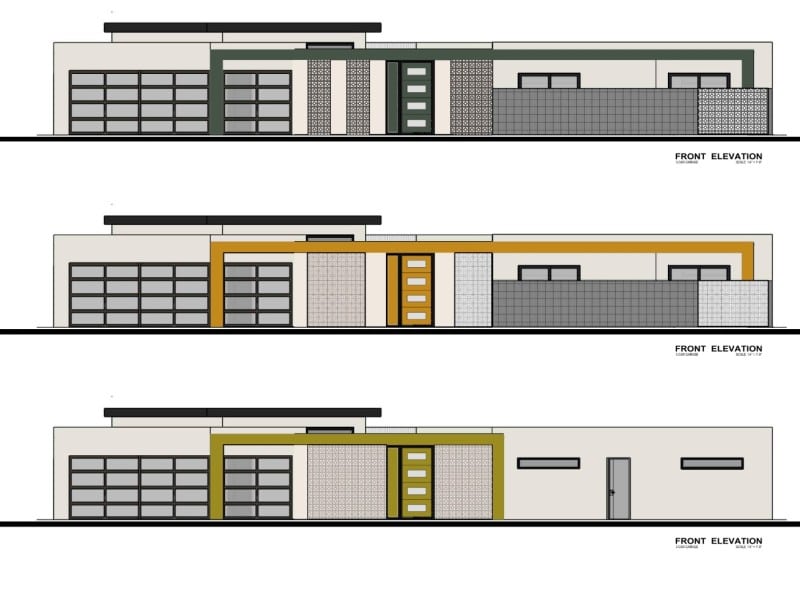
Architectural Review Committee sends back plans for eight-home development, votes for a restudy
The Architectural Review Committee preferred a monochromatic palette, rejecting a Planning Commission request for more color. “I just don’t want it to be atomic ranch and kitschy,” one member said.
City on track to close fiscal year with nearly $7 million surplus, report shows
The city’s three core revenue sources — Transient Occupancy Tax, Property Tax, and Sales and Use Tax — are up a combined 11.5% from the prior year’s mid-year numbers.

This week: Palm Springs boards to review housing project, historic designation, library budget
Architectural Review, Historic Preservation and Library boards meet this week, with one other meeting possible on Thursday.