
2025 In Memoriam Part 2: Looking back on politicians, entertainers, cultural pioneers we lost
From mayors and philanthropists to adventurers and acclaimed actors, the Coachella Valley said goodbye to remarkable individuals in 2025 whose contributions continue shaping our desert communities and cultural identity.
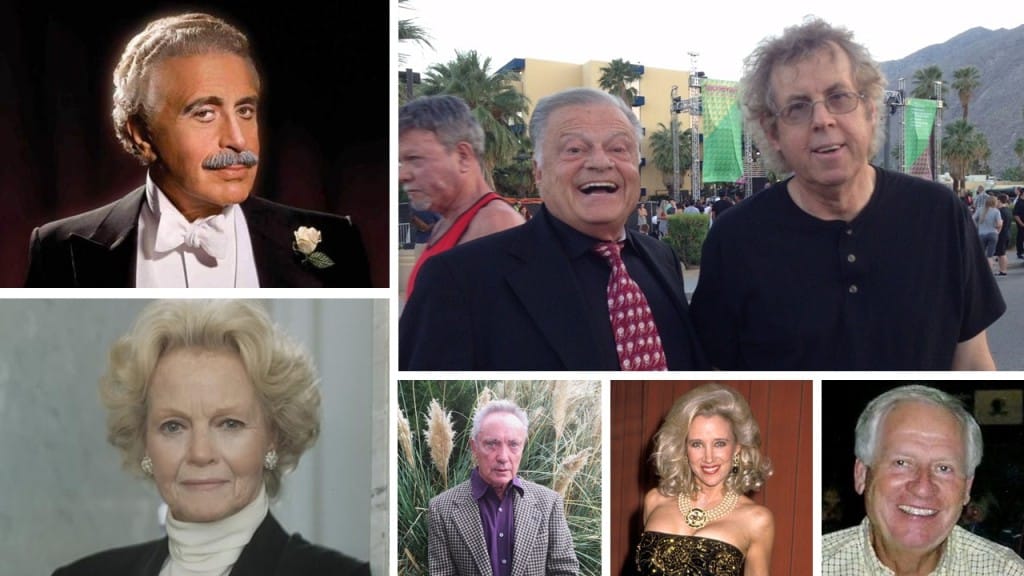
Local politicians don’t often make year-end memoriam lists. Those are usually reserved for individual achievers, as opposed to public servants.
But 2025 saw the loss of three Coachella Valley city council members who were notable for their team play and individual achievements. So we’ll begin Part Two of our look-back at local icons lost in 2025 with three achievers who led their cities as mayors and city council members:
Local reporting and journalism you can count on.
Subscribe to The Palm Springs Post
Don Adolph, a former Shell Oil engineer who served La Quinta from 2002-2014; G. Dana Hobart, an attorney who argued before the Supreme Court before devoting himself to Rancho Mirage from 2002-2021; and Mark Carnevale, the owner of the popular Nicolino’s restaurant who served Cathedral City from 2010 until his death Nov. 16 at age 75.
Adolph, who died Aug. 3 in Las Vegas at 94, was recognized by Concerned Citizens of La Quinta for 23 years of service to La Quinta. But he and his late wife, Diane, were to La Quinta in the 21st century what city founders Fred and Kay Wolff were to the town in the previous century: the first couple of civic and cultural activity.
Hobart, who died Oct. 4 at 93, is credited with conceiving the idea for the Rancho Mirage Observatory, which was named the best new tourist attraction in California by MSN.com after its 2018 launch. He also guided Jamie Kabler in creating the acclaimed Rancho Mirage Writers Festival, and championed the Rancho Mirage Amphitheater, the city dog park, and the undergrounding of utility lines, which helps me maintain reasonable fire insurance rates.
Carnevale helped revitalize the city’s Downtown Arts & Entertainment District, including the conversion of an IMAX theater into the Coachella Valley Repertory playhouse. He championed the Cathedral City Community Amphitheater and the Agua Caliente Cathedral City Casino.
But we’ll count them as one team of local luminaries. The remaining top 10, in chronological order are:
Sept. 3: Harold Matzner, 88, at Eisenhower after a short illness. Matzner took control of the Palm Springs International Film Society board at a time when its acclaimed festival was in crisis. He expanded its awards gala and convinced its original artistic director, Darryl Macdonald, to return as executive director to make the festival unique in America. It’s a festival that introduces quality international films and honors their filmmakers to launch the Academy Awards season.
That got Matzner started as a community activist. He became chairman of the McCallum Theatre and kept it on solid financial footing for the next two decades — perhaps at the expense, some charged, of adventurous programming. But he did the same for the finances of Eisenhower Health as a board member, the Palm Springs Art Museum as a vice chairman, and the City of Palm Springs as the spearhead of Measure J. Notably, he did not support the restoration of the Palm Springs Plaza Theatre. He offered to donate $1 million to its renovation, but not to restore it to its original 1936 blueprints, which so far has cost $34 million.
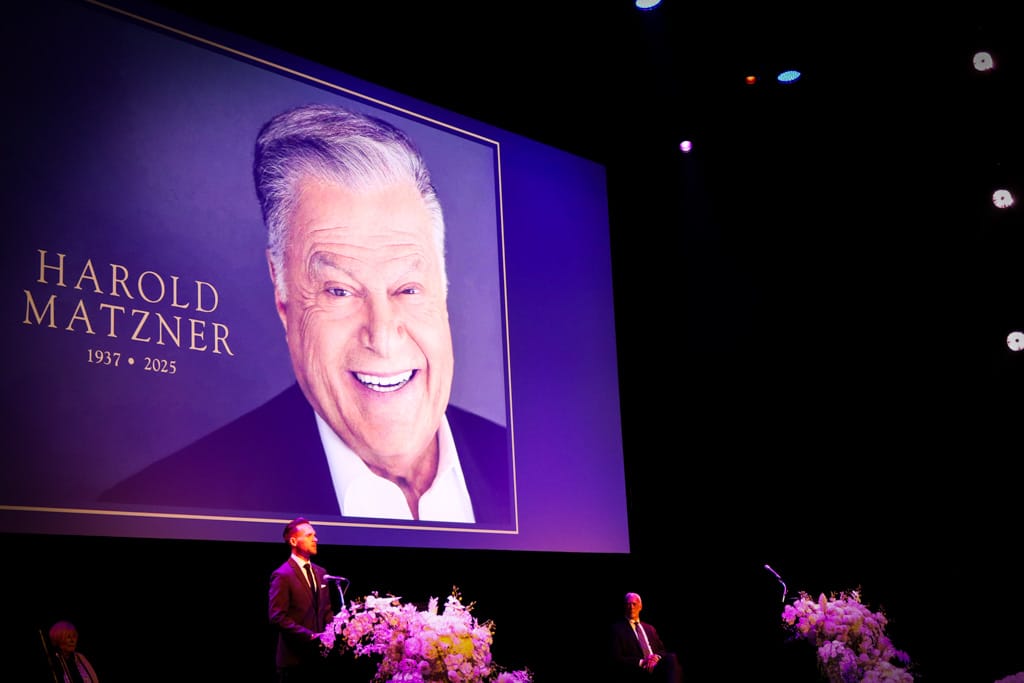
Matzner’s greatest local contribution may have been adapting its philanthropy industry to the post-movie star era. He said he didn’t know stars like previous charity kingpins Frank Sinatra and Bob Hope. So he expanded the base with small donors who could be nurtured into large contributors as they got older.
“In doing so,” I wrote in my Desert Sun obituary, “he left the valley less dependent on a few super wealthy individuals.”
Sept. 17: Riff Markowitz, 86, in Carlsbad. As mayor of Palm Springs at the dawn of grunge rock, Sonny Bono dreamed of turning the Plaza Theatre into a rock concert hall. What he got was a tribute to an era before rock that outlasted grunge.
Markowitz shepherded a tribute to vaudeville and Ziegfeld-type showgirls as the writer, director, producer and host of “The Fabulous Palm Springs Follies.” He and his wife, Mary Jardine, then marketed it as a salute to the golden age of Palm Springs for fans “old enough to have lived it.”
They came in buses from all over Southern California starting in 1992 to see older stars such as Ralph Young, Howard Keel, Kaye Ballard, and Buddy Greco, who all lived within driving distance. The cast of singers and dancers were all local and over 50. When I encountered Hope in the lobby one day, he quipped, “You don’t know who your neighbors are, do you?’
My mother loved going to The Follies. I was more of a sourpuss, so Riff banned me from the theater. But it was only temporary. I think he actually liked casting me as the local media guy who said the show “wouldn’t have legs.” I never said that, but it was a good line and Riff delivered it with comic mastery. Bill Dana, who could get away with his “My name Jose Jimenez” material at The Follies, called him a great straight man.
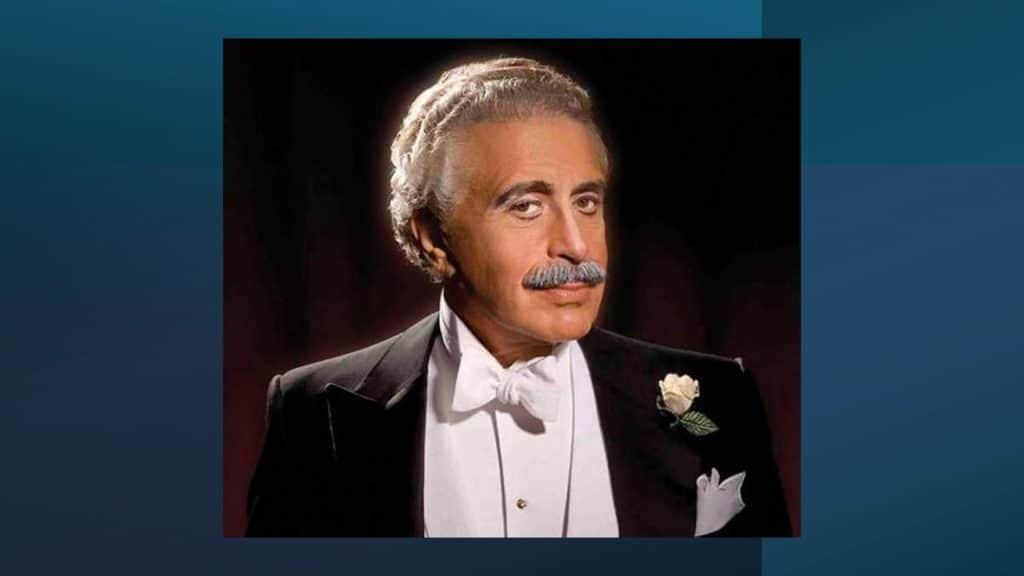
Media from around world, including the New York Times, praised the show. A short documentary about it, titled “Still Kicking: The Fabulous Palm Springs Follies,” was nominated for an Academy Award. It ran for 23 years and Riff never missed a performance in over 4,400 shows. Matzner called him a genius. More than 3 million people saw the Follies, which helped revitalize downtown Palm Springs as interest in mid-century modern culture began to flourish.
Oct. 14: Gene Lube, 104, at his home in Palm Springs. Gene was The Desert Sun sports editor when I arrived in February of 1979 and he typified old school Palm Springs. Sportswriter Ron Yukelson recalled that “he would wear these loud, yellow golf pants to the office with a random print shirt that never matched his pants and always elicited a fashion comment from someone in the Living Department,” which is what we called the three-person staff of “society” writers then.
Lube, a veteran of the Canadian Army Signal Corps and the 12th Armored Car Regiment in World War II, started his journalism career after the war with the Vancouver Daily Province and British United Press in Vancouver, Toronto and Montreal. His was sports editor of The Desert Sun was from 1963 to 1968, and then again starting in 1972.
When I arrived, he was an easy-going guy more interested in balancing his life than feeding the fires of a young man’s belly. He looked back at his early days in Palm Springs like a guy re-living Markowitz’s vision of the past. He interviewed Jim Fregosi about his first spring training as the Angels’ 18-year-old shortstop when Fregosi returned to Palm Springs in 1980 as their manager.
“I ate all my meals at the Orange Julius,” Fregosi said. “I was too young to eat where the veterans did. They wouldn’t let me in.”
Lube opined like the 59-year-old veteran he was: “Fregosi, of course, grew up fast. In many ways, his growth reflects the desert area. Together, they grew up quickly, almost overnight.”
Lube was moved to the copy desk when a new executive editor took over in 1982. Gene’s laissez faire management style wouldn’t cut it in the new fast-paced decade. But the editor had tasted World War II as an 18-year-old and he respected the older veterans now seeking rewards for their sacrifice. Gene worked at The Desert Sun until he was 72. His wife died in 1993, but he then met another love and really started living. They traveled the world and were together until the end of Gene’s long, productive life.
“He was an encyclopedia of all things cinema and Broadway. Don’t get me started on The Flintstones!”
Peter Harbur, speaking of his brother Ed
Oct. 14: Ed Harbur, age unknown, Cathedral City. Ed was one of the best local actors I encountered, but he had grander aspirations. He wrote a book on Ruby Keeler, the original hoofer from “42nd Street,” even though he never got to meet her. She lived across the street in Rancho Mirage from an even bigger dance star, Ginger Rogers, and she fascinated Ed.
Ed also was a talented cartoonist and his brother, Peter, said, “He was an encyclopedia of all things cinema and Broadway. Don’t get me started on The Flintstones!”
I once got him a small acting job in front of Merv Griffin when the show biz mogul asked me to produce the La Quinta Art Foundation’s salute to him. Standup comic Rex Meredith and I wrote a blackout sketch that needed an actor dressed as the caveman in the old Geiko commercials to deliver a punchline. Ed delivered it perfectly, but the lighting guy missed his cue. So Ed recited it in the dark.
Ed found peace off the stage. He had the most multi-cultural wedding I’ve ever attended, offering hope that love was conquering old restrictive dogmas.
Oct. 29: Maria Riva, 100, at her son’s home in New Mexico. Maria was the daughter of film legend Marlene Dietrich and, like many other offsprings of celebrity icons in this desert, she struggled to emerge from her mother’s vast shadow. She was tremendously talented. She earned two Emmy nominations for her prolific work in the golden age of live television in New York in the 1950s. She began a film career at age 9 as the daughter of Dietrich’s character in the 1934 film, “Caprice Royale,” directed by Joseph Josef von Sternberg, who was her mother’s lover.
She entertained the Allied troops in her native Germany at World War II’s tail end and then taught acting at Fordham University. She virtually retired from acting in the early ’60s to focus on her four sons and her husband of 50 years, set designer William Riva. But her friend, Kaye Ballard, considered her show biz royalty.
When her mother died in 1992, Maria wrote a brutally honest biography titled, “Marlene Dietrich: A Life.” It thrust her back in the limelight and forced her to rehash stories about her mother’s addiction to drugs and alcohol, her large number of male and female lovers, and how Dietrich didn’t let Maria have friends or attend public schools. The reaction to those interviews was harsh even though the book was a critical and commercial success.
Maria moved back to Palm Springs with her son, Peter, who was married to a local actress. She’d come to plays to support her daughter-in-law, and she didn’t shy away from local journalists like me. She just didn’t want to be in the spotlight. I found her to be, above all else, normal.
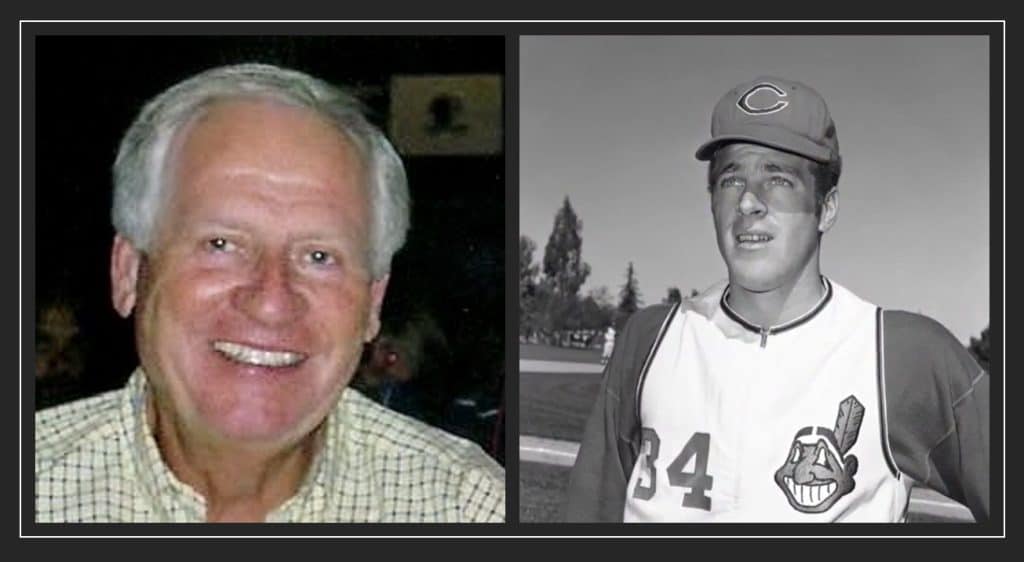
Oct. 30: Steve Hargan, 83, in Palm Springs. I never met or even heard of Hargan until I saw a paid obituary and read that this former major league pitcher had died in Palm Springs. A guy on Legacy.com said he was part of the Cleveland Indians’ pitching rotation of the 1960s with Louis Tiant, Sam McDowell and Sonny Siebert. Those guys I knew.
I looked Hargan up and learned he was an all-star. In 1967, he led the American League in shutouts despite missing part of the year with a hamstring injury. He also hit the last walk-off home run by a starting pitcher in major league history.
Hargan pitched in the big leagues from 1965 through 1977 with a respectable 3.92 ERA. A blogger named Aaron Goldstein said he “retreated from baseball once his playing days ended, living the life of a bachelor in Palm Springs in a condo he bought during his pitching career.”
A Toronto Blue Jays teammate wrote on Legacy.com, “He was quiet, non-assuming, and a good solid teammate. Like many of us, Steve just loved the game.”
Nov. 11: Sally Kirkland, 84, at Palm Springs hospice. Kirkland was another acclaimed actress who shunned the limelight in Palm Springs. You might remember her from her co-starring role in “The Sting” with Paul Newman and Robert Redford. She earned an Oscar nomination for her title role in the 1987 film, “Anna.”
Kirkwood trained in New York at the American Academy of Dramatic Arts and studied with Lee Strasberg, the father of Method acting. But she got pegged as a film actress who didn’t mind doing nude scenes when she was actually a very spiritual woman. An obituary said she was involved with the Church of the Movement of Spiritual Inner Awareness, whose followers believe in soul transcendence.
I met her several times in Palm Springs – I think most recently at the 2014 Palm Springs International ShortFest for a screening of her film, “Tom in Brazil.” News outlets said she entered a local hospice after developing dementia and fracturing four bones in her neck, right wrist and left hip. Friends set up a GoFundMe page in November to pay for her health expenses after MyNewsLA.com reported, “she lost a lot of money from bad advice from a former financial adviser-business manager.”
I know she was well-respected in Palm Springs as a volunteer who helped people with HIV.
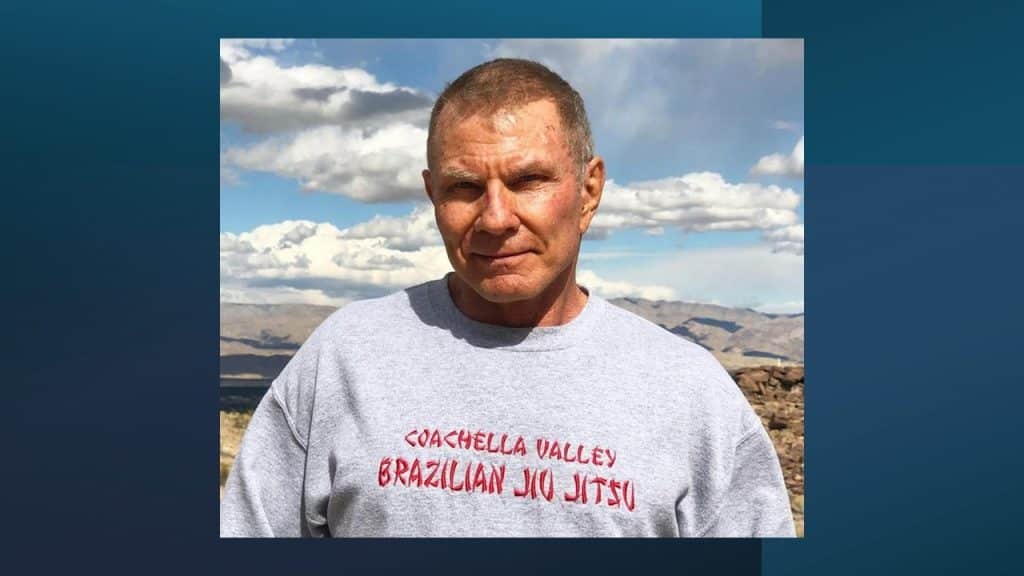
Nov. 20: Glen Heggstad, 73, from cancer. It’s not hyperbole to say that this former Hells Angel-turned martial artist led one of the most remarkable lives ever.
Mike Botan, host of AdvRider.com, to which Glen regularly contributed, said Glen circled the globe four times in three decades, visiting 57 countries “including treks through the Himalayas and the jungles of South America.”
His first book, “Two Wheels Through Terror,” recounts his kidnapping by Colombian rebels and how he was released from 33 days of captivity by jamming his motorcycle key up his nose, smearing his blood on his clothes, and getting the rebels to release him to the Red Cross by intentionally losing 50 pounds and convincing them he was dying of cancer. Then he got back on his motorcycle and resumed his trip to the tip of South America.
National Geographic made a documentary of that ordeal and Glen became a motivational speaker and author of a second book titled, “One More Day Everywhere: Crossing Fifty Borders on the Road to Global Understanding.”
He was a legitimate bad ass, investigated as a suspect in the infamous, still unsolved Octopus Murders, riding with the Hells Angels until he was 27, and serving time in prison, according to Botan, and earning Black Belt teaching credentials and international titles in martial arts including Chinese Kung Fu, Shotokan Karate, Japanese Judo, and Brazilian Jiu-Jitsu.
He founded the Coachella Valley Judo and Brazilian Jiu-Jitsu studio in Palm Desert and then gave it away to a prize student in a moving ceremony shortly before his death.
Interior designer and contractor Steven De Christopher, who knew Glen when he was in the Hell’s Angels, wrote on Facebook after Glen’s death, “Everybody knows Glen is a tough guy. But he transformed (into) another person. Just Angel.”
“Everybody knows Glen is a tough guy. But he transformed (into) another person. Just Angel.”
Steven De Christopher, on Glen Heggstad
I discovered his business acumen while working to unravel a mix-up in the Los Angeles County Recorders Office involving my family’s living trust. I learned that, instead of going to Probate Court, which could take over a year after the COVID lockdown, we could file a Heggstad Petition to expedite the proceedings. Glen filed the first such petition and it was so legally momentous, the petition was named after Glen.
His most amazing tale is what this “Striking Viking” called his journey to Valhalla. He was given a death sentence when diagnosed with advanced prostate cancer, but he refused to give an inch. He was told a treatment being tested in Florida could give him a remote chance of survival. So Glen flew back and forth to Florida monthly for the treatment.
I ran into him in a bathroom in the Dallas Airport and he looked exhausted. But, when I saw him on the airplane to Palm Springs, he was all smiles because he was sitting in the front row as a medical passenger while I was headed to coach. The treatment extended Glen’s life by years.
Glen’s legacy is the many friends and students whose lives were changed just by knowing him.
Nov. 23: Udo Kier, 81, at Eisenhower. Udo was another of Palm Springs’ great characters.
He was literally a character actor. He broke out as the star of two Andy Warhol films: 1973’s “Flesh for Frankenstein” and 1974’s “Blood for Dracula.” He was born and raised in Germany and he had a heavy German accent, so he played a lot of evil villains. He even played Hitler several times, most notably in the 2003 streamer, “Hunters,” starring Al Pacino. He was introduced to many U.S. filmgoers via Gus Van Sant’s 1991 film, “My Own Private Idaho.” His biggest starring role was probably the 2021 quirky comedy, “Swan Song.”
But Udo became a big Palm Springs celebrity through his long-time support of the Palm Springs International Film Festival. He lived a few blocks from the festival theaters, so he attended the screenings every year. Huge stars attended the Film Awards Gala, and Udo walked the red carpet, too. But Kaye Ballard was the only star who regularly attended screenings and she died in 2019. So Udo succeeded Kaye as “our celebrity.”
I don’t know who will succeed Udo. It will take a personality that can light up a room.
More: Read Part 1 of Fessier’s 2025 In Memoriam series here.
Related Articles
2025 In Memoriam Part 1: Looking back on artists, entertainers and cultural pioneers we lost
From a pioneering police novelist to a game show legend and a rock icon, Bruce Fessier looks back as the desert community mourned the passing of luminaries who shaped our cultural landscape.
Meet Ellen Goodman, our Palm Springs Person of the Year for 2025
As executive director of The Foundation For PSUSD, Goodman has spent a decade building programs that reveal the Coachella Valley’s children — and its future — to a community that often overlooks them.
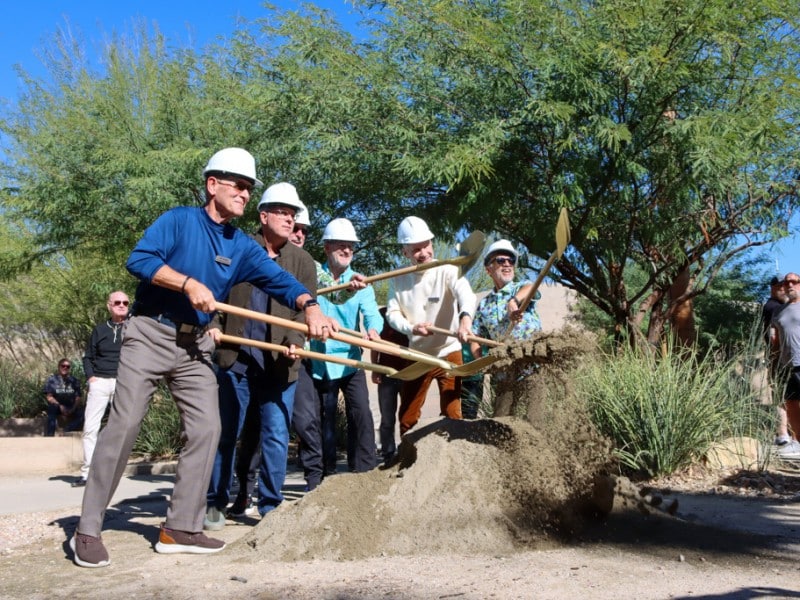
‘Forever remembered’: On World AIDS Day, ground broken for important memorial
After a decade-long push, backers of a landmark Palm Springs AIDS Memorial in Downtown Park broke ground on a project designed to honor lives lost, the caregivers who shaped the community, and a history too important to fade.